Hyundai Coupe: 6 Key Specs, Performance, And Revival Rumors
Exploring the timeless appeal of Hyundai's iconic Coupe from its powerful specs to modern revival rumors.
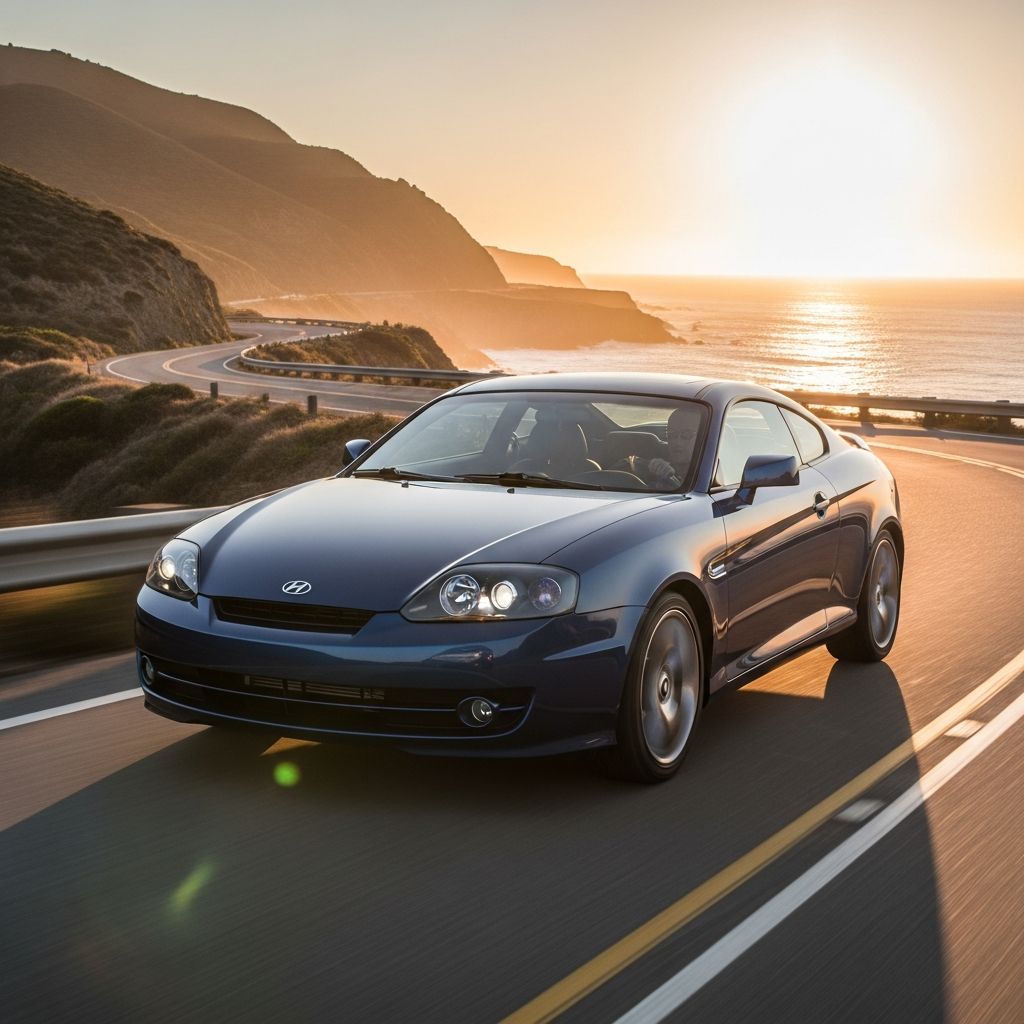
The Hyundai Coupe stands as a testament to affordable performance in the automotive world, blending sharp styling with capable engineering that punched above its weight class. Originally launched to challenge established sports cars, it offered enthusiasts a compelling mix of speed, handling, and practicality without breaking the bank.
Design Evolution and Visual Impact
From its debut, the Hyundai Coupe captured attention with its sleek, low-slung profile measuring 4,395mm in length and just 1,330mm in height, creating an aggressive stance ideal for spirited driving. The three-door configuration accommodated four seats, striking a balance between coupe exclusivity and everyday usability. Wheelbase of 2,530mm ensured stable cornering, while 17-inch alloy wheels shod in 215/45 ZR17 tires provided a firm grip on the road.
Modern renderings and concepts inspire visions of future iterations with full-width LED light bars, hidden projector headlights integrated into parametric grilles, and carbon fiber accents for a high-tech edge. Rear designs feature expansive diffusers and subtle spoilers, enhancing aerodynamics and visual drama without excess. These elements echo Hyundai’s current design language seen in performance models like the Elantra N.
Engine Power and Performance Metrics
At the heart of the flagship Hyundai Coupe 2.7 V6 3dr lay a robust DOHC V6 engine with 24 valves, a 10:1 compression ratio, and dimensions of 86.7mm bore and 75mm stroke, delivering front-wheel-drive thrust. It propelled the car from 0-62 mph in 8.3 seconds, reaching a top speed of 137 mph, figures respectable for its era. Fuel delivery via multi-point injection paired with a catalytic converter met Euro 4 standards, though efficiency varied: 20 mpg urban and 37 mpg extra-urban.
| Performance Spec | Detail |
|---|---|
| 0-62 mph | 8.3 seconds |
| Top Speed | 137 mph |
| EC Urban MPG | 20 mpg |
| EC Extra-Urban MPG | 37 mpg |
| CO2 Emissions | 236 g/km |
| Turning Circle | 10.88 m |
Braking and towing capabilities added versatility: max braked towing at 1,400 kg and unbraked at 550 kg, with a gross vehicle weight of 1,760 kg and kerbweight around 1,424 kg. A space-saver spare tire ensured minimal intrusion into the 418-liter boot space with seats up.
Interior Comfort and Practicality
Inside, the cabin prioritized driver engagement with supportive seats and a straightforward layout. Luggage capacity of 418 liters offered decent storage for a coupe, expandable by folding rear seats. While not lavish, materials and build quality exceeded expectations for the price point, around $26,990 to $32,980 in equivalent markets. Ratings like 7.0/10 from reviewers highlighted its enjoyment factor despite not being the quickest.
Contemporary concepts suggest upgrades: 10-inch digital clusters, matching infotainment screens, premium leathers, ambient lighting, and AI-assisted interfaces, drawing from Hyundai’s N-line heritage. Such features could elevate it against premium rivals.
Handling Dynamics and Driving Experience
The Hyundai Coupe earned praise for its chassis tuning, delivering predictable handling via a 10.88m turning circle and balanced weight distribution. Front-wheel drive with a responsive steering setup made it approachable for daily use yet fun on twisty roads. Reviewers noted it as ‘enjoyable enough to drive’ without overwhelming power, ideal for enthusiasts seeking value over outright speed.
- Strengths: Agile chassis, low price entry to coupe ownership.
- Weaknesses: Modest fuel economy in urban settings, dated emissions profile.
- Best For: Budget-conscious drivers wanting style and performance.
Rumors of a 2026 Revival: Genesis and Tiburon N
Excitement builds around potential 2026 returns. The Genesis Coupe, inspired by the Genesis X Concept, could feature turbocharged four-cylinders or V6s, priced near $40,000 to rival BMW 4 Series and Audi A5. Sleek lines, bold grilles, and luxury interiors with immersive audio and driver aids position it as a value luxury contender.
Meanwhile, a Tiburon N revival under Hyundai’s N division whispers 350-hp turbo 2.0-liter engines, possibly hybridized, or full EVs with sub-three-second 0-60 times and AWD. These align with Hyundai’s Ioniq 5 N success, promising raw thrills.
Speculative renders depict Elantra N-derived 276-hp 2.0L turbo engines with 289 Nm torque, full-width lighting, and aggressive bumpers. At $36,000-$50,000 ranges in some listings, accessibility remains key.
Market Positioning and Value Proposition
Historically, the Coupe shone in value, undercutting rivals while matching style and kit. Modern equivalents maintain this, with Drive.com.au pricing from $26,990, appealing in competitive segments. Against premium foes, superior equipment and warranty could differentiate revivals.
| Rival Comparison | Hyundai Coupe Edge |
|---|---|
| BMW 4 Series | Lower price, strong warranty. |
| Audi A5 | Better value, comparable power. |
| Mercedes C-Class Coupe | Affordable luxury alternative. |
Safety and Reliability Insights
Equipped with standard features like ABS and airbags, the original Coupe prioritized safety basics. Euro 4 compliance and low CO at 0.288 g/km reflected environmental considerations. Hyundai’s reputation for durability, backed by long warranties, bolstered ownership appeal.
Customization and Aftermarket Potential
Owners often enhanced the Coupe with suspension upgrades, exhausts, and body kits, leveraging its FWD platform. Max roof load of 40 kg and loading weight of 336 kg supported light modifications. Future N models could expand this with factory performance parts.
Environmental Considerations and Future Powertrains
With 236 g/km CO2, older models lag modern standards, but rumors point to hybrids or EVs for 2026. Turbo-four efficiency or electric torque could slash emissions while boosting performance, aligning with global shifts.
Ownership Costs and Buying Advice
Affordable servicing and fuel costs made it a smart buy. Current used markets show values from $36,000-$80,000 for similar Hyundais, suggesting strong resale. For buyers, prioritize V6 variants for thrill, check service history.
FAQs
What is the top speed of the Hyundai Coupe 2.7 V6?
137 mph.
Is a 2026 Hyundai Coupe revival confirmed?
Not officially, but strong rumors surround Genesis and Tiburon N variants.
How practical is the boot space?
418 liters with seats up, suitable for weekend trips.
What engine powers the classic model?
2.7L V6 DOHC with 24 valves.
What’s the fuel economy like?
20 mpg urban, 37 mpg extra-urban.
References
- Hyundai Coupe 2.7 V6 3dr Reviews 2026 | Top Gear — Top Gear. 2026. https://www.topgear.com/car-reviews/hyundai/27-v6-3dr/spec
- New 2026 Hyundai Genesis Coupe – The Ultimate … – YouTube — YouTube/Faster Cars. 2026. https://www.youtube.com/watch?v=n6ji1gcuycI
- New 2026 Hyundai Tiburon N – The Reborn Performance Coupe … — YouTube/Faster Cars. 2026. https://www.youtube.com/watch?v=QkHho_dpx84
- Hyundai Coupe 2026 Reviews, News, Specs & Prices – Drive — Drive.com.au. 2026. https://www.drive.com.au/showrooms/hyundai/coupe/
- Next Generation Hyundai Coupe – YouTube — YouTube. 2026. https://www.youtube.com/watch?v=qbgq9ywUD9U
Similar Articles


Read full bio of Sneha Tete