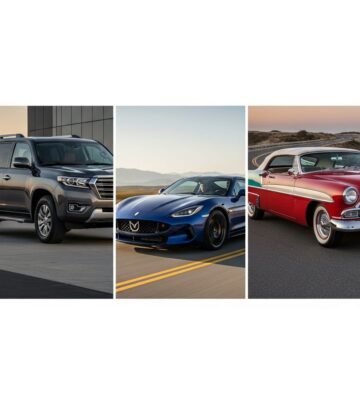
How Regulations Reshaped Modern Vehicles
Unintended consequences of U.S. policies that boosted SUVs, crushed sedans, and altered the entire car market forever.
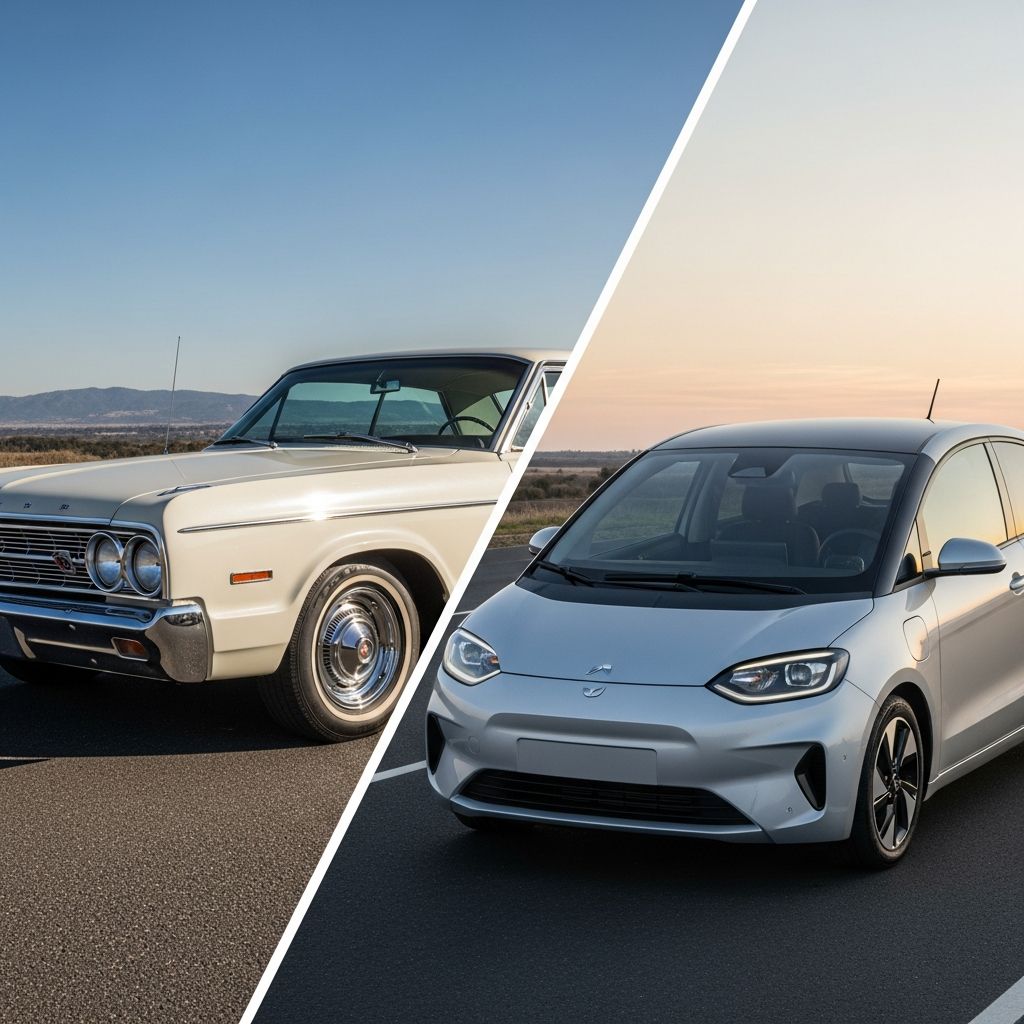
Government interventions aimed at improving energy security and safety have profoundly influenced vehicle design and market trends in the United States. Starting in the 1970s, policies like fuel economy mandates created unexpected incentives that propelled the rise of sport utility vehicles (SUVs) while challenging traditional passenger cars.
The Origins of Fuel Economy Mandates
In response to the 1973 oil crisis, Congress enacted the Energy Policy and Conservation Act in 1975. This legislation established Corporate Average Fuel Economy (CAFE) standards, requiring automakers to achieve an average of 27.5 miles per gallon (mpg) for passenger cars by 1985. Initially, these rules showed promise: the fleet-wide average improved from 13 mpg in 1975 to 19 mpg by 1980.
However, the act distinguished between cars and light trucks, allowing the Department of Transportation to set separate standards for trucks. This distinction arose from lobbying efforts by automakers, who argued that fixed congressional standards for cars were too rigid, while regulatory flexibility for trucks would better suit commercial needs.
Defining Trucks: A Gateway for SUVs
Regulators defined trucks broadly as vehicles “capable of off-highway operation,” which included those with four-wheel drive and sufficient ground clearance. Additionally, vehicles exceeding 6,000 pounds gross vehicle weight rating (GVWR) received exemptions from stricter car standards, justified for uses like farming.
Automakers exploited this by engineering SUVs to meet these criteria. For instance, American Motors successfully lobbied to classify Jeeps as trucks in the 1970s, bypassing both fuel efficiency and safety rules. By the time rules finalized, most new vehicles qualified as exempt trucks, shifting production toward heavier models.
- Key exemptions: 4WD capability, high ground clearance, GVWR over 6,000 lbs.
- Impact: Allowed poorer fuel economy (e.g., 14 mpg for some SUVs) without penalties.
The Gas Guzzler Tax and Further Loopholes
The 1978 gas guzzler tax imposed penalties from $1,000 to $7,700 on inefficient cars to discourage low-mpg models. Lobbyists secured exclusions for trucks, extending benefits to SUVs classified as such. This made large vehicles economically attractive amid rising demand for family haulers.
These policies inverted manufacturing economics: complying with car standards raised costs for sedans, while trucks became profitable. Ford’s 1990s Expedition, at 14 mpg, generated $12,000 profit per unit due to lax rules.
| Vehicle Type | CAFE Standard (pre-2000s) | Typical MPG | Profit Incentive |
|---|---|---|---|
| Passenger Cars | 27.5 mpg | 20-25 mpg | Low |
| Light Trucks/SUVs | ~20 mpg (flexible) | 14-18 mpg | High |
Safety Regulations and Design Shifts
Beyond fuel economy, safety mandates from the National Highway Traffic Safety Administration (NHTSA) influenced designs. Post-1960s rules required features like bumpers and crash protections, but trucks faced fewer mandates. SUVs as trucks avoided side-impact standards longer, enabling taller, boxier profiles that appealed to consumers despite higher rollover risks.
Over time, this led to SUVs dominating sales. From 25% market share in 2009, SUVs reached 50% by recent years, even after updated standards under Obama and Biden administrations that still permitted 41% more CO2 from trucks.
The Cash for Clunkers Program’s Lasting Effects
In 2009, the Consumer Assistance to Recyclate and Save (CARS) Act, or “Cash for Clunkers,” offered rebates up to $4,500 for trading old vehicles (over 8,000 lbs for trucks) for newer ones achieving at least 22 mpg. Engines were destroyed with sodium silicate to prevent reuse.
Intended to boost auto sales during recession, it accelerated sedan retirements, as rebates favored efficient small cars over larger ones. This skewed the fleet toward newer, regulated vehicles but removed many durable older models, indirectly supporting SUV growth by clearing inventory.
- Rebate conditions: New car < $45,000, >22 mpg combined.
- Outcome: Destroyed 677,000+ vehicles, many still roadworthy.
Economic and Environmental Consequences
CAFE standards raised vehicle prices, with estimates of compliance costs burdening lower-income buyers. Former Ford CEO Mark Fields warned of 1 million job losses if standards ignored market preferences. Environmentally, despite goals, average efficiency stalled below 27.5 mpg for decades due to SUV proliferation.
Recent EPA reviews signal potential revisions, acknowledging mandates’ regressive impact. Trucks now emit more CO2, countering original energy independence aims rooted in 1970s oil embargoes.
Market Transformation: Sedans Fade, Crossovers Rise
By the 2020s, sedans comprised under 20% of sales, replaced by crossovers—SUV-like but often car-classified for better efficiency. Manufacturers like Toyota and Honda pivoted, discontinuing models like the Camry in some markets for RAV4 variants.
This shift boosted profits: SUVs command premiums, with higher margins from optional features. Consumer preferences for space, visibility, and perceived safety aligned perfectly with loopholes.
Global Comparisons and Lessons
In Europe, stricter uniform standards favor smaller cars, limiting SUV dominance. U.S. policies, by contrast, exported larger designs, influencing global trends but raising fuel import reliance ironically.
Reform proposals include harmonizing standards or weight-based penalties, but lobbying persists. Closing loopholes could revive sedans, though entrenched tastes complicate changes.
Future Outlook: Electrification and New Rules
Electric vehicles (EVs) challenge old paradigms, as CAFE applies differently to batteries. Biden-era rules aim for 50 mpg fleet averages by 2030, but truck allowances remain. Automakers invest billions in EV SUVs, perpetuating size biases.
Policy evolution will determine if history repeats or if balanced incentives emerge for efficiency across all types.
Frequently Asked Questions (FAQs)
What is the SUV loophole?
A regulatory classification treating SUVs as light trucks, exempting them from stricter car fuel economy and safety standards since the 1970s.
Did Cash for Clunkers help or hurt the environment?
It removed polluting clunkers but destroyed viable engines, hastening shifts to SUVs with program incentives.
Why are American cars bigger than European ones?
U.S. loopholes incentivize larger vehicles; Europe enforces uniform efficiency rules.
Are CAFE standards still relevant?
Yes, but under review for affordability impacts amid EV transitions.
Can the SUV loophole be closed?
Attempts failed in 2009 and 2021; future reforms face industry opposition.
References
- The Loophole That Made Cars in America So Big — Distilled Earth. 2023. https://www.distilled.earth/p/the-loophole-that-made-cars-in-america
- The Weird Loophole That Made American Cars So Big — YouTube (Ed’s Auto Reviews). 2023. https://www.youtube.com/watch?v=C5q_l8SXar0
- The Government Program That Killed The Automotive Industry — YouTube. 2023. https://www.youtube.com/watch?v=zfqfmKYSEyM
- EPA to Revise Government Mandate That Caused Car Prices to Skyrocket — Americans for Prosperity. 2025-04-01. https://americansforprosperity.org/blog/epa-to-revise-government-mandate-that-caused-car-prices-to-skyrocket/
Similar Articles





Read full bio of medha deb