Golf vs i30: Ultimate Hatchback Battle
Discover which compact hatchback reigns supreme in performance, comfort, and value between Volkswagen Golf and Hyundai i30.
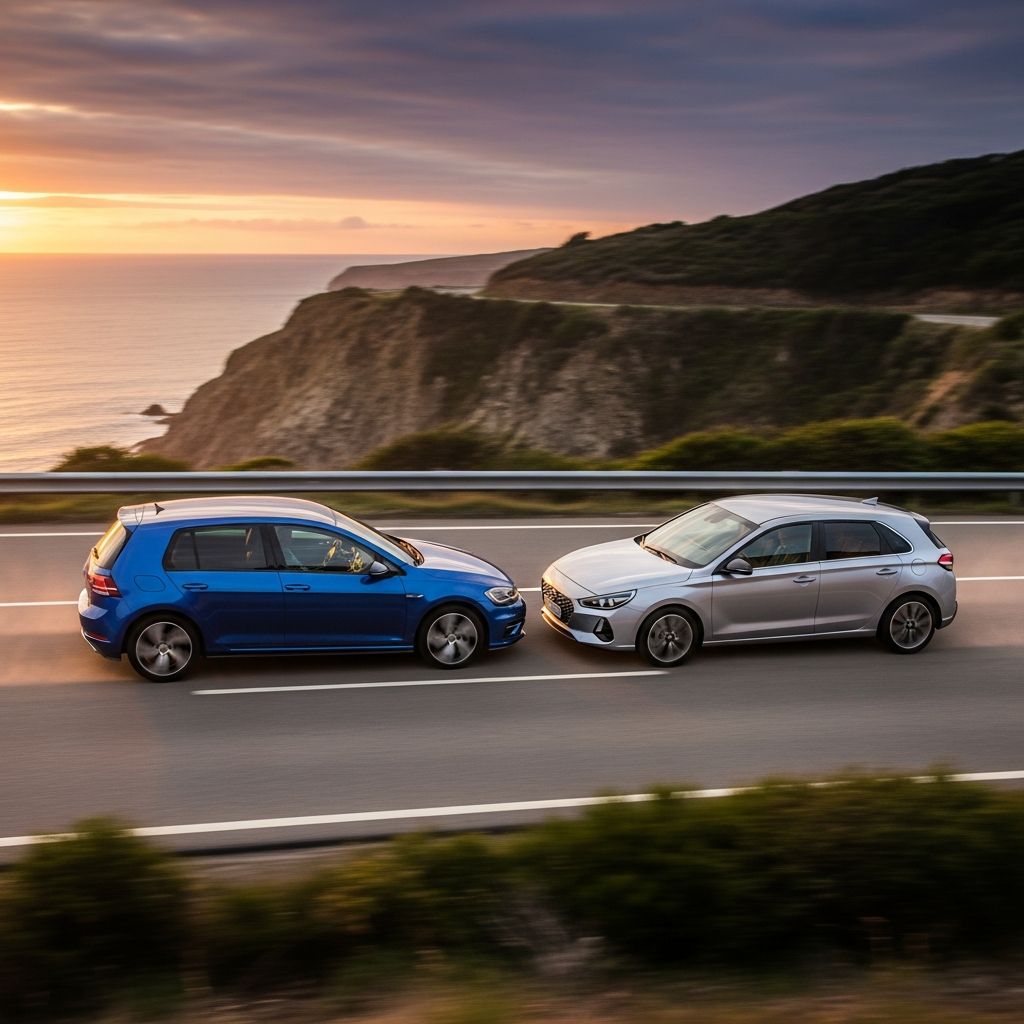
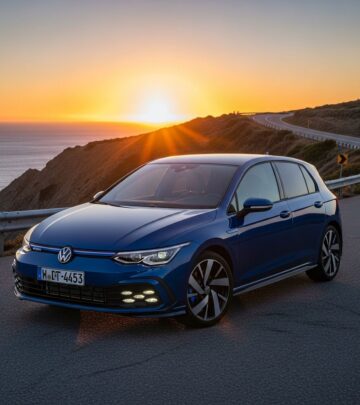
Compact hatchbacks like the Volkswagen Golf and Hyundai i30 dominate family car sales with their blend of practicality, efficiency, and driving pleasure. This showdown pits the VW Golf 1.0 TSI 110 Life against the Hyundai i30 1.0 T-GDI 48V Hybrid Premium, both priced around £23,000, to determine which offers superior real-world appeal.
Powertrain Performance Face-Off
The heart of any hatchback lies in its engine. Hyundai’s 1.0-litre turbocharged three-cylinder with mild-hybrid tech produces 118bhp and 172Nm of torque, on paper edging the Golf’s 108bhp and 200Nm from its own 1.0-litre turbo unit. Yet, real-world acceleration tells a different story: the Golf sprints to 62mph in 10.2 seconds, undercutting the i30’s 11.2 seconds.
Volkswagen’s motor revs more eagerly, delivering instant throttle response that makes city driving and overtaking feel effortless. The i30 suffers from hesitant low-rev pull, long gearing, and a flywheel that lags in rev-matching, creating a disjointed drive. Top speeds align closely at 126mph for Golf and 122mph for i30, but the VW’s linearity shines on highways.
| Spec | VW Golf 1.0 TSI | Hyundai i30 Hybrid |
|---|---|---|
| Power | 108bhp | 118bhp |
| Torque | 200Nm | 172Nm |
| 0-62mph | 10.2s | 11.2s |
| Top Speed | 126mph | 122mph |
Handling and Ride Dynamics
Behind the wheel, the Golf excels in composure. Its steering is precise and weighted ideally for spirited B-road runs, while the chassis grips confidently without feeling harsh. The i30 trails here, with softer suspension that absorbs major bumps but transmits small imperfections like potholes more noticeably.
Cornering reveals the Golf’s edge: greater front-end bite and less body roll inspire driver confidence at higher speeds. Hyundai’s setup feels less planted, with steering that lacks the VW’s directness, making it suitable for relaxed cruising but not enthusiastic drives. Both hush cabin noise effectively on motorways, aided by 16-inch wheels on base models.
Interior Quality and Comfort
Step inside, and the Golf feels premium. Soft-touch materials, a leather-wrapped steering wheel, and ambient lighting elevate it above the i30’s harder plastics in key areas. The VW’s seats offer better support for long journeys, with adjustable lumbar options standard on tested Life trim.
Hyundai counters with generous standard kit: wireless charging, heated seats, and a 10.25-inch digital cluster in Premium spec. Rear space is ample in both, accommodating six-footers comfortably, though the Golf adds rear AC vents and felt-lined door bins to prevent rattles. Driving positions are exemplary, with rake and reach adjustments suiting diverse builds.
- Golf advantages: Premium materials, rear vents, flat-folding seats.
- i30 advantages: Armrest with cupholders, larger infotainment screen.
Cargo and Practicality Breakdown
Boot space is competitive: Golf’s 380 litres expands to 1,270 litres with seats folded, featuring a variable-height floor for versatility. The i30 edges it at 395/1,301 litres, with bag hooks but no adjustable floor in base Active guise.
Both shine for family duties—square load areas ease bulky item loading. Golf’s seats fold completely flat, ideal for flat-packs, while i30’s are near-flat in higher trims. Door pockets and under-floor storage match closely.
Fuel Efficiency and Running Costs
Test economy favors the i30 mildly at 46.7mpg versus Golf’s 44.5mpg, translating to £1,333 annual fuel for Hyundai and £1,398 for VW at average prices. WLTP figures are tighter: 53.0mpg Golf, 52.3mpg i30. CO2 outputs sit at 122g/km and 121g/km, respectively, banding both at 27% company car tax—£1,246 yearly for Golf, £1,268 for i30 (standard rate).
Over three years/36,000 miles, Golf retains 50.2% value (£11,699), trouncing i30’s 41.9% (£9,926). Road tax is £150 Golf, £140 i30. Hyundai’s five-year unlimited-mile warranty beats VW’s three-year/60,000-mile cover, appealing to private buyers.
| Cost Metric | Golf | i30 |
|---|---|---|
| 3-Year Residual | 50.2% | 41.9% |
| Annual Fuel (Test) | £1,398 | £1,333 |
| CO2 | 122g/km | 121g/km |
Safety Ratings and Tech Features
Both earn five-star Euro NCAP ratings, but Golf’s 2020 test scores higher: 95% adult, 89% child protection versus i30’s 2017 88/84%. VW includes adaptive cruise, lane assist, and superior safety aids.
Infotainment is strong: Golf’s 10.4-inch touchscreen integrates seamlessly with wireless Apple CarPlay; i30’s matching unit adds Bluelink connectivity. Driver aids like AEB and blind-spot monitoring are standard across both.
Ownership Experience and Reliability
Driver Power surveys rank Hyundai 13th for manufacturers, 11th dealers; VW 19th/22nd, suggesting better Hyundai support. Golf’s build quality shines long-term, while i30’s warranty mitigates concerns.
Which One Wins?
The Volkswagen Golf emerges victorious for its engaging drive, refined ride, premium feel, and stronger residuals, ideal for enthusiasts valuing dynamics. Hyundai i30 suits budget-conscious buyers prioritizing warranty and kit, though its engine disappoints. Test drive both to decide.
Frequently Asked Questions
Is the VW Golf faster than Hyundai i30?
Yes, Golf accelerates quicker at 10.2s 0-62mph versus i30’s 11.2s, with better low-speed response.
Which has better fuel economy?
i30 edges test mpg (46.7 vs 44.5), but Golf leads WLTP (53.0 vs 52.3).
Are rear seats spacious in both?
Both offer excellent legroom for adults; Golf adds AC vents.
What about warranties?
Hyundai’s 5-year unlimited miles tops Golf’s 3-year/60k.
Safety comparison?
Golf scores higher in recent Euro NCAP; both five stars.
References
- Hyundai i30 vs Volkswagen Golf — Auto Express. 2020. https://www.autoexpress.co.uk/car-group-tests/354061/hyundai-i30-vs-volkswagen-golf
- First Car Shootout: Volkswagen Golf 110TSI vs Hyundai i30 Active — Chasing Cars. N/A. https://www.chasingcars.com.au/compare/first-car-shootout-volkswagen-golf-110tsi-vs-hyundai-i30-active/
- Volkswagen Golf vs Hyundai i30 — Carwow. N/A. https://www.carwow.co.uk/editorial/choosing-a-car/car-comparisons-side-by-side/volkswagen-golf-vs-hyundai-i30
Similar Articles


Read full bio of Sneha Tete