Gibbs Aquada: High-Speed Amphibious Roadster Guide
Discover the Gibbs Aquada Bond Series, the pioneering amphibious sports car that conquers roads at 100mph and waters at 30mph with James Bond flair.
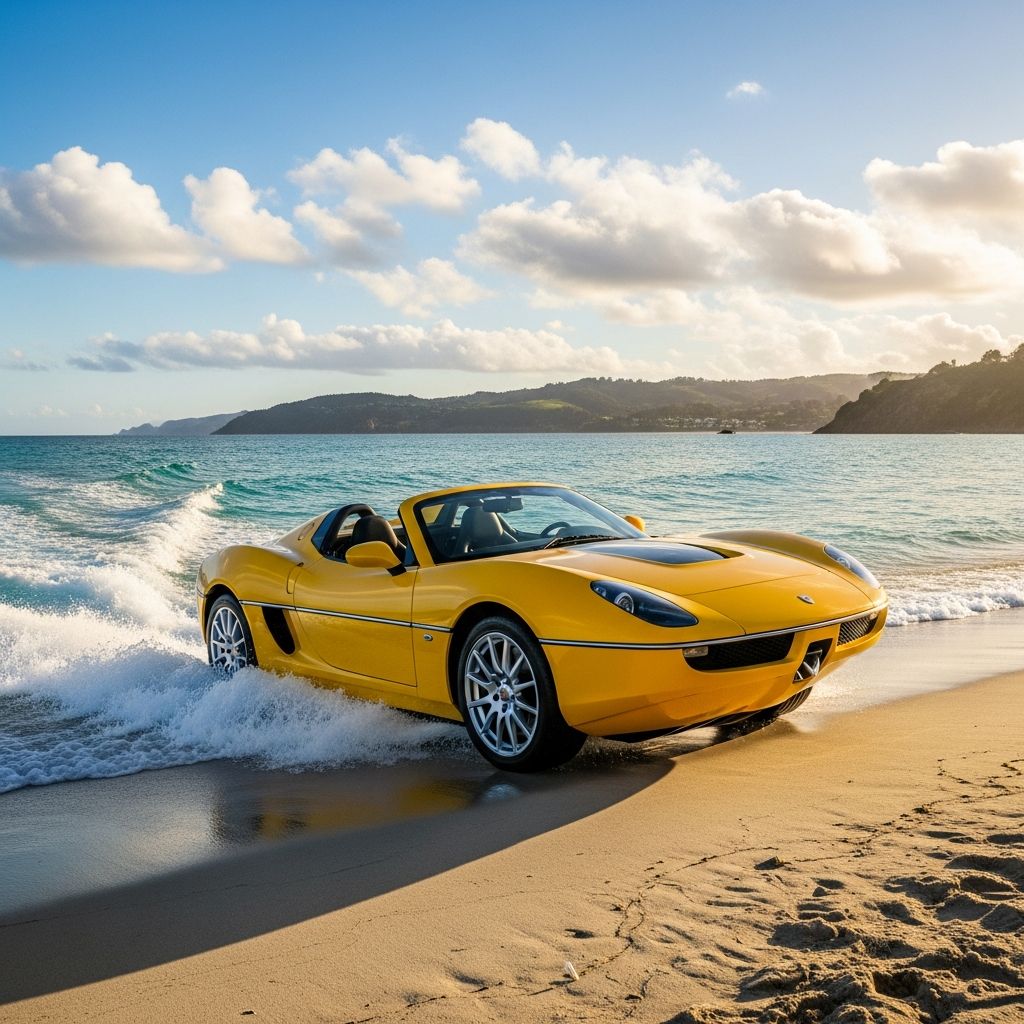
The Gibbs Aquada represents a groundbreaking fusion of automotive and marine engineering, delivering sports car thrills on land and jet-powered excitement on water. Launched as the world’s first high-performance amphibian, this vehicle shattered expectations by proving that seamless transitions between road and river were not just possible but exhilarating.
Innovation Behind the Design
Conceived by New Zealand entrepreneur Alan Gibbs, the Aquada emerged from Gibbs Technologies in the UK, where a team of engineers tackled the longstanding challenges of amphibious vehicles. Traditional models like the 1960s Amphicar plodded through water at mere 7mph, resembling a sluggish bathtub more than a sports craft. The Aquada flipped this script with
High Speed Amphibian (HSA)
technology, enabling plane-out performance on water—rising onto its hull for minimal drag and maximum velocity.Its
aluminum spaceframe chassis
provides structural rigidity while keeping weight to 1,350kg, paired with a lightweight fiberglass body shell for corrosion resistance and agility. Visually, it evokes a beefed-up roadster with distinctive pop-up headlights reminiscent of classic designs, though its proportions hint at hidden aquatic prowess. No doors mean easy water entry but require passengers to step aboard like a convertible boat.Powertrain and Performance Specs
At the heart lies a mid-mounted
2.5-liter V6 engine
sourced from Land Rover, initially rated at 175hp but tuned to 230-250hp in production variants for robust output. This powers rear wheels via a five-speed automatic transmission on land, delivering 0-60mph in under 9 seconds and a top speed exceeding100mph
—impressive for a dual-purpose machine.On water, the magic unfolds: a button press disengages road drive, retracts wheels into the hull via hydraulic struts, and reroutes power to a
rear-mounted jet impeller
. Generating over 2,200lbs of thrust akin to a personal watercraft, it propels the Aquada to30+mph
, fast enough to tow water skiers. Steering remains intuitive through a directional nozzle linked to the wheel, allowing tight turns and power slides.| Mode | Top Speed | 0-60mph (Land) | Power Source |
|---|---|---|---|
| Land | 100+mph | 9 seconds | 2.5L V6, 230hp |
| Water | 30+mph | N/A | Jet Drive, 2,200lbs thrust |
This table highlights the Aquada’s dual-domain dominance, balancing speed across environments without compromise.
Seamless Land-to-Water Transition
Entering aquatic mode is deceptively simple: approach a slipway, activate the dash button, and within 10-12 seconds, wheels fold away, power shifts to the jet, and a dashboard light confirms readiness. Throttle response sharpens as the hull planes up, slicing through waves with agility. Exiting water? A quick burst powers it up the bank, wheels deploy, and it’s road-ready again—no towing required.
- Hydraulic wheel retraction: Arches seal watertight, streamlining the profile.
- Clutch disengagement: Prevents drag from spinning wheels underwater.
- Jet nozzle steering: Mimics outboard motor precision for hairpin maneuvers.
- Central driver position: Optimizes visibility and balance in both modes.
Three seats in a McLaren F1-inspired layout place the driver centrally, flanked by passengers, enhancing stability and immersion.
Record-Breaking Achievements
In 2004, adventurer Richard Branson piloted an Aquada across the English Channel, clocking
1 hour, 40 minutes, and 6 seconds
—a world record for amphibious vehicles that still stands. Departing from the UK coast, it outpaced ferries, demonstrating real-world endurance over choppy seas. This feat underscored the Aquada’s reliability, battling waves that would swamp lesser designs.Other highlights include demos towing skiers and high-speed lake runs, cementing its status as a thrill machine. Though production aimed for 100 units at around £150,000 ($250,000), limited numbers were built, making survivors collector’s gems today.
Driving Experience: Road and Wave Dynamics
On tarmac, the Aquada surprises with composed handling for its 1,350kg mass. The spaceframe and wide stance deliver grip, though the automatic gearbox softens urgency compared to manuals. Ride quality absorbs bumps adequately, belying its boat heritage—far from the wallowing of past amphibians.
Aquatic adventures elevate it to superstar status. Acceleration surges like a jetski, hull lift-off unleashes speed, and controllability shines in turns. Reviewers note its ability to drift sideways or pivot sharply, blending car-like familiarity with boat adrenaline. Fuel efficiency? Land yields 20mpg, water less quantifiable but unleaded-compatible.
James Bond Legacy and Cultural Impact
Dubbed the “Bond Series,” the Aquada channels 007 glamour—envision Pierce Brosnan evading foes via river escape. Its no-doors ingress, central seating, and Q-branch innovations fuel spy fantasies. Media from Top Gear to Cigar Aficionado hailed it as the ultimate crossover, influencing amphibious design long after.
Though Gibbs shifted to military Humdingers, the Aquada’s civilian blueprint proved amphibians could be fast, fun, and drivable. Modern iterations like WaterCar Panther draw from its jet tech, but none match the original’s charisma.
Modern Relevance and Collectibility
Over two decades on, Aquadas fetch premiums at auctions, prized for rarity and provenance. Owners near lakes or coasts revel in unique mobility—drive to the dock, launch instantly, no trailer hassles. Maintenance demands dual expertise, but modular systems ease it.
Environmentally, its efficiency beats trailering boats, aligning with versatile transport trends. As electric amphibious concepts emerge, the Aquada remains the petrol-powered benchmark for high-speed duality.
Pros and Cons Overview
| Pros | Cons |
|---|---|
| 100mph land / 30mph water speeds | High original price (£150k+) |
| Effortless mode switching | No doors; ingress challenges |
| Record Channel crossing | Limited production (100 units) |
| Jet-powered fun | Specialized maintenance |
Frequently Asked Questions (FAQs)
How fast does the Gibbs Aquada go on land and water?
It reaches over 100mph on roads and 30+mph on water, powered by a V6 engine and jet drive.
Can the Aquada pull a water skier?
Yes, its 2,200lbs thrust enables waterski towing with ease.
Who set the English Channel record with it?
Richard Branson in 2004, completing the crossing in 1:40:06.
Does it have doors?
No, to prevent leaks; passengers climb in over the sills.
What’s the engine spec?
2.5L Land Rover V6, 230-250hp, five-speed auto.
Why the Aquada Endures
The Gibbs Aquada transcends novelty, proving engineering ingenuity can merge worlds. From Gibbs’ vision to Branson’s dash, it embodies adventure unbound by terrain. For enthusiasts, it’s not just a vehicle—it’s a portal to extraordinary drives.
References
- Gibbs Aquada Bond Series — Auto Express. 2003-10-28. https://www.autoexpress.co.uk/car-reviews/15635/gibbs-aquada-bond-series
- Gibbs Aquada Amphibious Car — Cigar Aficionado. N/A. http://www.cigaraficionado.com/article/gibbs-aquada-amphibious-car-8389
- Top Gear’s Top 9: Amphibious Cars — Top Gear. N/A. https://www.topgear.com/car-news/list/top-gears-top-9-amphibious-cars
- From the Archives: Crashing the Monaco GP in the Gibbs Aquada — Top Gear. N/A. https://www.topgear.com/car-news/big-reads/archives-crashing-monaco-gp-gibbs-aquada
- The 10 Best Amphibious Cars Of All Time, Ranked — HotCars. N/A. https://www.hotcars.com/best-amphibious-cars-of-all-time-ranked/
- Amphibians: At last, the British sports car that really makes a splash — The Times. N/A. https://www.thetimes.com/uk/environment/article/amphibians-at-last-the-british-sports-car-that-really-makes-a-splash-xkp729rwfkm
- Awkward or Awesome? This Speedboat/Sports Car Never Quite Hit… — GearJunkie. N/A. https://gearjunkie.com/motors/amphibious-car-gibbs-aquada-video
Similar Articles





Read full bio of Sneha Tete