Gibbs Aquada: 110 MPH Amphibious Sports Car Guide
Discover the revolutionary Gibbs Aquada, blending high-speed sports car thrills with speedboat performance for unmatched land-water adventures.
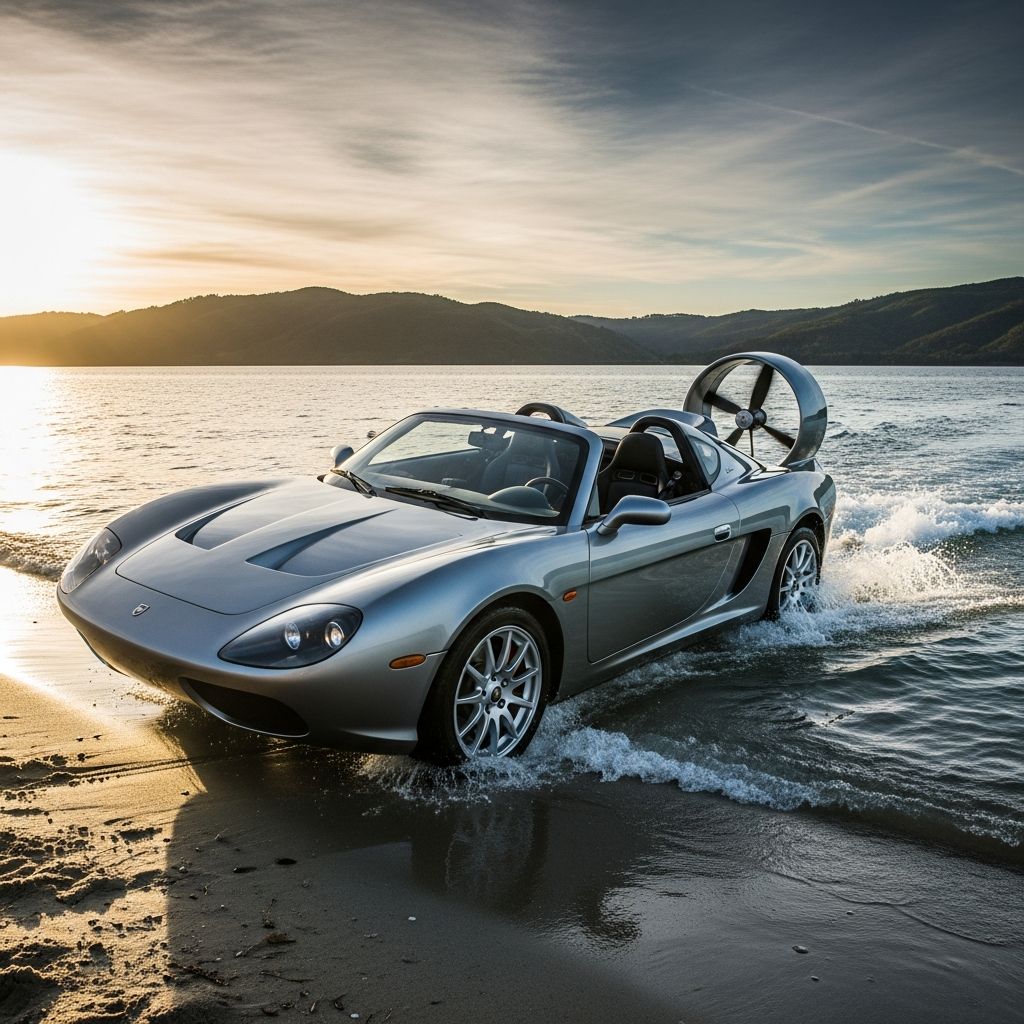
The Gibbs Aquada stands as a bold fusion of automotive and marine engineering, delivering sports car agility on roads and speedboat prowess on water. Developed by Gibbs Technologies, this high-speed amphibian (HSA) vehicle shattered expectations with its 110 mph land top speed and 30+ mph water capability, making it a dream for adventure seekers.
Engineering a Dual-Purpose Marvel
At its core, the Aquada features a lightweight aluminum chassis wrapped in a glass-reinforced composite body, optimizing strength and reducing weight to 1,450 kg. This construction enables near-perfect weight distribution, crucial for handling both terrains. The retractable wheels, powered by hydraulic struts, tuck neatly into the hull upon water entry, minimizing drag and allowing planing over waves rather than plowing through them.
The powertrain centers on a mid-mounted 2.5-liter V6 engine, sourced from Land Rover Freelander components, producing 175 horsepower. Paired with a four-speed automatic transmission driving the rear wheels on land, it accelerates from 0-60 mph in 8.5 seconds. On water, the system decouples front drive-shafts, redirecting power to a rear-mounted impeller jet that generates over 2,200 lbs of thrust.
Land Performance: Sports Car Soul
Defying its elevated ride height and boat-like profile, the Aquada delivers surprisingly sporty dynamics. Citroen-derived gas suspension, stiffened for firmness, teams with a massive front anti-roll bar to keep the body flat in corners. Direct steering allows precise line adjustments mid-turn via throttle input, mimicking true sports cars.
Reviewers praise its intoxicating engine note, with a throaty air intake rumble under acceleration. Top speed hits 110 mph, and the three-seater layout—driver centrally positioned—enhances balance. No doors prevent water ingress, requiring passengers to step over sills, adding to its raw, open-top convertible charm.
Water Capabilities: Effortless Transformation
Transitioning to boat mode takes mere seconds: a button press raises wheels, activates the jet drive, and engages a steering nozzle linked to the wheel. A dashboard light confirms readiness, and the accelerator becomes a throttle. It planes efficiently thanks to a keel-shaped hull, reaching 30 mph—sufficient for water skiing—and handles waves up to 0.5 meters.
This seamless shift, without noticeable mechanical drama, underscores Gibbs’ HSA technology, positioning the Aquada as the world’s first truly high-performance amphibian.
Design and Practicality Breakdown
| Feature | Land Mode | Water Mode |
|---|---|---|
| Top Speed | 110 mph | 30+ mph |
| Power Source | 175 hp V6, rear-wheel drive | Jet impeller (2,200 lbs thrust) |
| Suspension/Wheels | Extended, gas struts | Retracted into hull |
| Seating | 3 passengers, central driver | Same, open cockpit |
| Weight | 1,450 kg | Optimized for planing |
This table highlights the Aquada’s adaptive engineering, balancing performance across environments.
Record-Breaking Legacy
In 2004, Richard Branson piloted an Aquada across the English Channel in 1 hour 40 minutes, averaging 26 knots and setting a record for fastest amphibious crossing. This feat, from Hyde Manor estate to a Normandy beach, showcased reliability and speed, outpacing a trailing powerboat.
The event drew global attention, with the vehicle pulling water skiers en route, proving practical fun beyond novelty.
Development History and Challenges
Gibbs Technologies, headquartered in Nuneaton, UK, unveiled the Aquada in 2002 after years of R&D. Founder Alan Gibbs envisioned HSAs to address global flooding and mobility needs, leading to prototypes like the Aquada. Production aimed for 100 units at $250,000 each, targeting affluent enthusiasts.
- Innovation Driver: Patented hull and retraction systems overcame traditional amphibian flaws like poor speed or handling.
- Market Hurdles: High cost, regulatory safety concerns in the US, and niche appeal limited sales.
- Commercial Fate: Fewer than planned units sold; Gibbs shifted to military and utility HSAs like Humdinga.
Driving Impressions from Experts
Auto Express testers found it “fun to drive” on both surfaces, with sporty feel belying its size. Top Gear noted its MX-5-like styling (sharing headlights) and attention-grabbing presence, forgiving handling quirks for the spectacle. Fifth Gear’s video review highlighted effortless water exits via a switch flick.
Owners and demos report pushed-back acceleration and stable cornering, though wind buffeting in open config and wave limits temper versatility.
Comparisons with Other Amphibians
Unlike the sluggish 1960s Amphicar (7 mph water top), the Aquada’s HSA tech delivers sports car metrics. Modern rivals like WaterCar Panther lag in land speed, while Gibbs’ later Humdinga prioritizes utility over sportiness.
- Aquada excels in dual high performance.
- Panther: Better waves, slower roads.
- Amphicar: Historical curiosity, obsolete.
Modern Relevance and Future Prospects
Though production ceased, the Aquada inspires amphibious revival amid climate challenges. Gibbs’ Aquafly aims for flight-capable HSAs. Used examples occasionally surface at auctions, prized by collectors for Branson’s endorsement and engineering purity.
Safety debates persist—hazy US standards cited—but UK/EU compliance affirmed seaworthiness.
Pros and Cons Overview
- Pros: Thrilling dual-mode speed, innovative transitions, record holder, head-turner.
- Cons: $250k+ price, no doors (access inconvenience), wave height limits, limited production.
Frequently Asked Questions (FAQs)
What powers the Gibbs Aquada on land and water?
A 2.5L V6 engine (175 hp) drives rear wheels on land; on water, it powers a jet impeller.
How fast does it go?
110 mph top on land, 30+ mph on water, 0-60 mph in 8.5 seconds.
Can it water ski?
Yes, with sufficient thrust to pull skiers at speed.
Why didn’t it sell well?
Steep price, safety regs in key markets, and niche demand.
Is it street-legal?
Yes in approved regions; requires dual certifications.
Why the Aquada Endures
The Gibbs Aquada transcends gimmickry, proving amphibians can thrill like supercars and boats. Its legacy fuels innovation in multi-domain vehicles, blending adrenaline with practicality for a new era of mobility.
References
- Gibbs Aquada Amphibious Car — Cigar Aficionado. 2004. https://www.cigaraficionado.com/article/gibbs-aquada-amphibious-car-8389
- Gibbs Aquada Review — Auto Express. 2004. https://www.autoexpress.co.uk/car-reviews/15790/gibbs-aquada
- Crashing Monaco GP in Gibbs Aquada — Top Gear. N/A. https://www.topgear.com/car-news/big-reads/archives-crashing-monaco-gp-gibbs-aquada
- Best Amphibious Cars Ranked — HotCars. 2023. https://www.hotcars.com/best-amphibious-cars-of-all-time-ranked/
- Amphibious V6 Roadster Gibbs Aquada — Supercar Blondie. 2023. https://supercarblondie.com/amphibious-floating-v6-roadster-from-2002-the-gibbs-aquada/
- Awkward or Awesome? Gibbs Aquada — GearJunkie. 2019. https://gearjunkie.com/motors/amphibious-car-gibbs-aquada-video
Similar Articles




Read full bio of medha deb