Formula Ford 1.0 EcoBoost: Redefining Lightweight Performance
Discover how a 1.0L turbocharged engine powers a sub-500kg race car.
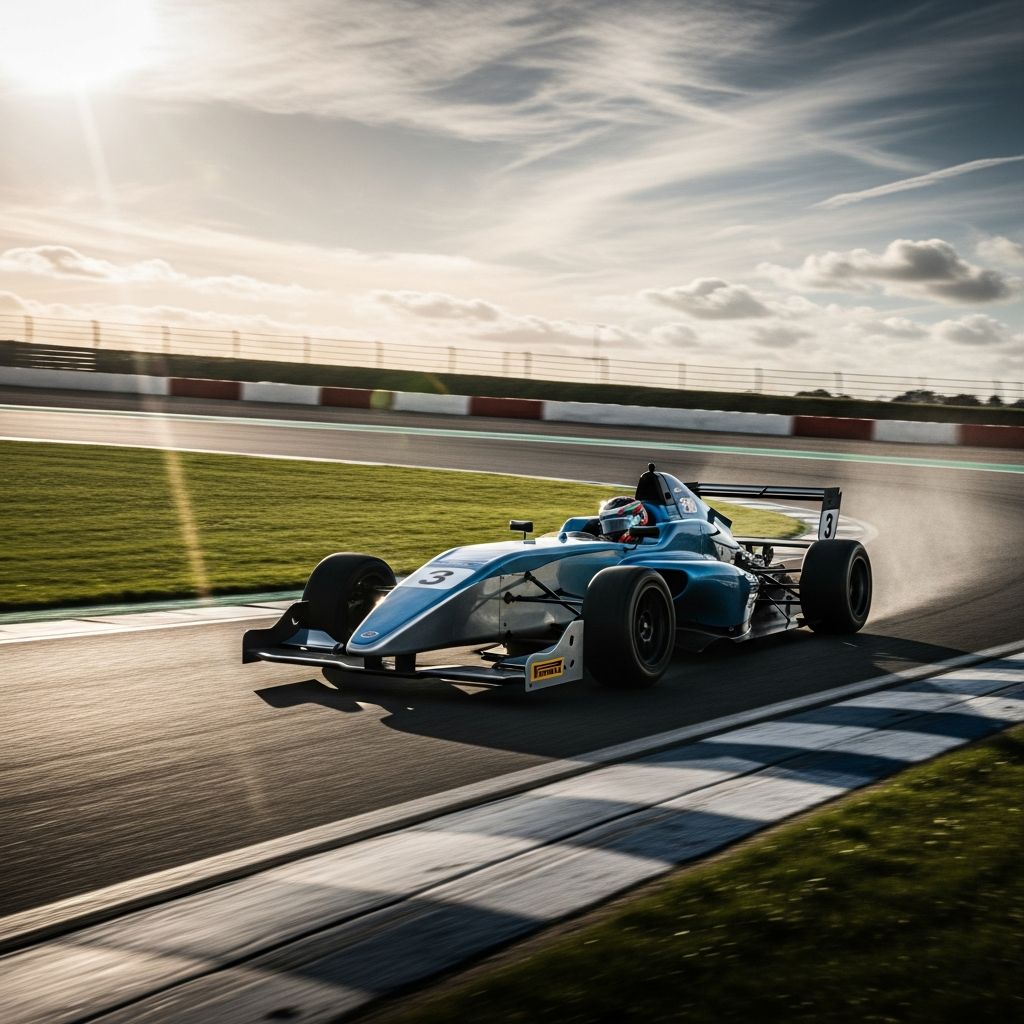
Formula Ford 1.0 EcoBoost: The Ultimate Expression of Lightweight Racing
The automotive world constantly pursues contradictions: how to make vehicles faster while consuming less fuel, how to deliver thrilling performance without sacrificing everyday usability, and how to prove that raw power isn’t the only path to exhilaration. Ford’s Formula Ford 1.0 EcoBoost represents a compelling answer to these challenges. This street-legal race car challenges conventional wisdom about what constitutes a high-performance vehicle, proving that engineering brilliance and innovative thinking can produce results that rival supercars while achieving fuel consumption figures that conventional economy vehicles struggle to match.
Engineering Marvel: The Foundation of Exceptional Lightness
At the heart of the Formula Ford 1.0 EcoBoost’s capabilities lies its revolutionary approach to weight reduction. Tipping the scales at just 495 kilograms—less than half the weight of many modern family hatchbacks—this vehicle represents what becomes possible when engineers prioritize substance over unnecessary complexity. This extreme lightness isn’t achieved through compromise or sacrifice of safety; rather, it results from meticulous engineering decisions and the selection of appropriate materials throughout the vehicle’s construction.
The platform itself draws from Formula Ford racing heritage, utilizing a purpose-built carbon fiber chassis that provides rigidity and strength without unnecessary bulk. Every component undergoes evaluation not for what it can do, but for what it must do, eliminating anything that doesn’t contribute directly to the driving experience or essential functionality. This philosophy extends from the suspension system through to the interior appointments, where comfort is balanced against performance requirements.
Weight Distribution and Chassis Dynamics
The vehicle’s mid-mounted engine placement contributes significantly to handling characteristics and weight distribution. By positioning the three-cylinder turbocharged unit behind the driver, engineers achieved an ideal center of gravity that enhances both stability and responsiveness through corners. The compact dimensions of the 1.0-liter EcoBoost engine facilitate this unconventional placement while maintaining accessibility for maintenance and repairs.
Propulsion: Proving Displacement Irrelevance
A turbocharged 1.0-liter three-cylinder engine producing 200 horsepower might seem implausible when removed from context. However, this extraordinary power density results from sophisticated engineering that maximizes the efficiency of every combustion cycle. The turbocharger, sourced from Ford’s Fiesta ST platform and specifically calibrated for this application, transforms the diminutive displacement into a force that rivals naturally aspirated engines twice its size.
The engine management systems utilize advanced fuel injection technology, variable valve timing, and precision turbo boost control to deliver power across the RPM range while maintaining reliability and longevity. Unlike some extreme performance modifications that compromise durability, this installation represents Ford’s commitment to creating a genuinely usable high-performance powerplant rather than a one-dimensional sprint machine.
Power Delivery and Performance Metrics
| Performance Specification | Value |
|---|---|
| Engine Displacement | 1.0 Liters (Three-Cylinder) |
| Maximum Horsepower | 200 bhp |
| Acceleration (0-62 mph) | Under 4 seconds |
| Curb Weight | 495 kg (1,090 lbs) |
| Power-to-Weight Ratio | Approximately 404 bhp/ton |
| Estimated Fuel Economy | Up to 118 mpg (theoretical) |
The acceleration figures place this vehicle in supercar territory, achieving 0-62 mph in under four seconds—a benchmark typically reserved for six-figure performance machines. This capability doesn’t result from brute force displacement but from the favorable power-to-weight ratio: with approximately 404 horsepower per ton, the Formula Ford outperforms many vehicles with significantly larger engines simply through the mathematics of lightweight engineering.
Transmission and Control Systems
The Formula Ford utilizes a race-spec sequential manual transmission that incorporates automatic throttle blipping during downshifts. This sophisticated system enhances both performance and driving engagement, allowing the driver to focus on line and positioning while the transmission management handles technical gear changes. The sequential shifter itself requires a learning curve for drivers accustomed to conventional manual transmissions, but its benefits in response time and precision prove invaluable during spirited driving.
The hydraulic clutch system provides precise engagement control, essential for both launching from standstill and executing smooth transitions during normal driving conditions. This combination of mechanical and electronic systems demonstrates how different technologies can work in harmony to enhance the overall driving experience.
The Paradox of Efficiency: Performance Meets Frugality
Perhaps the most remarkable aspect of the Formula Ford 1.0 EcoBoost involves its fuel consumption figures. In theoretical testing, Ford claimed approximately 118 miles per gallon—a figure more commonly associated with hybrid economy vehicles than turbocharged race cars. Actual real-world testing at 75 mph demonstrated 47 mpg, still exceptional considering the vehicle’s performance capabilities and extreme lightness.
This efficiency advantage stems directly from the combination of lightweight construction, aerodynamic design, and the EcoBoost engine’s inherent efficiency characteristics. By minimizing weight, the vehicle requires less energy to accelerate and overcome rolling resistance. The turbocharger enables the small displacement engine to produce sufficient power without resorting to excessive RPMs that would increase consumption. The result challenges fundamental assumptions about the relationship between performance and fuel economy.
Real-World Consumption Data
- Constant-speed testing at 75 mph: 47 mpg
- Theoretical combined cycle: 118 mpg
- Track driving: Significantly higher consumption but offset by reduced fuel tank capacity
- Weight savings equivalent to approximately 10 average passengers
Street-Legal Design: Racing Car Practicality
Despite its circuit-bred heritage, the Formula Ford 1.0 EcoBoost incorporates all necessary equipment for legal road operation. Integrated headlights and indicators provide essential visibility and communication with other traffic participants. A functional handbrake ensures parking security, while the tax disc holder mounted inside the front wheel wheel adds a touch of British automotive humor to an otherwise serious machine.
These additions represent the absolute minimum necessary for road legality rather than comfort-oriented luxuries. There’s no power steering, no air conditioning, and no sound insulation beyond what the bare structure provides. Interior appointments remain purely functional, with racing seats and a stripped-down dashboard focused exclusively on essential information. This uncompromising approach to design philosophy creates an intensely focused driving environment that few modern vehicles can replicate.
Track Performance and Real-World Capability
The vehicle’s capabilities extend beyond acceleration figures into genuine circuit performance. At the Nürburgring Nordschleife, the most demanding road course in Europe, the Formula Ford achieved a lap time of 7 minutes and 22 seconds—a benchmark that places it ahead of many hypercars and premium sports machines despite its diminutive engine displacement and price point.
This achievement demonstrates that raw power represents only one component of circuit performance. The lightweight construction enables rapid direction changes without excessive lateral loading on components. The responsive steering and precise handling characteristics allow drivers to place the vehicle exactly where intended, reducing lap time loss through imprecision.
Handling Characteristics
The mid-engine configuration provides near-perfect weight distribution that enhances both cornering grip and directional stability. The Formula Ford responds immediately to steering inputs, a characteristic that emerges directly from minimal mass requiring acceleration. Brake performance remains exceptional thanks to reduced inertia and a favorable brake-to-weight ratio that minimizes stopping distances without requiring exotic braking systems.
Suspension compliance balances performance requirements against the need for everyday driveability on standard public roads. The double-wishbone or MacPherson strut setup (depending on specific configuration) provides the control necessary for circuit driving while remaining manageable during normal road use.
The Driving Experience: Visceral Engagement
Operating the Formula Ford 1.0 EcoBoost represents a profound departure from contemporary automotive norms. The absence of power-assisted steering means every road imperfection transmits directly through the helm, providing unfiltered feedback about tire grip and suspension behavior. The sequential transmission demands active participation in gear selection, while the responsive throttle reacts instantly to driver inputs without the lag inherent in conventional fuel injection systems.
Engine noise penetrates the cabin unattenuated by sound deadening material, creating an auditory experience that complements the mechanical simplicity of the machine. This directness might seem primitive compared to modern vehicles’ isolation and refinement, yet it creates an authenticity and engagement increasingly rare in contemporary automotive design.
The driving position, relatively upright and forward-positioned compared to sports cars, provides excellent visibility and a sense of integration with the vehicle’s dynamics. The manual operation of all systems requires constant attention and engagement, transforming ordinary driving into an active pursuit rather than passive transportation.
Design Philosophy and Engineering Innovation
The Formula Ford 1.0 EcoBoost represents not merely a modified race car but a comprehensive philosophy about performance, efficiency, and the purpose of mechanical systems. Every component serves a defined purpose; nothing exists for cosmetic embellishment or unnecessary comfort. This design economy creates a vehicle that proves radical simplicity and focused engineering can outperform complexity.
The project demonstrates Ford’s capability to innovate within constraints, proving that breakthrough performance doesn’t require unlimited budgets or exotic materials. The EcoBoost engine itself began as a technology intended to improve economy in family vehicles; its application here proves how versatile and capable modern three-cylinder turbocharged architecture has become.
Comparison Context: Where This Vehicle Stands
Measuring the Formula Ford against conventional vehicles reveals the magnitude of its achievement. A Porsche 911 Carrera 4S—a six-figure sports machine with 400+ horsepower and sophisticated systems—achieves similar acceleration figures, yet the Formula Ford accomplishes comparable performance with a quarter-liter engine and a fraction of the complexity. A Ferrari 458, another machine costing significantly more, cannot match the Formula Ford’s power-to-weight ratio or fuel efficiency.
These comparisons aren’t intended to suggest the Formula Ford replaces exotic machinery but to illustrate what becomes possible when engineers focus on the fundamental physics of motion rather than pursuing displacement as the solution to performance limitations. The vehicle stands as proof that optimization and thoughtful engineering can rival raw power.
Practical Considerations and Limitations
Despite its remarkable capabilities, the Formula Ford 1.0 EcoBoost exists primarily as a demonstration vehicle and limited-production special rather than mass-market availability. Its extreme simplification creates challenges for everyday use: the lack of power steering demands physical effort during low-speed maneuvers, the absence of sound insulation makes extended highway driving fatiguing, and the single-seat configuration eliminates any possibility of carrying passengers.
The suspension setup, while excellent for circuit work, transmits every road irregularity directly to occupants, creating a ride quality that challenges contemporary expectations for comfort. The lack of modern conveniences like power windows, central locking, or sophisticated infotainment systems might frustrate drivers accustomed to contemporary standards.
Legacy and Future Implications
The Formula Ford 1.0 EcoBoost exists as an engineering exercise that proves concepts relevant far beyond this specific vehicle. It demonstrates the viability of lightweight construction, the potential of advanced turbocharging, and the possibility of extracting supercar-level performance from three-cylinder displacement. These lessons inform development of practical vehicles for mainstream customers.
Future performance vehicles may increasingly draw inspiration from this project’s philosophy: pursuing efficiency and performance through weight reduction and optimized powerplants rather than perpetually increasing engine displacement. As environmental concerns and regulatory pressures intensify, the lessons learned from this unconventional machine become increasingly relevant to the broader automotive industry.
Frequently Asked Questions
Can you purchase a Formula Ford 1.0 EcoBoost?
The Formula Ford 1.0 EcoBoost remains primarily a demonstration and limited-production vehicle rather than a mass-market offering. Ford produced a small number for racing series and special exhibitions, but standard purchase availability remains extremely limited. Most examples remain in racing programs or private collections.
What’s the top speed of the Formula Ford EcoBoost?
While specific top speed figures vary based on configuration, the power and weight characteristics suggest capability in excess of 130 mph. However, the vehicle’s design prioritizes acceleration and handling rather than straightline maximum velocity.
How does the Formula Ford compare to modern electric race cars?
The Formula Ford’s approach differs fundamentally from electrified competition. While modern electric vehicles offer instant torque delivery and sophisticated energy management, the Formula Ford proves that refined conventional powerplants, when optimally matched to lightweight construction, remain remarkably capable.
Is the Formula Ford practical for regular driving?
The Formula Ford represents an extreme expression of performance prioritization. While technically street-legal, its lack of modern conveniences, uncomfortable ride quality, and demanding steering and controls make it impractical for most drivers as a primary vehicle. It functions best as a specialist tool for enthusiasts.
What makes the Formula Ford’s fuel economy so exceptional?
The combination of minimal weight, aerodynamic design, and an efficient turbocharged engine enables extraordinary fuel economy. At 75 mph constant speed, it achieved 47 mpg—remarkable for a machine capable of supercar acceleration. The power-to-weight ratio and modern engine efficiency compensate for the performance orientation.
Conclusion: The Philosophy of Essential Design
The Formula Ford 1.0 EcoBoost stands as a remarkable achievement in automotive engineering that transcends its role as a curiosity or demonstration vehicle. It proves that performance, efficiency, and engaging driving dynamics need not demand unlimited resources or exotic materials. Instead, through thoughtful engineering and unwavering commitment to eliminating unnecessary complexity, extraordinary results become achievable.
This vehicle challenges fundamental assumptions about what constitutes a high-performance machine, demonstrating that the future of exciting automotive experiences might involve reducing complexity rather than increasing it. As the industry navigates environmental concerns and evolving transportation paradigms, the lessons embedded in this remarkable machine—that lightness, precision, and focused engineering matter more than raw displacement—may prove prescient. The Formula Ford 1.0 EcoBoost remains not merely a race car but a manifesto about what becomes possible when engineers refuse to accept conventional limitations.
References
- Formula Ford 1.0 EcoBoost Street-Legal Race Car — Autocar. 2012. https://www.youtube.com/watch?v=sxUx6qi0I_k
- Formula Ford 1.0 EcoBoost Review — Street Legal Race Car. 2013. https://www.streetlegalracecar.com/single-post/2013/09/20/formula-ford-10-ecoboost-review
- Fast, Frugal, Fun: Ford 1.0 EcoBoost Laps Nurburgring In Race Car — Green Car Reports. 2012. https://www.greencarreports.com/news/1078921_fast-frugal-fun-ford-1-0-ecoboost-laps-nurburgring-in-race-car
- Formula Ford EcoBoost 1.0 Liter Street Legal Road Race Car — Autoweb. 2012. https://www.autoweb.com/formula-ford-ecoboost-10-liter-street-legal-road-race-car–sema
Similar Articles






Read full bio of Sneha Tete