Ford Puma Gen-E: Late EV Arrival?
Ford's electrified Puma enters a crowded market with efficiency and fun driving, but faces battery and range hurdles in 2026.
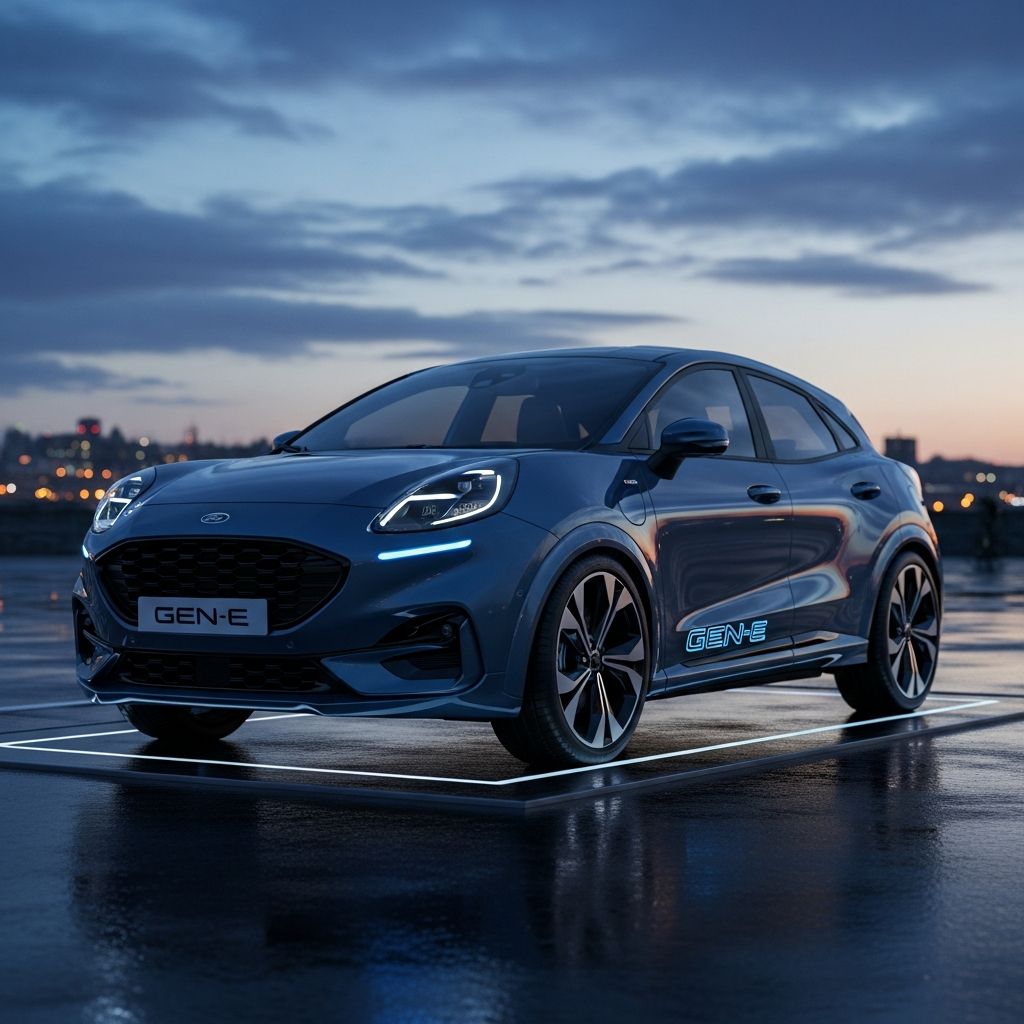
The Ford Puma Gen-E transforms the bestselling petrol crossover into an electric contender, prioritizing driving enjoyment and urban practicality over groundbreaking range. Despite entering a saturated market, its efficient powertrain and familiar chassis deliver a compelling package for city drivers.
Origins and Platform Evolution
Ford’s decision to electrify the Puma stems from its proven success as Europe’s top-selling small SUV. Rather than a ground-up EV design, the Gen-E adapts the existing Global B-Car platform, integrating a floor-mounted battery to maintain the original’s agile footprint. This approach preserves the Puma’s hallmark sharp steering and composed ride, appealing to buyers who value dynamics in a compact package.
Externally, changes are subtle: a sealed front panel enhances aerodynamics, unique alloy wheels distinguish it, and the absent exhaust frees up rear space. Internally, the layout mirrors the combustion model, with added EV-specific displays for energy flow and charging status. Rear seating remains snug for adults, suiting its urban family focus.
Powertrain and Performance Breakdown
At the heart lies a single front-wheel-drive setup: a 166hp (some sources note 165-168hp) electric motor paired with a 43kWh lithium-ion NMC battery. This delivers 0-62mph in approximately 8 seconds, matching the zip of petrol variants while providing instant torque for lively acceleration.
- Power Output: 166hp, 290Nm torque for responsive urban sprints.
- Top Speed: Limited to 99mph, adequate for most scenarios.
- Drive Feel: Retains the Puma’s enthusiastic cornering, with precise steering that outshines rivals like the Peugeot E-2008.
Reviewers praise its body control and fun factor, though added weight from the battery slightly dulls the edge compared to the lighter ICE model. The ride balances firmness for handling with comfort on 17-inch wheels.
Battery Efficiency and Real-World Range
The 43kWh battery is modestly sized versus competitors boasting 50kWh+, yet Ford squeezes impressive efficiency. Official WLTP figures claim 233-258 miles, with real-world tests varying by conditions.
| Condition | Observed Efficiency | Estimated Range |
|---|---|---|
| Urban/Mixed | 4.0-5.4 mi/kWh | 180-233 miles |
| Motorway (70mph) | 3.1-3.4 mi/kWh | 130-170 miles |
| Cold Weather | 3.1-3.4 mi/kWh | 130-180 miles |
City driving shines, often hitting 6 mi/kWh with gentle inputs, but highway speeds erode range quickly. Cold tests showed 180 miles indicated, aligning with rivals like Kia EV3 under similar duress.
Charging Capabilities Explored
DC fast charging peaks at 100kW, enabling 10-80% in 23-25 minutes—a class-leading pace. A 10-minute session adds about 77 miles. Home AC charging via 7kW wallbox takes nearly 6 hours for 30-97%, practical for overnight top-ups.
- Fast Charge: 100kW max, competitive with segment leaders.
- Added Range: 124km (77 miles) in 10 minutes.
- Full Charge Time: ~5-6 hours on 7kW AC.
This setup suits commuters with access to rapid chargers, though the small battery means less time waiting overall.
Practicality: Space and Features
Boot capacity impresses at 523 litres, expanding further without an exhaust intrusion—surpassing Renault 4 E-Tech, Kia EV3, and Vauxhall Mokka. The floor-mounted battery preserves a flat load area and MegaBox underfloor storage, a Puma staple.
Standard kit is generous: digital cockpit, wireless charging, adaptive cruise, and Ford’s Co-Pilot Assist. Trims like Select start at competitive pricing, bolstered by UK grants reducing effective cost.
| Spec | Details |
|---|---|
| Luggage | 523 litres (expandable) |
| Battery/Range | 43kWh / 233 miles WLTP |
| P11D Value | £29,940 |
| CO2/BIK | 0g/km (3% tax band) |
Rear space prioritizes front occupants, but it’s family-viable for short trips.
Market Positioning and Rivals
Incentives like the UK’s £3,500 grant enhance value, with low running costs (37.57p/mile total ownership).
Running Costs and Ownership
Zero emissions yield minimal BIK tax (£15-30/month), strong residuals (40%), and cheap fuel at £2,851 annually. Maintenance is low at £1,562 over cycles. Efficiency keeps electricity bills down, especially urban-focused.
Depreciation is managed, making it a solid company car choice. Long-term, its platform maturity promises reliability akin to the petrol Puma.
Driving Impressions: Urban Star or Highway Compromise?
Testers universally laud its engagement: “sharper steering than any rival,” with a springy chassis that invites B-roads. Urban agility shines, but motorway drone and range anxiety temper enthusiasm for frequent haulers. Cold weather reveals typical EV vulnerabilities, yet it recovers well in mild conditions.
Potential Drawbacks and Improvements
The converted platform shows in the modest battery and FWD-only setup—no AWD option. Ride firmness may jar on poor roads, and rear visibility could improve. Ford could expand trims or battery sizes to broaden appeal.
Who Should Buy the Puma Gen-E?
Ideal for city dwellers, short commuters, or families needing fun and space without range demands. Skip if motorway miles dominate or larger batteries beckon.
Frequently Asked Questions (FAQs)
What is the real-world range of the Ford Puma Gen-E?
Expect 180-233 miles in mixed driving, dropping to 130-170 on motorways or in cold weather.
How fast does it charge?
100kW DC for 10-80% in 23 minutes; 7kW AC full charge in about 6 hours.
Is the Puma Gen-E fun to drive?
Yes, it inherits the petrol model’s sharp handling and lively performance.
How does boot space compare?
523 litres beats many rivals like Kia EV3 and Vauxhall Mokka.
What’s the starting price with grants?
Around £29,940 P11D, reduced by UK incentives.
Final Verdict: Worth the Wait?
The Puma Gen-E proves conversions can excel, blending familiarity with EV perks. Its dynamics and value shine, but range limits curb universal appeal in 2026’s EV landscape. A smart pick for the right buyer.
References
- Ford Puma Gen-E (Electric) First Look Review — TopElectricSUV. 2025. https://topelectricsuv.com/first-look-review/ford-puma-gen-e/
- Ford Puma Gen-E Review — Business Car. 2025. https://www.businesscar.co.uk/car-reviews/ford-puma-gen-e-review/
- Ford Puma Gen-E Review & Buying Guide 2026 — Electrifying.com. 2026. https://www.electrifying.com/reviews/ford-reviews/puma-gen-e/review
- Ford Puma Gen-E Review — DrivingElectric. 2025. https://www.drivingelectric.com/ford/puma
- Ford Puma Gen-E Review — Motorpoint. 2025-09-24. https://www.motorpoint.co.uk/car-reviews/ford/puma-gen-e
Similar Articles


Read full bio of Sneha Tete