Ford’s Nostalgic Strategy: Bridging Heritage and Innovation
How Ford uses classic design elements to attract diverse generations of drivers
Ford’s Nostalgic Strategy: How Heritage Drives Contemporary Success
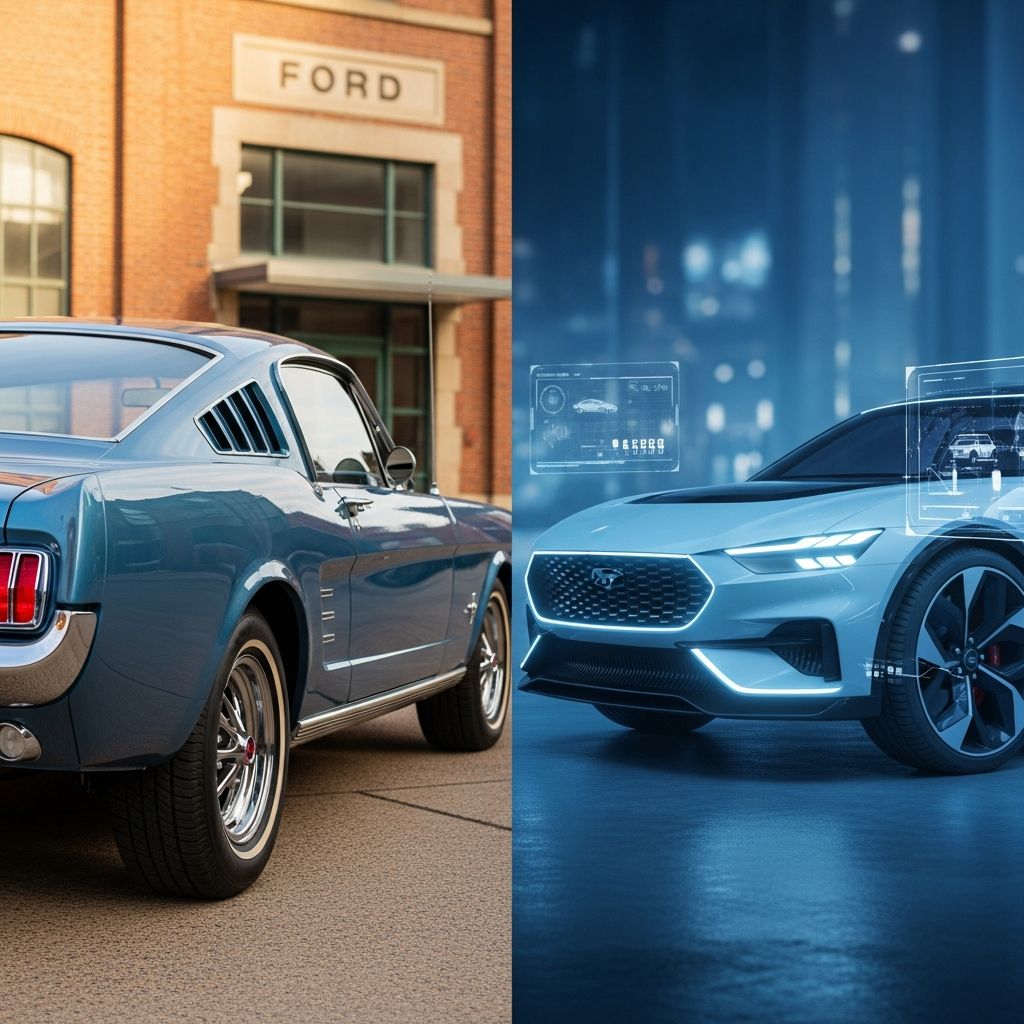
The automotive industry faces a paradox in the modern era. Consumers demand cutting-edge technology, sophisticated safety systems, and environmentally responsible vehicles. Yet simultaneously, drivers express a profound longing for the aesthetic and emotional qualities that defined past generations of automobiles. Ford has emerged as a masterful navigator of this contradiction, recognizing that nostalgia need not conflict with innovation. By deliberately revisiting its extensive catalog of design icons and reinterpreting them through contemporary engineering, Ford has discovered a powerful formula for brand loyalty that transcends age demographics.
The Foundation of a Century-Long Legacy
Ford’s approach to blending past and present operates from a position of unparalleled historical depth. With over a century of automotive manufacturing experience, the company possesses a treasure trove of design language, mechanical innovations, and cultural touchstones that few competitors can match. This heritage extends beyond mere nostalgia—it represents genuine technological and aesthetic achievements that remain relevant today. The company understands that consumers increasingly gravitate toward brands that acknowledge and celebrate their lineage rather than attempting to reinvent themselves wholesale with each model cycle.
The emotional resonance of Ford’s historical vehicles runs remarkably deep across multiple generations. The Mustang, introduced in 1964, established itself not merely as a vehicle but as a cultural phenomenon. Its fastback silhouette, distinctive front grille design, and iconic tri-bar taillights became synonymous with American automotive aspirations. Similarly, the original Bronco represented freedom and adventure, particularly during its early iterations in the 1960s. These vehicles transcended their mechanical functions to become symbols of identity and lifestyle—a psychological dimension that manufacturers cannot easily replicate through modern design alone.
Strategic Integration of Design Continuity
Ford’s strategy diverges significantly from competitors who treat retro styling as superficial ornamentation. Instead, the company conducts deliberate archaeological work into what made original vehicles compelling. When Ford’s design team approached the modern Bronco revival, chief designer Robert Gelardi explicitly investigated the fundamental characteristics that resonated with original owners. This methodology—identifying the essential DNA of a design rather than mimicking surface-level details—produces vehicles that feel authentically connected to their predecessors while functioning as genuine modern machines.
The modern Bronco Roadster concept exemplifies this approach. Rather than simply reproducing the 1966 original, designers created a vehicle that echoes the “compelling simplicity” of the classic while incorporating contemporary engineering, materials science, and safety standards. This distinction matters profoundly. A vehicle that merely copies vintage aesthetics risks appearing as a museum piece or costume, potentially limiting its appeal to practical consumers. Conversely, a vehicle that captures the essential spirit of its predecessor while delivering modern performance characteristics appeals across demographic boundaries.
Multi-Generational Appeal Through Shared Heritage
One of the most sophisticated aspects of Ford’s nostalgic strategy involves its ability to generate relevance across disparate age groups simultaneously. Baby boomers who purchased original Mustangs and Broncos experience direct personal connection to these vehicles—they represent chapters from their own automotive journeys. Millennials, meanwhile, approach these same vehicles from a different angle: as culturally significant objects that represent an idealized American past they themselves did not experience. Generation Z encounters these vehicles stripped of the specific historical context, appreciating them instead as design statements that offer distinctiveness in an era of increasingly homogenized vehicle aesthetics.
This multi-generational appeal creates a powerful marketing ecosystem. Older consumers purchase modern versions of vehicles they owned, seeking updated versions of familiar experiences. Younger consumers purchase them seeking cultural authenticity and differentiation. Middle-aged consumers often experience complex nostalgia for vehicles from their formative years. No single demographic dominates Ford’s retro-inspired sales, but rather all contribute simultaneously, creating a broader and more stable customer base than vehicles targeting narrow segments.
Differentiation in an Increasingly Homogenized Market
The modern automotive landscape presents a peculiar visual monotony. Many contemporary vehicles, regardless of manufacturer, incorporate similar proportions, styling language, and design philosophies. Aerodynamics, safety regulations, and manufacturing efficiency have pushed vehicles toward convergence rather than distinction. In this context, Ford’s retro-inspired vehicles function as visual oases. The Mustang’s distinctive proportions, the Bronco’s utilitarian geometry, and the GT’s throwback aggression stand apart from the rounded, streamlined silhouettes dominating current vehicle categories.
This differentiation extends beyond mere aesthetics to encompass brand perception and market positioning. When a consumer selects a classic-inspired vehicle over a contemporary alternative, they make a statement about values and identity. They signal appreciation for heritage, skepticism toward uncritical modernism, and desire for distinctiveness. Manufacturers who recognize these psychological dimensions gain substantial advantages in increasingly competitive segments.
The Mechanics Behind Successful Retro Integration
Several key principles emerge from analyzing Ford’s successful implementations of retro design philosophy:
- Authentic lineage: Ford draws from genuine historical vehicles rather than creating fictional heritage, ensuring designs resonate with documented cultural significance.
- Design essence extraction: Rather than copying specific details, designers identify and extract the fundamental characteristics that made original vehicles compelling.
- Technological elevation: Modern vehicles incorporate contemporary engineering while respecting original design language, ensuring performance matches modern expectations.
- Functional purpose: Retro elements serve practical purposes within modern vehicle contexts rather than functioning purely as decoration.
- Generational flexibility: Designs communicate sufficiently across age groups, resonating with both direct historical connection and abstract cultural appreciation.
Market Validation and Consumer Response
The commercial success of Ford’s heritage-focused strategy provides empirical validation of its effectiveness. The modern Bronco’s market reception dramatically exceeded initial projections, with demand substantially outpacing production capacity. Original Bronco Roadsters from the 1960s continue appreciating in value, with auction prices regularly exceeding estimates, demonstrating sustained collector and enthusiast interest. The Mustang’s continued vitality across multiple generations—from its iconic 1960s iterations through modern performance variants—testifies to the enduring power of thoughtful design continuity.
This market success transcends luxury or niche segments. Ford’s strategy operates effectively across mainstream consumer bases, generating revenue and brand loyalty in competitive categories where margins typically narrow and differentiation proves difficult. The company’s ability to command premium positioning for vehicles that competitors might classify as “basic” reflects the added value consumers assign to authentic heritage and distinctive design.
Balancing Innovation with Tradition
A critical tension exists between modernization and preservation. Push too aggressively toward innovation, and vehicles lose their connection to heritage, becoming merely another contemporary design exercise. Remain too committed to original forms, and vehicles become impractical compromises, prioritizing style over function. Ford navigates this balance through deliberate calibration, allowing modern technology and safety standards to inform design while maintaining visual and proportional continuity with predecessors.
The Mustang exemplifies this balance. Modern iterations incorporate turbocharged engines, advanced driver assistance systems, sophisticated infotainment interfaces, and contemporary safety structures. Yet the fundamental visual identity—fastback profile, tri-bar taillights, distinctive hood design—remains recognizable across decades. Consumers experience both continuity and progression simultaneously.
Long-Term Strategic Implications
Ford’s heritage-focused strategy suggests broader implications for automotive manufacturing in coming decades. As vehicles increasingly function as platforms for technology deployment rather than mechanical achievements alone, differentiation through character and heritage becomes increasingly valuable. Electric powertrains standardize mechanical distinctiveness—an electric vehicle from manufacturer A performs mechanically similar to manufacturer B. In this context, design language and brand character assume outsized importance.
The success of retro-inspired vehicles also suggests that consumer desire for authentic differentiation may outpace the industry’s tendency toward homogenization. Rather than converging toward a single optimal design solution, the market demonstrates appetite for vehicles expressing distinctive character and historical continuity. Manufacturers who possess deep heritage and design sophistication possess substantial competitive advantages.
Challenges and Considerations
Ford’s strategy, while successful, presents inherent challenges. Designing vehicles that genuinely bridge heritage and contemporary expectations requires sophisticated design teams and substantial development resources. Not all historical vehicles translate effectively to modern contexts—some possessed proportions or characteristics that modern safety regulations or manufacturing methods cannot accommodate. Additionally, market saturation could eventually diminish novelty; if too many manufacturers pursue similar heritage-revival strategies, differentiation value erodes.
The strategy also depends partially on consumer demographics and cultural conditions that may shift. Should broader cultural attitudes toward heritage, authenticity, or nostalgia fundamentally change, the effectiveness of this approach could diminish. However, current evidence suggests these attitudes remain robust across generations.
Frequently Asked Questions
Why does Ford focus so heavily on revisiting past designs?
Ford leverages deep historical heritage to create emotional connections with consumers. Vehicles like the Mustang and Bronco represent cultural touchstones that resonate across generations. By thoughtfully reinterpreting these designs with modern technology, Ford differentiates itself in competitive markets while accessing brand loyalty that spans decades.
Do retro-inspired vehicles compromise modern performance?
No. Ford’s strategy integrates heritage design language with contemporary engineering. Modern Broncos and Mustangs incorporate advanced powertrains, sophisticated safety systems, and driver technology equal to or exceeding competitors. The retro styling reflects design continuity rather than mechanical compromise.
Which demographics purchase Ford’s heritage-inspired vehicles?
Ford’s retro strategy successfully appeals across multiple generations. Baby boomers connect through direct personal ownership experience; millennials appreciate cultural significance and distinctiveness; Generation Z values aesthetic differentiation. This multi-generational appeal creates stability unusual in automotive markets.
How does Ford identify which historical vehicles to revive?
Ford prioritizes vehicles with established cultural significance and enduring consumer interest. Design teams conduct historical research to understand what made original vehicles compelling, then extract essential characteristics rather than merely copying details. This research-based approach ensures contemporary designs maintain authentic connection to predecessors.
The Broader Automotive Landscape
Ford’s success with heritage-focused design strategies has influenced broader automotive industry trends. Other manufacturers increasingly recognize the market potential of vehicles with historical continuity and distinctive character. The company’s approach demonstrates that authenticity and innovation need not conflict—instead, they can reinforce each other when executed with design sophistication and deep brand understanding.
The evolution from the Model T through contemporary performance vehicles illustrates how Ford learned from each generation about customer preferences, mechanical possibilities, and design aspirations. This continuous learning process—rather than episodic redesigns—creates coherent design language across decades. Each vehicle generation taught the company something valuable about what customers wanted, even when customers themselves couldn’t articulate those desires.
Ford’s strategy of bridging heritage with innovation represents more than marketing cleverness. It reflects a fundamental understanding that vehicles function as cultural artifacts beyond their mechanical purposes. By respecting this reality and investing in design coherence across generations, Ford has constructed a competitive moat that transcends typical automotive advantages like manufacturing efficiency or technological novelty.
References
- How Ford Blends Classic Design with Modern Tech — Willis Ford. 2025. https://www.willisford.com/ford-retro-design-modern-technology.htm
- Ford Revisited Its History With a New Bronco Roadster Concept — InsideHook. 2025. https://www.insidehook.com/autos/ford-bronco-roadster-concept-evokes-1960s
- The Ford Car Evolution 1903-2028 — YouTube. https://www.youtube.com/watch?v=oz-QQmkRq9A
- How Ford Keeps Revisiting Its Past – and Why It Keeps Working — Autoblog. https://www.autoblog.com/features/how-ford-keeps-revisiting-its-past-and-why-it-keeps-working
- Late-1960s Ford car design film shows US automakers losing it — IndieAuto. 2025. https://www.indieauto.org/2025/08/13/late-1960s-ford-car-design-film-shows-us-automakers-losing-it/
Similar Articles







Read full bio of Sneha Tete