2024 Ford E-Transit Custom: Modern Electric Commercial Van
Comprehensive overview of Ford's latest electric commercial van technology and capabilities.
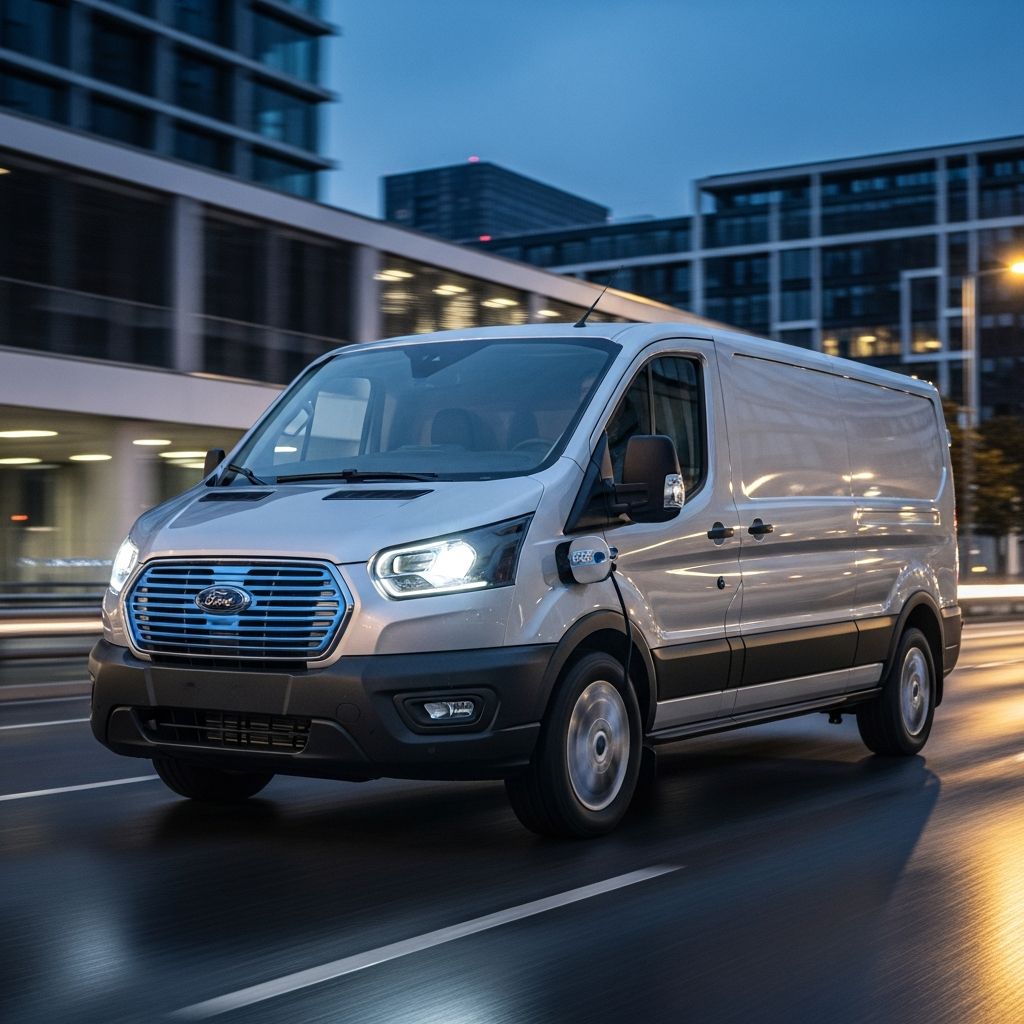
Understanding the 2024 Ford E-Transit Custom: A New Era in Commercial Transportation
The commercial vehicle landscape is undergoing a significant transformation as businesses increasingly seek environmentally responsible alternatives to traditional diesel-powered vans. Ford’s E-Transit Custom represents a pivotal moment in this evolution, combining decades of commercial vehicle expertise with cutting-edge electric propulsion technology. This electric van delivers a compelling proposition for enterprises looking to reduce their carbon footprint while maintaining the practicality and reliability expected from a modern commercial workhorse.
Redefining Commercial Driving Dynamics
The driving experience in the E-Transit Custom stands apart from conventional diesel commercial vehicles. The integration of electric motor technology fundamentally changes how the van behaves on the road, offering a notably smoother and more refined operation. The absence of traditional engine vibrations creates a cabin environment that drivers find noticeably less fatiguing during extended work shifts, which translates to improved safety and productivity on the job.
The van’s suspension architecture plays a crucial role in its superior handling characteristics. Unlike many commercial vehicles that employ live rear axles with leaf springs, the E-Transit Custom features independent rear suspension with semi-trailing arms and gas dampers. This sophisticated setup, combined with a low center of gravity achieved through battery placement, delivers handling that rivals passenger vehicles in many respects. During real-world testing across urban streets, country roads, and highway sections, the van maintained predictable and controlled behavior, instilling confidence in drivers regardless of conditions.
The steering wheel itself incorporates a fold-down table feature that enhances cabin practicality for professionals who need workspace while parked. This thoughtful design element exemplifies how Ford has engineered the E-Transit Custom specifically for working professionals rather than simply converting an existing platform.
Engine Specifications and Power Delivery
The E-Transit Custom presents drivers with two motor options to suit different operational needs. The standard configuration features a 134-horsepower motor producing 308 pound-feet of torque immediately upon acceleration. For businesses requiring more responsive performance, particularly in urban environments, the 217-horsepower variant delivers significantly quicker acceleration during city driving cycles, though peak torque remains consistent across both options.
The single-speed reduction gear transmission eliminates the complexity of traditional multi-gear systems, making the van remarkably straightforward to operate. This simplified drivetrain contributes to easier maintenance and fewer potential points of failure compared to conventional diesel alternatives. The instant torque characteristic of electric motors provides excellent pulling power from stationary positions, making junction exits and maneuver capabilities more responsive than expected for a vehicle of this size.
Battery Technology and Range Considerations
All E-Transit Custom variants incorporate a 64-kilowatt-hour usable battery pack, representing the foundation of the van’s operational capabilities. This battery capacity translates into different range capabilities depending on driving patterns and vehicle trim levels. The official WLTP range varies from 172 to 337 kilometers, with the Limited trim achieving 201 miles and the Sport variant at 195 miles.
Real-world testing provides more practical insights into achievable range. During comprehensive testing with 400 kilograms of payload, the van demonstrated average consumption of 20 kilowatt-hours per 100 kilometers under mixed driving conditions, implying a realistic range of approximately 320 kilometers. Urban-only operations may extend range to 300 kilometers or beyond, while highway driving typically reduces the distance to 200-250 kilometers.
Weather conditions and driving behavior significantly influence battery performance. Colder temperatures and aggressive acceleration will reduce available range compared to moderate conditions, a characteristic common to all electric vehicle types. However, the E-Transit Custom’s efficient motor and battery management system minimize these penalties relative to competing electric vans.
Charging Infrastructure and Home Power Solutions
The integration of Pro Power Onboard technology represents a significant practical advantage for tradespeople and small business operators. This feature converts the E-Transit Custom into a mobile power source, providing electricity to tools and equipment through integrated power sockets. Ford’s testing revealed that operating a circular saw for an hour consumes only approximately 5 kilometers of range, demonstrating the modest power draw of typical work equipment.
Home charging capabilities have been engineered with user-friendliness as a priority consideration. Ford has developed an approach to domestic charging that simplifies the process for operators unfamiliar with electric vehicle technology. This attention to charging convenience represents a crucial factor in the practical adoption of electric commercial vehicles, particularly for small business owners who may be transitioning from diesel fleets.
Operational Cost Analysis
The financial advantages of electric commercial operation present a substantial business case for fleet managers. Ford indicates that operating and maintaining an E-Transit Custom should cost approximately 40 percent less than the equivalent diesel Transit Custom. This reduction encompasses both fuel consumption advantages and dramatically lower maintenance requirements.
Maintenance expense reduction proves particularly significant for long-term fleet economics. Electric motors eliminate the need for oil changes, transmission servicing, and many engine-related maintenance tasks that consume time and resources with diesel vehicles. Testing data suggests maintenance costs for larger electric Transit models total approximately $800 over 120,000 kilometers, compared to $1,600 for diesel equivalents. These savings reflect the mechanical simplicity of electric powertrains, which contain far fewer moving parts requiring periodic attention.
The absence of exhaust fluid systems, spark plugs, and complex emission control equipment further reduces the specialized knowledge and equipment required for vehicle maintenance. This simplification extends vehicle availability and reduces unexpected downtime for commercial operators.
Load Capacity and Cargo Management
The electric configuration preserves cargo capacity comparable to diesel Transit Custom models. The electric motor’s space efficiency, requiring no transmission tunnel beneath the vehicle floor, ensures that load areas remain uncompromised. This represents a significant advantage over front-wheel-drive implementations, which sacrifice floor space to accommodate the driveshaft arrangement.
Testing demonstrated that the van accommodates 400 kilograms of payload while maintaining predictable performance characteristics. The low center of gravity resulting from battery positioning actually improves load handling stability compared to some diesel configurations, contributing to safer driving behavior when fully laden.
The integrated cab design features a steering wheel table that provides portable workspace for professionals managing multiple jobs throughout the day. The redesigned drive selector, implemented as a column stalk rather than a traditional floor-mounted lever, frees valuable cabin space that benefits both driver comfort and practical usability.
Comparison with Competing Electric Commercial Vehicles
| Feature | E-Transit Custom | Volkswagen Caddy Electric | Maxus eDeliver 7 |
|---|---|---|---|
| Battery Capacity | 64 kWh | 68 kWh | 77-88 kWh |
| Official Range | Up to 337 km | ~336 km | ~320 km |
| Power Options | 134-217 hp | 110 hp | Single motor |
| Torque Delivery | 308-415 Nm | 260 Nm | 310 Nm |
The E-Transit Custom maintains competitive positioning within the commercial electric van segment. While battery capacity remains modest compared to some competitors, the refined efficiency of Ford’s electric system delivers range advantages that translate to practical daily usability. The dual motor options provide flexibility that many competitors lack, allowing businesses to select performance characteristics matching their specific operational requirements.
Interior Design and Driver-Centric Features
The cabin environment reflects Ford’s commitment to driver comfort and operational practicality. At first glance, the interior distinguishes itself from the diesel predecessor primarily through the absence of a conventional gear lever. The column-mounted drive selector preserves cabin space while maintaining intuitive operation for drivers accustomed to automatic transmission controls.
Seating arrangements provide comfortable accommodation for driver and two passengers, with bench seating offering adequate width for shared workdays without excessive crowding. Multiple cup holders and storage provisions reflect the practical demands of commercial professionals who consume beverages and personal items throughout working hours. The overall cabin design balances functionality with a more refined atmosphere than traditional commercial vans, reducing fatigue during extended driving periods.
A camera-based central interior mirror replaces the traditional rear-view window, technology that initially appeared gimmicky in passenger vehicles but proves genuinely beneficial for commercial applications. This innovation improves visibility during maneuvering and loading operations while eliminating the structural compromise required for traditional mirror mounting.
Noise Reduction and Environmental Impact
The dramatic reduction in noise levels represents one of the most immediately noticeable differences between electric and diesel commercial operation. Electric motors operate with near-silence compared to combustion engines, while the absence of gear changes and engine vibrations creates a substantially quieter working environment. Urban neighborhoods benefit considerably from this reduction in commercial noise pollution, while driver stress decreases during days spent in congested city environments.
The environmental credentials extend beyond noise reduction to complete elimination of tailpipe emissions. In urban centers where air quality affects both worker health and community well-being, the widespread adoption of electric commercial vehicles would deliver substantial public health benefits. Businesses operating the E-Transit Custom in city environments achieve zero local emissions while serving their commercial purposes.
Practical Considerations for Business Adoption
The E-Transit Custom exhibits limitations that potential operators must carefully evaluate. The lack of a spare tire represents a departure from traditional commercial vehicle equipment, requiring operators to rely on roadside assistance services or alternative tire management solutions. Some businesses may find the range limitations problematic for operations requiring extensive daily mileage without intermediate charging opportunities.
Payload capacity considerations affect certain specialized applications. Comparison with diesel alternatives reveals that payload carrying capability may lag behind some competitors, a factor that specific business types require when evaluating fleet conversion. Operations involving exceptionally heavy cargo loads may benefit from consulting detailed specifications before committing to electric conversions.
The 2300-kilogram towing capacity provides practical utility for businesses requiring occasional equipment transportation, though heavy-duty towing remains better suited to larger diesel commercial vehicles.
Technology Integration and User Experience
Ford’s engineering approach emphasizes user-friendliness throughout the E-Transit Custom experience. The thoughtfully designed controls and straightforward operation appeal to operators transitioning from diesel vehicles without requiring extensive retraining. The single-speed transmission eliminates gear selection complexity, while the familiar vehicle platform architecture maintains operational consistency with existing Ford commercial fleets.
Efficiency monitoring through onboard computer displays provides operators with real-time feedback on consumption patterns. Testing revealed that actual efficiency in real-world conditions often matches or exceeds manufacturer projections, with 3.44 miles per kilowatt-hour translating to 219-mile range during testing cycles. This transparency enables operators to develop realistic operational planning and charging strategies.
Future Considerations and Market Position
The E-Transit Custom occupies a crucial position in the transition toward zero-emission commercial vehicle fleets. As regulatory pressure intensifies and environmental consciousness shapes purchasing decisions, electric options become increasingly essential for competitive businesses. The van’s combination of practical usability, refined driving experience, and operational cost advantages positions it as a serious competitor in the commercial vehicle segment.
Business operators evaluating fleet electrification should consider the E-Transit Custom within the context of their specific operational patterns. Urban delivery businesses with regular charging opportunities will experience optimal economics and performance, while enterprises requiring unlimited daily range may benefit from evaluating hybrid or diesel alternatives alongside pure electric options.
References
- Ford E-Transit Custom Electric Van 2024 Review — Chasing Cars. 2024. https://www.chasingcars.com.au/reviews/vans/ford-e-transit-custom-electric-van-2024-review/
- 2024 Ford E-Transit Review, Pricing, and Specs — Car and Driver. 2024. https://www.caranddriver.com/ford/e-transit-2024
- Ford e-Transit Custom (2024) Review — CompleteVan.ie. 2024. https://www.completevan.ie/van-reviews/ford-e-transit-custom-2024-review/
- Ford e-Transit Custom Review & Buying Guide 2026 — Electrifying. 2026. https://www.electrifying.com/reviews/ford-reviews/e-transit-custom/review
- Ford E-Transit Custom Review — Van Shelving Solutions. 2024. https://vanshelves.co.uk/blogs/van-reviews/ford-e-transit-custom-review
- Review of the Ford E-Transit: A Familiar Face with an Electric Heart — Electric Drives TV. 2024. https://electricdrives.tv/review-of-the-ford-e-transit-a-familiar-face-with-an-electric-heart/
- Ford E-Transit Custom Review — What Van?. 2024. https://www.whatvan.co.uk/van-reviews/ford-e-transit-custom-review/




Read full bio of medha deb