Fiat 500 Facts And Figures: Specs, History, And 2024 EV
Discover the complete story of the Fiat 500, from its 1957 origins to modern electric rebirth, with key specs, history, and performance details.
Fiat 500 Facts and Figures
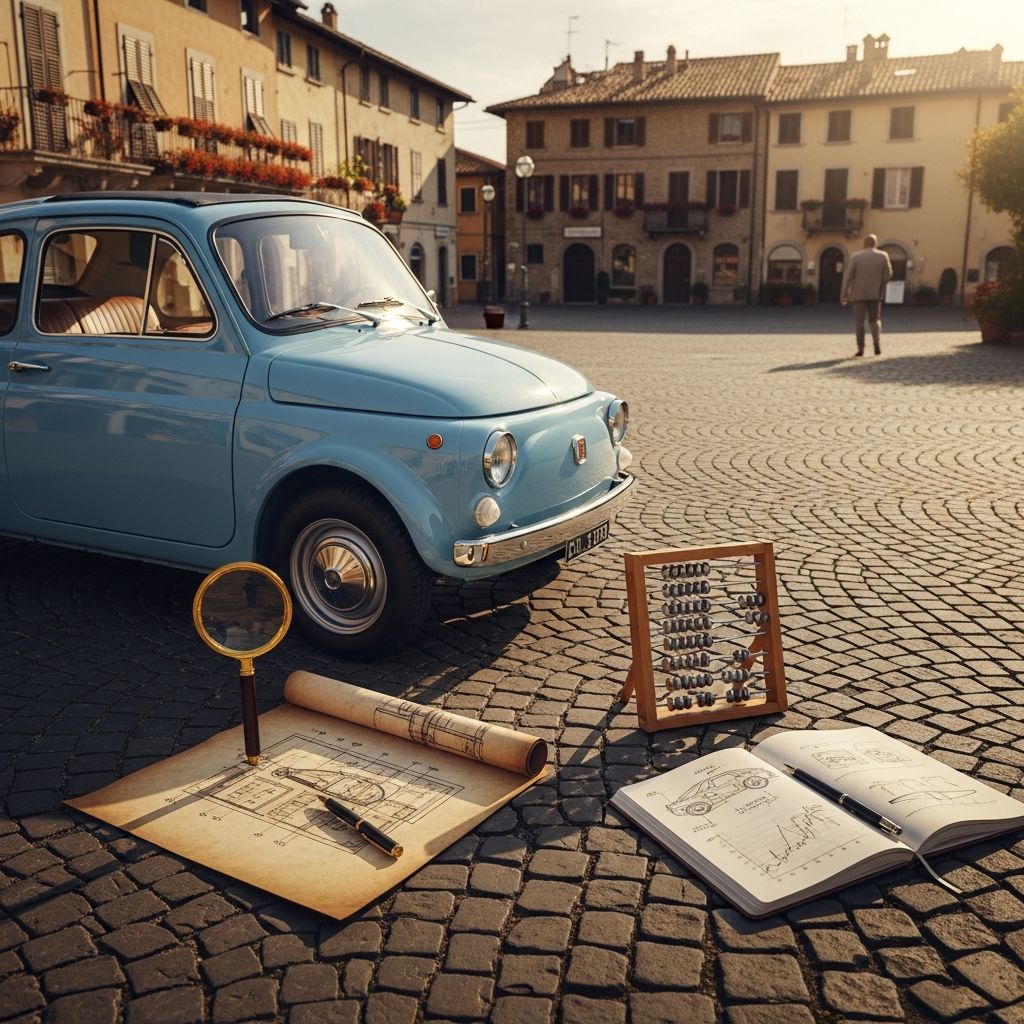
The Fiat 500 stands as one of the most recognizable small cars in automotive history, blending Italian flair with practical urban mobility. Launched in 1957, it evolved through decades, influencing modern compact designs and returning as an electric model. This guide covers its heritage, technical details, variants, and key metrics.
Origins and Historical Significance
The Fiat 500 emerged post-World War II to meet Italy’s demand for affordable transport. Designed by Dante Giacosa, the original “Nuova 500” featured a rear-mounted two-cylinder engine, making it the first true city car. Production ran from 1957 to 1975, with nearly 4 million units built, cementing its status as the “people’s car.”
Its cultural impact extended beyond roads, appearing in films like Roman Holiday and symbolizing Italy’s Dolce Vita era. Today, classics remain popular among collectors due to high production volumes and low costs.
Classic Models and Evolution
The Fiat 500 lineup diversified quickly. Early versions prioritized economy, while later ones added power and luxury.
- Fiat 500N (1957-1960): Featured 479cc engine (13 hp), suicide doors, teardrop indicators, and long roof. Chassis type 110.
- Fiat 500D (1960-1965): Upgraded to 499cc (18 hp), rectangular tail lights, still with suicide doors. Chassis 110D.
- Fiat 500F (1965-1973): Conventional doors, round speedometer, various seat colors. Most produced variant. Chassis 110F.
- Fiat 500L (1968-1972): Luxury model with enhanced interior and larger engine for comfort.
- Fiat 500R (1972-1975): Final iteration with updated dashboard and panels.
Sport versions like the 1958 Sport model offered 21.5 hp and two-tone paint, while variants included estates and vans.
Modern Fiat 500: Revival and Specs
Revived in 2007 for Europe and 2011 for the US, the new Fiat 500 retained retro charm with contemporary tech. It featured a 1.4L MultiAir engine (101-135 hp), front-wheel drive, and options like manual or automatic transmissions.
| Model Year | Engine | Horsepower | Torque | Fuel Economy (City/Hwy) |
|---|---|---|---|---|
| 2012 Base | 1.4L I4 | 101 hp | 98 lb-ft | 31/40 mpg |
| 2012 Abarth | 1.4L Turbo I4 | 160 hp | N/A | 28/34 mpg |
| 2019 Pop | 1.4L I4 | 135 hp | 150 lb-ft | 24/32 mpg |
Dimensions: Length ~3570mm, width ~1627mm, height ~1488mm, seating for 4, cargo 9.5-23.6 cu ft. Curb weight around 2505 lbs. Built in Mexico for US markets.
Performance and Driving Dynamics
Classic 500s topped 53 mph with basic engines, emphasizing agility over speed. Modern versions improved: the Turbo model hit 135 hp with better suspension and brakes. Abarth variants delivered sporty handling, while the 500L added space for five passengers without sacrificing nimbleness.
Fuel efficiency shone, with manuals reaching 38 mpg highway in early 2010s models. The 500e electric variant, launched in California, offered zero-emissions driving with the same stylish package.
Dimensions and Practicality
- Classic: Wheelbase 1940mm, compact for city parking.
- Modern Hatch: 3546mm long, 1627mm wide, ideal for urban use.
- 500L: Larger with extra doors for family practicality.
- Convertible (500c): Retractable roof for open-air fun.
Interior featured seven airbags, Bluetooth, and power features standard.
Electric Future: Fiat 500e
The all-electric 500e revives the name in 2024 for the US, maintaining charm with modern EV tech. Previous 500e was California-exclusive, focusing on eco-friendliness.
Pricing and Ownership Costs
Classic 500s are affordable classics. Modern used 2019 models: Pop ~$10,400, Lounge ~$12,350 fair market. Warranty: 4 years/50,000 miles basic.
Safety and Reliability
Equipped with ABS, stability control, and multiple airbags. JD Power notes performance upgrades in later models.
Why the Fiat 500 Endures
Its blend of style, efficiency, and fun keeps it relevant. From 1957 icon to 2024 EV, it adapts while preserving heritage.
Frequently Asked Questions
What is the original Fiat 500 engine size?
Started at 479cc, upgraded to 499cc.
Is the Fiat 500 still in production?
Gas models discontinued; 500e returns 2024.
How fuel-efficient is the modern Fiat 500?
Up to 32 mpg highway combined.
What makes the Abarth version special?
160 hp turbo engine, tuned suspension.
Are classic Fiat 500s easy to find?
Yes, 3.9 million produced.
References
- FIAT 500 Model Year History — J.D. Power. N/A. https://www.jdpower.com/cars/history/fiat/500
- 10 Facts about the Fiat 500 — Autoweek. N/A. https://www.autoweek.com/car-life/classic-cars/g32346963/10-facts-about-the-fiat-500/
- Icons of Italy: The Fiat 500 — Italy Segreta. N/A. https://italysegreta.com/icons-of-italy-fiat-500/
- Used 2019 FIAT 500 Specs & Features — Edmunds. N/A. https://www.edmunds.com/fiat/500/2019/features-specs/
- 20 Fascinating Facts about the Fiat 500 — Lancaster Insurance. 2021-03-29. https://www.lancasterinsurance.co.uk/news/2021/march/29/20-fascinating-facts-about-the-fiat-500/
Similar Articles


Read full bio of Sneha Tete