Electric Vehicle Charging Infrastructure Challenges
Understanding the widespread reliability crisis affecting EV charging networks
The Growing Reliability Crisis in Public Electric Vehicle Charging Networks
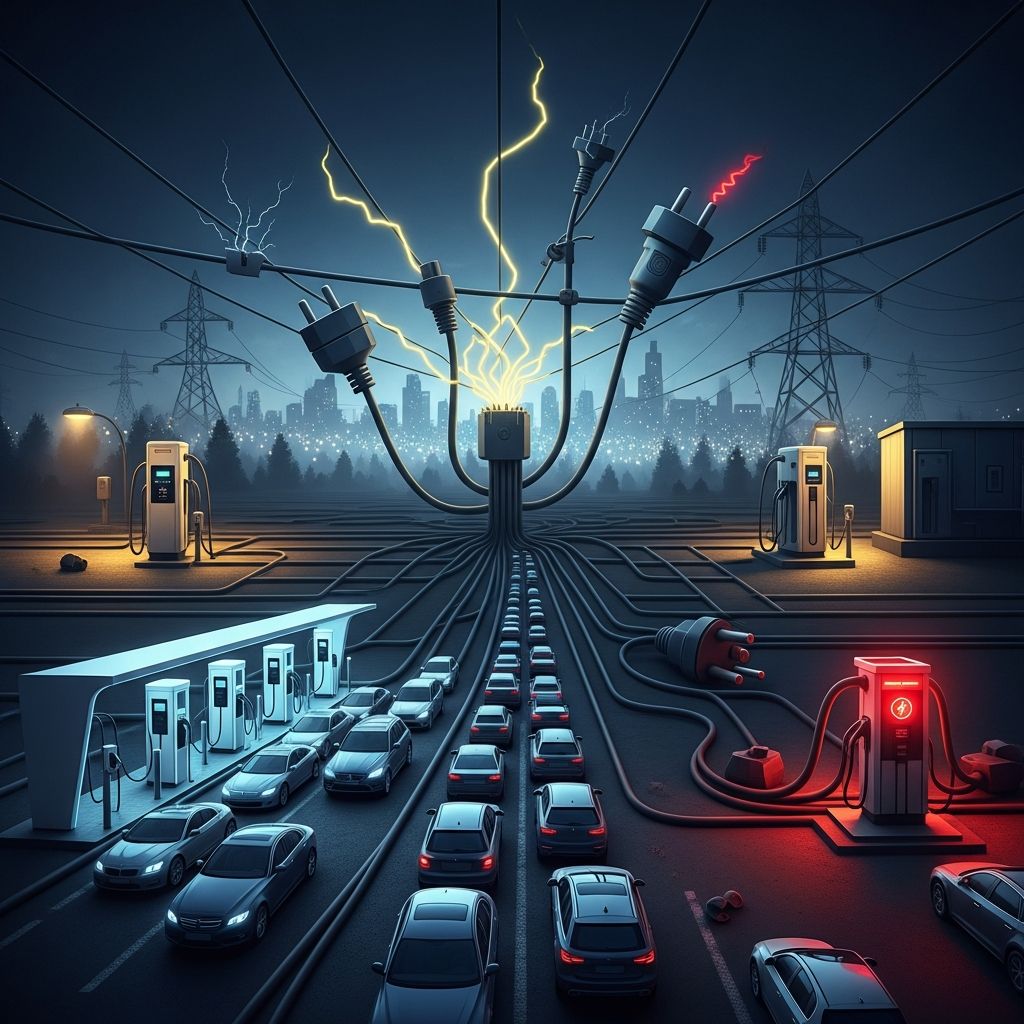
The expansion of electric vehicle adoption across North America has created unprecedented demand for reliable public charging infrastructure. However, a significant gap exists between the number of charging stations installed and their actual operational reliability. Recent studies reveal a troubling reality: approximately one in four public EV chargers fail to function properly when drivers need them most, undermining confidence in electric vehicle ownership and threatening the sustainability of the EV transition.
Understanding the Scale of the Problem
The reliability crisis affecting public EV charging networks is more severe than most consumers realize. According to Harvard Business School research utilizing artificial intelligence models trained on EV user reviews, charging stations across the United States maintain an average reliability score of only 78%, meaning roughly one in five chargers are non-functional. This statistic translates to millions of failed charging attempts annually, creating frustration among EV owners who depend on these networks for daily transportation needs.
The J.D. Power U.S. Electric Vehicle Experience Public Charging Study provides additional context to this challenge. While improvements have been documented—with failure rates declining from 19% to 14% year-over-year—these numbers still represent a substantial barrier to EV adoption. To put this in perspective, if traditional gasoline stations experienced similar failure rates, consumer satisfaction would plummet, yet EV drivers have become somewhat accustomed to these inadequate service levels.
Consumer Reports’ EV Charging Community research indicates that electric car owners encounter problems during approximately one in every five public charging sessions. This frequency of failure demonstrates that infrastructure reliability remains a critical impediment to mainstream EV adoption and represents one of the most significant barriers preventing consumers from transitioning away from internal combustion engine vehicles.
Identifying the Root Causes of Charging Failures
Charging station malfunctions stem from multiple interconnected sources, creating a complex maintenance challenge that extends beyond simple hardware replacement. Understanding these causes is essential for developing effective solutions.
Hardware and Physical Damage
Physical deterioration represents one of the most prevalent sources of charging station failures. Damaged charging cables, malfunctioning connectors, and worn internal components account for a substantial portion of non-functional chargers. Environmental factors including extreme weather, freeze-thaw cycles, and exposure to salt in winter climates accelerate hardware degradation. Additionally, user error—such as improper cable handling or connector damage—contributes to the hardware failure problem.
According to Consumer Reports data, 76% of hardware-related problems involve broken or unresponsive screens and error messages. These interface failures prevent drivers from initiating charging sessions or receiving feedback about station status, rendering the charger effectively unusable regardless of whether the core charging mechanism functions properly.
Software and Communication Failures
Beyond physical components, software malfunctions create pervasive reliability issues. Communication breakdowns between vehicles, chargers, and central servers result in authentication failures and payment processing errors. Additionally, inaccurate software reporting generates what industry professionals call “ghost chargers”—stations that appear operational in mobile applications but fail to function when drivers arrive.
The ChargerHelp Reliability Report indicates that up to 16% of chargers display false status information, misleading drivers about availability and functionality. This software-related problem proves particularly frustrating because it creates the illusion of infrastructure reliability while delivering disappointment in real-world scenarios.
Payment System Complications
Payment authorization represents another significant failure point within the EV charging ecosystem. Multiple touchpoints—including service providers, payment processors, electrical utilities, and vehicle systems—create numerous opportunities for errors. When any component in this payment chain malfunctions, drivers cannot initiate charging despite the charger hardware functioning properly.
The Impact on EV Adoption and Driver Satisfaction
Unreliable charging infrastructure creates cascading negative effects throughout the EV ecosystem. While vehicle reliability has improved substantially, charging infrastructure inadequacy remains a critical barrier to mainstream adoption. Drivers investing in expensive electric vehicles face the frustration of discovering that readily available charging networks cannot reliably support their transportation needs.
Geographic disparities in reliability further complicate this problem. Research indicates that drivers in the Pacific region experience a 21% failure rate, while those in the East South Central region encounter only 7% failures. Major metropolitan areas show even starker variations: Seattle and Los Angeles report 25% and 24% failure rates respectively, while Denver drivers experience only 14% failures. These regional differences suggest inconsistent maintenance standards and operational practices across charging networks.
Satisfaction metrics reflect the human impact of these reliability challenges. While reliability has improved, overall satisfaction with public charging has declined, with DC fast charging satisfaction dropping 10 points and Level 2 charging satisfaction falling 7 points on J.D. Power’s satisfaction scale. Beyond reliability concerns, charging costs and payment ease have emerged as significant dissatisfaction drivers, creating a compound problem where even functional chargers fail to deliver satisfactory customer experiences.
Comparative Performance Across Charging Networks
Not all charging networks perform equally. Consumer Reports data reveals substantial variations in reliability across different operators:
| Charging Network | Problem Session Rate | Reliability Status |
|---|---|---|
| Tesla Superchargers | 4% | Highest reliability |
| Rivian Adventure Network | 5% | Highest reliability |
| Blink Network | 41% | Significant problems |
| EVgo Network | 43% | Significant problems |
| Shell Recharge | 48% | Most problematic |
The dramatic performance differences suggest that network size, proprietary technology, and operational investment levels significantly influence reliability outcomes. Tesla’s vertical integration and direct control over its charging infrastructure enables superior performance compared to third-party networks operating on standardized hardware and protocols.
Emerging Solutions and Innovative Approaches
Recognizing the systemic nature of charging infrastructure challenges, entrepreneurial companies have developed technology platforms designed to revolutionize network maintenance and reliability standards. These solutions address the root cause identified by Harvard researchers: insufficient maintenance and operator training.
Proactive Maintenance Technologies
Advanced diagnostic platforms utilize real-time monitoring capabilities to identify charging station problems before they impact drivers. These systems continuously analyze performance data, detecting anomalies that indicate impending failures or existing malfunctions. By enabling preventative maintenance, these technologies reduce downtime and improve overall network reliability.
Technician Training and Network Development
Innovative companies are establishing trained technician networks specifically focused on charging station maintenance and repair. Rather than expecting individual station operators to possess specialized knowledge, these services provide professional expertise accessible across multiple networks. This approach democratizes maintenance quality, ensuring that independent operators can access the same level of service sophistication as large corporate networks.
Real-Time Status Reporting
Software solutions that eliminate “ghost chargers” through accurate real-time status reporting represent another critical advancement. These platforms integrate directly with charging networks to provide drivers with reliable information about station availability, functionality, and operational status.
The Path Forward: Industry Standards and Accountability
Addressing the charging infrastructure crisis requires coordinated effort across multiple stakeholders. Industry observers emphasize that without dramatic improvements in maintenance standards and operational consistency, EV adoption growth will stagnate. Several strategic approaches show promise:
- Establishing National Reliability Standards: Uniform performance benchmarks would create accountability across charging networks and incentivize consistent maintenance practices.
- Implementing Mandatory Monitoring Systems: Requiring real-time diagnostics and status reporting would prevent ghost charger problems and enable rapid response to failures.
- Creating Technician Certification Programs: Professional standards for charging station maintenance would professionalize the field and improve service quality.
- Developing Regional Maintenance Networks: Distributed technician networks would provide geographic coverage and reduce response times to station failures.
- Improving Payment Integration: Standardized, interoperable payment systems would reduce authentication failures and enhance user experience.
Frequently Asked Questions
What percentage of EV chargers are currently non-functional?
Research indicates that approximately 14-22% of public EV charging attempts fail, with variations depending on methodology and geographic region. Some studies report that up to one in four chargers may be non-operational at any given time.
Why do chargers show as available when they’re actually broken?
Inaccurate software reporting occurs when chargers fail to communicate their true status to mobile applications and central databases. These “ghost chargers” appear operational due to outdated status information or communication failures between the charger and the network.
Which charging networks are most reliable?
Tesla Superchargers (4% failure rate) and Rivian’s Adventure Network (5% failure rate) demonstrate substantially higher reliability than third-party networks like Shell Recharge (48%), EVgo (43%), and Blink (41%).
What’s the most common cause of charging failures?
The charger being out of service or malfunctioning accounts for approximately 60% of failed charging visits, followed by payment system problems and hardware issues.
Are charging networks getting more reliable?
Yes, recent data shows improvement, with failure rates declining from 19% to 14% year-over-year. However, satisfaction metrics have declined despite improved reliability, suggesting that cost and payment issues now represent primary dissatisfaction drivers.
Conclusion: The Imperative for Infrastructure Excellence
The reliability crisis affecting public EV charging networks represents one of the most significant obstacles to mainstream electric vehicle adoption. While technological improvements and innovative maintenance solutions show promise, broader industry transformation remains necessary. As EV adoption accelerates, charging infrastructure reliability must match the expectations consumers have developed through decades of reliable gasoline station networks. The competitive advantage will accrue to companies and networks that prioritize reliability, standardize maintenance practices, and invest in professional technician networks. Ultimately, the transition to electric vehicles depends not only on vehicle technology advancement but equally on the development of trustworthy, consistently functional charging infrastructure that drivers can depend upon.
References
- The Scary Truth About EV Charger Reliability (And How to Fix It) — ChargerHelp. 2024. https://www.chargerhelp.com/post/the-scary-truth-about-ev-charger-reliability-and-how-to-fix-it/
- The state of EV charging in America: Harvard research shows EV chargers less reliable than gas pumps — Harvard Business School. 2023. https://www.hbs.edu/bigs/the-state-of-ev-charging-in-america
- Study: EV Charging More Reliable, Less Satisfying — Kelley Blue Book. 2025. https://www.kbb.com/car-news/study-ev-charging-more-reliable-less-satisfying/
- Electric Vehicle Charging Station Reliability — CLEAResult. 2024. https://www.clearesult.com/sites/default/files/2024-05/EV-WATTS_White-Paper_Charging-Station-Reliability.pdf
- EV charger reliability improves, but high costs still dent satisfaction — Utility Dive. 2025. https://www.utilitydive.com/news/jd-power-ev-charging-reliability-improves/759018/
- Most Common EV Charging Problems and How to Avoid Them — Consumer Reports. 2024. https://www.consumerreports.org/cars/hybrids-evs/most-common-ev-charging-problems-and-how-to-avoid-them-a1108537217/
Similar Articles




Read full bio of Sneha Tete