ECU Guide: Functions, Issues, and Tuning
Discover how Electronic Control Units power modern vehicles, from core operations to troubleshooting faults and performance enhancements.
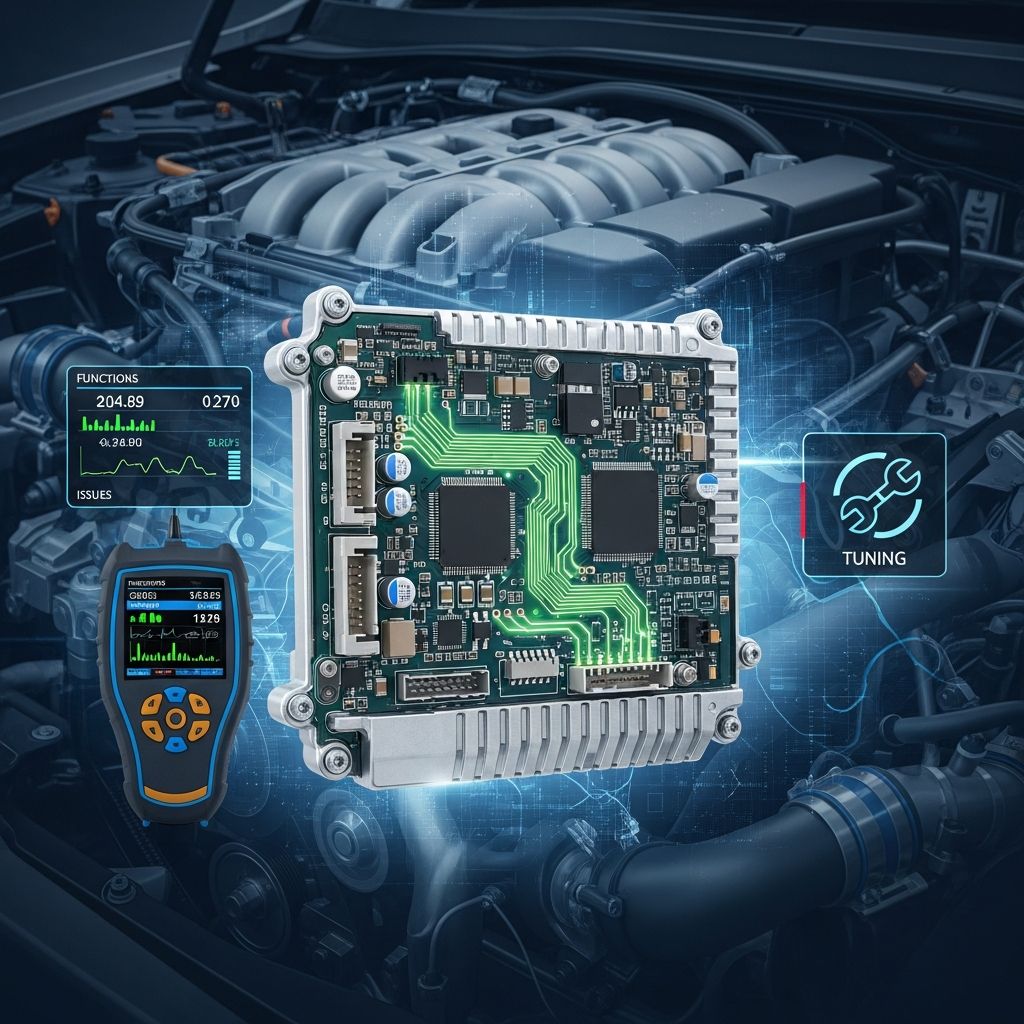
Electronic Control Units (ECUs) serve as the central nervous system in contemporary automobiles, orchestrating everything from engine performance to safety systems. These compact computers process data from numerous sensors to make split-second decisions that ensure smooth operation, fuel economy, and compliance with emissions standards.
The Core Role of ECUs in Vehicle Operation
At its essence, an ECU is a microcontroller embedded with software that interprets sensor inputs and commands actuators to adjust vehicle functions dynamically. Modern cars can house over 100 such units, each dedicated to specific tasks like engine management, transmission control, or braking systems. The primary ECU, often called the Engine Control Module (ECM) or Powertrain Control Module (PCM), focuses on optimizing combustion processes.
Sensors feed real-time data on parameters such as air intake temperature, throttle position, oxygen levels in exhaust, crankshaft rotation, and coolant temperature. The ECU uses pre-programmed maps—numeric tables and algorithms—to calculate ideal fuel delivery, spark timing, and valve operations. For instance, during cold starts, it enriches the fuel mixture to aid ignition while minimizing emissions through precise warm-up cycles.
Key Functions Managed by the Primary Engine ECU
- Fuel Injection Precision: Determines the exact amount and timing of fuel sprayed into cylinders based on load, speed, and environmental factors for maximum efficiency.
- Ignition Timing Control: Advances or retards spark to prevent knocking, adapt to altitude, and boost power output.
- Idle Speed Regulation: Maintains stable RPM when stationary, preventing stalling by adjusting throttle and fuel.
- Emissions Management: Oversees EGR valves and catalytic converters to reduce pollutants like NOx and CO.
- Power Management: Regulates internal voltages from the car’s 12V battery to power microprocessors and peripherals safely.
Beyond the engine, dedicated ECUs handle transmission shifts for seamless gear changes, ABS for wheel lock prevention via brake modulation, and even infotainment for media playback. In electric vehicles, ECUs manage battery discharge, motor torque, and regenerative braking.
Types of ECUs Across Automotive Systems
| ECU Type | Primary Functions | Key Sensors/Actuators |
|---|---|---|
| Engine Control Unit (ECM/PCM) | Fuel, ignition, emissions | MAF, O2, crankshaft sensors; injectors, coils |
| Transmission Control Unit (TCU) | Gear shifting, torque converter | Speed, throttle sensors; solenoids |
| Anti-lock Braking System (ABS) | Brake pressure modulation | Wheel speed sensors; valves |
| Body Control Module (BCM) | Lights, locks, windows | Door switches; motors |
This modular design allows for specialized control, improving reliability as a failure in one unit doesn’t cascade to others.
Common ECU Malfunctions and Their Symptoms
ECUs are robust but not infallible. Faults often stem from electrical surges, water ingress, overheating, or sensor degradation. Minor issues may go unnoticed as the ECU self-adapts, but severe ones trigger warning lights or limp mode—reduced power to protect the engine.
- Sensor Failures: Faulty mass airflow or oxygen sensors send erroneous data, causing rough idling, poor acceleration, or increased fuel use. Diagnosis involves OBD scanners reading fault codes.
- Power Supply Problems: Voltage irregularities from weak batteries or alternators can corrupt ECU memory or halt operations.
- Software Glitches: Infotainment ECUs may freeze, requiring resets, while engine units store diagnostic trouble codes (DTCs) for retrieval.
- Hardware Wear: Capacitors degrade over time, leading to intermittent failures, especially in high-mileage vehicles.
Self-diagnostic features monitor inputs/outputs hundreds of times per second, flagging deviations and storing codes for mechanics.
Diagnosing and Resolving ECU Faults
Start with an OBD-II scanner to pull codes, which pinpoint issues like P0300 (misfire) or P0171 (lean mixture). Visual checks for corrosion or loose wiring follow. Sensor tests use multimeters; replacements are straightforward but must match OEM specs.
For ECU-specific faults, bench testing simulates vehicle conditions. Reflashing software via dealer tools can fix corrupted maps. In rare total failures, replacement costs $500–$2000, often including reprogramming to the VIN. Regular maintenance like clean sensors and stable batteries prevents most issues.
Enhancing Performance Through ECU Tuning
ECU remapping reprograms fuel, ignition, and boost maps to unlock hidden potential, increasing horsepower by 10-30% and torque similarly. Paired with hardware upgrades like exhausts or intakes, gains amplify.
Modern tuning connects laptops via OBD ports to upload custom maps, replacing ‘chipping’ of old eras. Standalone ECUs offer full flexibility for race builds. Benefits include sharper throttle response and economy improvements up to 5% in eco-tunes.
Risks and Best Practices in Tuning
- Choose reputable tuners to avoid engine damage from overly aggressive maps.
- Warranty voids are common; some insurers hike premiums.
- Track emissions legality—many regions require stock maps for inspections.
Hybrid tuning with piggyback modules overlays adjustments without altering the base ECU.
Future Trends: Smarter, Connected ECUs
Advancing ECUs integrate AI for predictive maintenance, over-the-air updates, and ADAS features like adaptive cruise. In autonomous vehicles, they fuse data from cameras/LiDAR for real-time decisions. Cybersecurity looms large, with firewalls against hacking.
Frequently Asked Questions (FAQs)
What happens if my ECU fails completely?
The engine may not start, or the car enters limp mode with limited power. Tow to a specialist for diagnosis.
Can I tune my ECU myself?
Software exists for DIY, but professional dyno-testing ensures safety and optimal results.
How long do ECUs last?
Typically 100,000+ miles with proper care; infotainment units fail sooner.
Does ECU tuning improve fuel economy?
Yes, economy maps can boost MPG by optimizing mixtures, though performance tunes may reduce it.
Are all cars equipped with ECUs?
Post-1980s models yes; pre-electronic vehicles used carburetors mechanically.
References
- ECU (Electronic Control Unit) explained — ECU Testing. 2023. https://www.ecutesting.com/categories/ecu-explained/
- Understanding the Operation of ECU — Monte Tuning Blog. 2024. https://blog.montetuning.com/understanding-the-operation-of-ecu/
- What is an ECU? Car Electronic Control Units from functions to… — Auto Express. 2023-05-01. https://www.autoexpress.co.uk/tips-advice/366497/what-ecu-car-electronic-control-units-functions-problems-and-tuning
- What is Electronic Control Unit in Automotive Systems? — Total Phase. 2024-05-15. https://www.totalphase.com/blog/2024/05/what-is-electronic-control-unit-automotive-systems/
- What Does an ECU (Engine Control Unit) Do in a Car? — Gil’s Garage. 2023. https://www.gilsgarage.com/blog/what-does-an-ecu-engine-control-unit-do-in-a-car
- Electronic control unit (ECU): Purpose and function — YouTube (Society of Automotive Engineers reference). 2022. https://www.youtube.com/watch?v=w_ENU0rE5DI
- What Is an Electronic Control Unit? — Aptiv. 2024. https://www.aptiv.com/en/insights/article/what-is-an-electronic-control-unit
Similar Articles





Read full bio of Sneha Tete