Double Cab Pickup Tax Shift Explained
Understand the 2025 UK tax overhaul for double cab pickups and how it reshapes business vehicle choices with higher costs and new strategies.
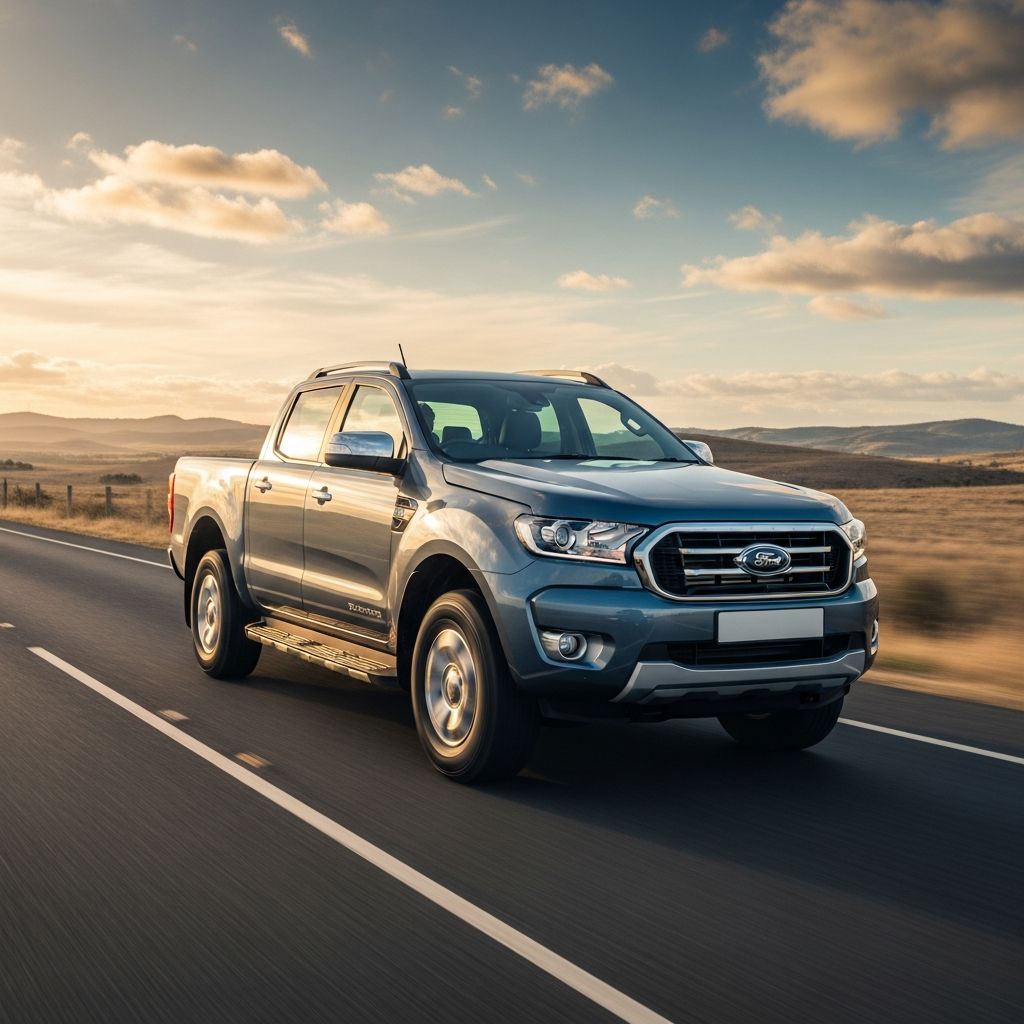
Starting April 2025, UK double cab pickup trucks with payloads of one tonne or more face a seismic tax reclassification from light commercial vehicles to passenger cars, dramatically altering tax treatments for businesses and employees.
Background on the Policy Overhaul
The Autumn Budget 2024 finalized this shift after earlier policy wobbles, confirming that these versatile workhorses—popular in construction, agriculture, and trades—will no longer enjoy commercial vehicle tax perks.
Previously, double cabs qualified as vans due to their payload capacity, allowing full expensing and low flat-rate taxes. Now, HMRC treats them as cars designed for both passengers and goods, per updated manuals like CA23510 and CA23511.
This affects corporation tax from 1 April 2025 and income tax from 6 April 2025, impacting purchases, leases, employee perks, and running costs.
Core Tax Impacts Breakdown
The reclassification ripples through multiple tax areas, raising costs significantly for most users.
Capital Allowances Transformation
Businesses could once claim 100% first-year allowances on double cabs as commercial vehicles, deducting full cost against profits immediately.
Post-2025, they fall under car rules: main rate pool at 6% annual writing-down allowance (18% for ultra-low emission <50g/km CO2), or special rate pool at 6% for high emitters.
This slows cost recovery, tying up cash flow—especially painful for diesel-dominated models with high CO2.
Benefit-in-Kind (BIK) Surge
Company drivers currently pay a fixed £3,960 BIK for private use of double cabs as vans, plus £769 fuel benefit.
From 2025/26, BIK shifts to car bands: list price multiplied by CO2-based percentage (e.g., 30-37% for typical diesels), potentially tripling or quadrupling bills to over £10,000 annually for premium models.
Employers face higher National Insurance too, amplifying fleet costs.
Expense Deductions and Leasing Limits
Running costs like fuel and maintenance were fully deductible pre-2025. Now, car rules cap deductions, especially for high-CO2 vehicles.
Leasing sees ‘restriction of hiring costs’ for emitters over 50g/km, disallowing excess over statutory amounts—another hit for financed double cabs.
| Tax Area | Pre-2025 (Van Treatment) | Post-2025 (Car Treatment) |
|---|---|---|
| Capital Allowances | 100% first-year allowance | 6-18% annual writing-down |
| BIK Rate | Fixed £3,960 | CO2-based % of list price (20-37%) |
| Fuel Benefit | Fixed £769 | CO2-based % of max list price |
| Lease Restrictions | None | Applied for >50g/km CO2 |
Transitional Relief Measures
HMRC offers buffers for pre-2025 commitments, softening the blow.
- Capital Allowances: Contracts before 1 April 2025 (corp tax) or 6 April 2025 (income tax), with spend by 1 October 2025, retain van status.
- BIK Protection: Vehicles bought, leased, or ordered pre-6 April 2025 keep old rates until sale, lease end, or 5 April 2029—whichever first.
- VAT Unaffected: Payload-based van treatment persists for VAT recovery.
Businesses should audit contracts now to lock in relief.
Industry-Wide Repercussions
Sectors reliant on double cabs—like farming, building, and landscaping—face tough choices as costs climb 2-3x.
- Higher procurement/operating expenses strain margins.
- Fleet managers pivot to single-cab pickups (still vans if >1 tonne payload), panel vans, or electric options with 2% BIK rates.
- Used market may flood with ex-fleet double cabs, dropping prices—potential win for private buyers.
Electric/hybrid pickups gain appeal via lower BIK bands, though infrastructure lags in rural areas.
Strategic Planning for Businesses
Immediate Actions
- Review fleet: Identify eligible transitional vehicles.
- Accelerate 2024/25 purchases/orders for relief.
- Model post-tax costs using HMRC calculators.
Long-Term Alternatives
- Single-Cab or Chassis-Cab: Retain van tax if payload qualifies.
- Traditional Vans: Lower BIK, full allowances.
- Electrification: Ford Ranger PHEV or Rivian R1T previews tax-efficient future.
- Contract Hire Review: Negotiate early termination or switches.
Consult tax advisors for bespoke modeling, as individual CO2 and usage vary impacts.
Key Dates Timeline
| Date | Milestone |
|---|---|
| 1 April 2025 | Corporation tax reclassification starts |
| 6 April 2025 | Income tax/BIK changes effective |
| 1 October 2025 | Capital allowance transition deadline |
| 5 April 2029 | BIK relief end date |
FAQs on Double Cab Tax Changes
What payloads are affected?
Only double cabs with 1 tonne+ payload shift to car status; lighter ones may differ.
Does this apply to imports?
Yes, if meeting payload criteria and used in UK business.
Can I modify vehicles to qualify?
HMRC assesses ‘primary construction’—mods rarely override design for passengers/goods.
What about zero-emission models?
They benefit from lower BIK (2-5%) but lose full commercial allowances.
Private owners impacted?
Minimal direct hit; indirect via higher used prices or resale values.
Future Outlook and Adaptations
As 2025 nears, expect manufacturer responses: more single-cab variants, EV pushes, and pricing tweaks.
Businesses thriving will blend compliance with innovation—swapping double cabs for tax-smart fleets while maintaining capability. Policymakers aim to curb ‘van life’ private use, prioritizing genuine commercial needs.
Stay informed via HMRC updates; proactive planning turns this hurdle into optimization opportunity.
References
- New Tax Rules for Double Cab Pick-Up Trucks — SMH Group. 2024. https://smh.group/new-tax-rules-for-double-cab-pick-up-trucks/
- April 2025 | Double Cab Pick-Up Tax Changes Explained — Bumper. 2025-04-06. https://www.bumper.co/blog/double-cab-pick-up-tax-changes
- Changes to tax rules for double cab pickups take effect – what you need to know — ICAS. 2025. https://www.icas.com/news-insights-events/news/tax/changes-to-tax-rules-for-double-cab-pickups-take-effect-what-you-need-to-know
- Double Cab Pick ups – What is happening in 2025 with the tax — Kimberley Shapcott Property Tax and Accountancy (YouTube). 2024. https://www.youtube.com/watch?v=RDPuVrz_9zA
- Pickup truck tax changes – what do they mean for different types of rural business — Farmers Guardian. 2024. https://www.farmersguardian.com/feature/4413701/pickup-truck-tax-changes-mean-different-types-rural-business
Similar Articles








Read full bio of medha deb