Daihatsu Sirion Rally IV: Ultimate Rally Hatch
Discover the 2003 Daihatsu Sirion Rally IV, a lightweight AWD supermini that outaccelerates premium sedans with its tuned Toyota engine and rally-ready specs.
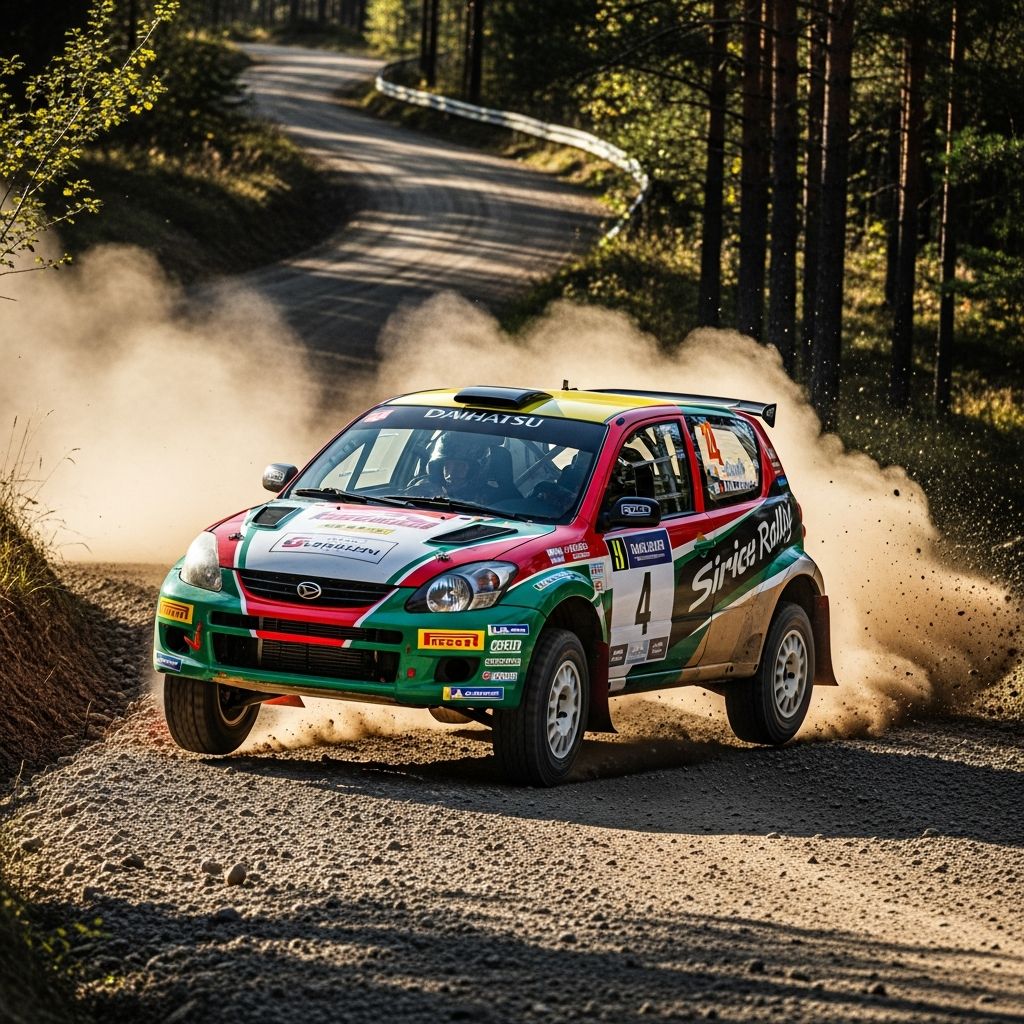
The Daihatsu Sirion Rally IV stands as a testament to innovative engineering in the early 2000s supermini segment. Launched in 2003 exclusively for the UK market, this limited-edition hatchback transformed the humble Sirion into a rally-inspired powerhouse. With its all-wheel-drive system, potent 1.3-liter engine, and featherweight construction, it delivered performance that rivaled cars from much larger manufacturers.
Origins and Development of a Rally Legend
Daihatsu, known for compact and reliable vehicles, drew inspiration from Japan’s kei car culture and rally heritage to create the Sirion Rally IV. Building on the first-generation Sirion (M101 chassis, 1998-2004), this variant targeted enthusiasts seeking more than standard front-wheel-drive commuting. The Rally IV evolved from previous Rally models like the Rally II, introducing four-wheel drive for superior traction—a key upgrade for wet UK roads and spirited driving.
Development focused on enhancing the base Sirion’s capabilities without ballooning costs or size. Daihatsu engineers sourced a proven 1.3-liter inline-four engine from the Toyota Yaris lineup, tuning it for higher output. This collaboration highlighted Daihatsu’s position within the Toyota group, allowing access to refined components. The result was a car weighing just 900 kg, with a compact wheelbase of 2345 mm, making it agile on twisty B-roads.
Powertrain and Performance Breakdown
At the heart of the Sirion Rally IV lies a 1298 cc DOHC inline-four engine producing 109 hp (81 kW) at 6000 rpm and 142 Nm of torque at 4600 rpm. This setup outpowered the standard Sirion’s 1.3-liter unit and even surpassed the Yaris T Sport’s 1.5-liter in peak power density. Paired with a close-ratio five-speed manual gearbox, it enabled explosive acceleration: 0-60 mph in 8.9 seconds (some tests claim 8.6 seconds) and a top speed of 112 mph.
Comparatively, this shaved time off a BMW 520i’s 9.2-second sprint, a remarkable feat for a sub-compact hatch. The all-wheel-drive system, unlike the lighter front-wheel-drive Rally II (850 kg), added 50 kg but provided unmatched grip, especially with power upgrades in simulations or real-world tuning. Tires sized 175/60 R14 balanced road manners with rally aggression.
| Performance Metric | Sirion Rally IV | BMW 520i (Contemporary) | Yaris T Sport |
|---|---|---|---|
| 0-60 mph | 8.9 s | 9.2 s | ~8.7 s |
| Power | 109 hp | ~170 hp | 106 hp |
| Weight | 900 kg | ~1500 kg | ~1050 kg |
| Drivetrain | AWD | RWD | FWD |
This table illustrates the Rally IV’s efficiency: lighter weight and AWD traction allowed it to punch above its power figures.
Bold Exterior and Rally-Ready Styling
Visually, the Sirion Rally IV ditched subtlety for bulbous, aggressive flares. Wide body kits, oversized wheel arches, and rally decals gave it a planted stance, evoking Group N rally cars. Front and rear bumpers featured integrated fog lights and spoilers for downforce, while roof rails and side skirts enhanced the adventure-ready look. Available in vibrant colors like Rally Red or Yellow, it turned heads on dealer lots.
- Key Styling Features: Bulbous arches for wider track, aggressive front splitter, rear diffuser, roof-mounted spoiler.
- Wheels and Tires: 14-inch alloys with low-profile rubber for sharp handling.
- Badging: Prominent ‘Rally IV’ emblems and Daihatsu script.
These elements not only improved aerodynamics but also signaled its performance intent, setting it apart from vanilla Sirions.
Interior Comfort Meets Driver Focus
Inside, the cabin prioritized functionality with supportive Recaro-style bucket seats, grippy steering wheel, and aluminum pedals. The five-door layout offered practicality for four adults, with 250 liters of boot space expandable via folding rear seats. Analog gauges featured a prominent tachometer redlining at 7000 rpm, and blue rally graphics lit the dials at night.
Despite its sporty bent, it retained supermini virtues: air conditioning, electric windows, and a CD stereo. Build quality reflected Japanese precision, with durable plastics and tight panel gaps. The short-throw shifter and precise clutch made it engaging for daily drives or track days.
Handling Dynamics and On-Road Prowess
The Rally IV’s 4WD system distributed torque intelligently, minimizing understeer in corners. Suspension was uprated with stiffer springs and dampers, lowering the center of gravity for flat cornering. Independent MacPherson struts front and rear, plus anti-roll bars, delivered go-kart-like responsiveness. Braking came from ventilated discs upfront, hauling the light chassis to a stop confidently.
Reviews praised its balance: neutral handling, quick turn-in, and AWD stability in the rain. Power delivery was linear, peaking mid-range for overtakes. Fuel economy hovered at 40-45 mpg combined, impressive for its output.
Market Reception and Limited Availability
Priced around £13,000-£15,000 in 2003, the Rally IV undercut hot hatches like the Peugeot 206 GTI while offering unique AWD. UK sales were limited, making survivors rare today—many cherished by collectors. It appealed to buyers tired of predictable FWD superminis, bridging daily driver and weekend warrior roles.
In gaming circles like Gran Turismo, it gained cult status for upgradability, where AWD shone with tuning. Real-world owners report reliability, with the Toyota-derived engine often exceeding 150,000 miles.
Technical Specifications at a Glance
- Engine: 1.3L L4 DOHC, 109 hp @ 6000 rpm, 142 Nm @ 4600 rpm
- Transmission: 5-speed manual, close-ratio
- Drivetrain: Permanent AWD
- Dimensions: Wheelbase 2345 mm, Length ~3600 mm, Weight 900 kg
- Performance: 0-60 mph 8.9 s, Top Speed 112 mph
- Fuel Economy: ~42 mpg (combined)
Legacy and Modern Relevance
Though Daihatsu exited Europe in 2013, the Sirion Rally IV endures as a fun, modifiable classic. Its lightweight AWD formula prefigured modern crossovers like the Suzuki Swift Sport Hybrid. Today, values range £3,000-£8,000 for good examples, rewarding preservation efforts. Enthusiasts tune for more power, fitting turbo kits or suspension upgrades while retaining originality.
In an era of heavy EVs, the Rally IV reminds us of pure, mechanical joy—affordable thrills without emissions tech baggage.
Frequently Asked Questions (FAQs)
What makes the Daihatsu Sirion Rally IV special?
Its rare AWD in a 900 kg supermini, 109 hp Toyota engine, and 8.9s 0-60 mph time that beats pricier rivals.
Is the Rally IV faster than the standard Sirion?
Yes, significantly: tuned engine, AWD, and gearbox yield quicker acceleration despite added weight.
How reliable is the Sirion Rally IV?
Highly, thanks to Toyota-sourced components; many exceed 150,000 miles with basic maintenance.
Can I still buy a Rally IV today?
New? No, it’s 2003-only. Used market has low-mileage gems for collectors.
What’s the top speed and economy?
112 mph top speed, around 42 mpg combined—efficient for performance.
References
- Daihatsu Sirion Rally IV — Auto Express. 2003. https://www.autoexpress.co.uk/daihatsu/sirion/15203/daihatsu-sirion-rally-iv
- Daihatsu Sirion Rally IV 2003 — GTPlanet. 2021-10-18. https://www.gtplanet.net/forum/threads/daihatsu-sirion-rally-iv-2003.329757/
- Daihatsu Sirion Rally IV UK-spec (M101) ‘2003 — WheelsAge.org. N/A. https://en.wheelsage.org/category/limited-editions/daihatsu_sirion_rally_iv
- File:Daihatsu Sirion Rally 4.jpg — Wikimedia Commons. 2003. https://commons.wikimedia.org/wiki/File:Daihatsu_Sirion_Rally_4.jpg
- Daihatsu Sirion Rally 4 — Daihatsu-Club.net. 2003. https://cs.daihatsu-club.net/gallery_detail.php?id=163
- 2004 Daihatsu Sirion Rally IV Specs — Automobile-Catalog.com. 2004. https://www.automobile-catalog.com/car/2004/575360/daihatsu_sirion_rally_iv.html
- Daihatsu Sirion — Wikipedia (Spanish). 2023. https://es.wikipedia.org/wiki/Daihatsu_Sirion
Similar Articles


Read full bio of medha deb