Daewoo Kalos: Comprehensive Review & Buyer’s Guide
Discover the strengths and weaknesses of the Daewoo Kalos compact sedan
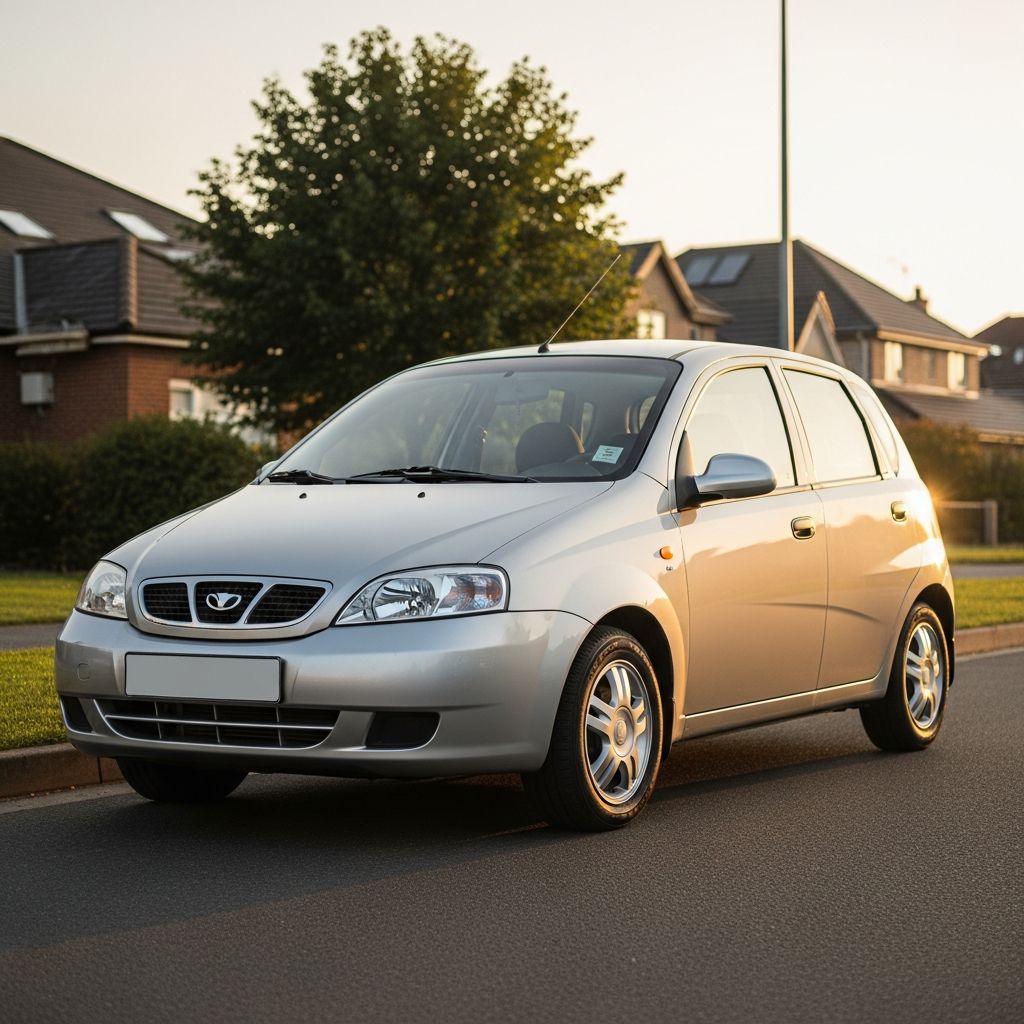
The Daewoo Kalos emerged as an intriguing entry in the compact sedan market, representing the Korean manufacturer’s attempt to challenge established competitors through aggressive pricing and contemporary styling. Designed by renowned Italian stylist Giugiaro, the Kalos captured attention with its proportionate appearance and distinctive front-end treatment. However, the vehicle’s journey through the used car market has revealed a complex narrative of practical virtues tempered by significant limitations and ownership challenges.
Design Philosophy and Exterior Presentation
The Kalos’s most compelling attribute is its visual presentation. Rather than conforming to the boxy aesthetics that dominated the compact vehicle segment during its production years, the Kalos featured clean lines and contemporary proportions that gave it a presence disproportionate to its size class. The front fascia, particularly distinctive compared to similarly-positioned competitors, conveyed a sense of intentional design rather than cost-cutting compromise.
The bodywork demonstrates attention to detail in its proportioning, with the overall stance suggesting stability and purposefulness. The high roofline, a deliberate design choice rather than an accident of engineering constraints, contributes to the vehicle’s distinctive silhouette. This roofline extends generous headroom throughout the cabin—a feature that distinguishes the Kalos from numerous competitors that sacrificed interior volume for sleeker external proportions.
However, aesthetic merit does not guarantee durability. The exterior panels, particularly the doors, presented notable vulnerability to parking lot damage. The absence of protective rubbing strips combined with relatively soft paint finishes meant that minor contact incidents frequently resulted in visible damage. Prospective used-car buyers need to examine all body panels meticulously, as cosmetic wear often indicates how previous owners treated the vehicle overall.
Engine Options and Performance Characteristics
The Kalos launched with a 1.4-litre eight-valve engine, subsequently expanded to include 1.4-litre 16-valve and 1.2-litre eight-valve configurations. A 1.5-litre variant also appeared in certain markets. These powerplants represented competent rather than exceptional engineering—reliable enough for extended service lives but lacking the refinement or enthusiasm associated with more prestigious manufacturers.
The entry-level 1.2-litre and 1.4-litre eight-valve engines delivered dismal performance characteristics, producing noticeable noise when operating at elevated engine speeds while struggling to deliver meaningful acceleration. The 1.4-litre 16-valve variant represented a superior choice, offering substantially greater punch and responsiveness. This engine delivered approximately 94 horsepower, enabling acceleration to 60 miles per hour in approximately 11 seconds with a top speed reaching 110 miles per hour—respectable figures for the vehicle class and sufficient for typical urban and motorway driving.
The transmission options included a five-speed manual as standard, with a four-speed automatic available as an upgrade. However, the manual gearbox suffered from notable deficiencies, exhibiting a floppy quality that undermined driver confidence and contributed to imprecise gear changes. The steering, assisted by a rack-and-pinion mechanism, offered light action and acceptable accuracy without delivering the communicative feedback that enthusiasts might expect.
Real-world driving revealed the engines’ inherent limitations. While adequate for flat terrain and city driving, encountering significant hills required dropping through the gearbox to maintain momentum. The high-geared setup, implemented to optimize fuel economy, contributed to this performance characteristic. Fuel consumption remained respectable, with documented figures approaching 40 miles per gallon in mixed driving, though this efficiency came at the cost of climbing ability.
Suspension, Handling, and Ride Quality
The Kalos employed MacPherson strut front suspension combined with a torsion beam rear arrangement—a configuration common in vehicles of this price point and market segment. This setup prioritized ride comfort over dynamic handling precision. The suspension tuning leaned toward soft compliance, allowing the vehicle to absorb road irregularities with minimal disturbance to cabin occupants. Motorway cruising proceeded smoothly, and passengers rarely complained about excessive noise transmission from the road surface.
However, this comfort-oriented tuning introduced handling characteristics that disappointed drivers seeking more responsive cornering behavior. The vehicle exhibited pronounced body roll during spirited direction changes, and the steering required considerable lock input when navigating highway-speed corners. Handling bias toward understeer, while predictable and safe for inexperienced drivers, felt uninspiring to those accustomed to more dynamic machinery. The suspension’s long 2,480-millimeter wheelbase, positioned within a 4,235-millimeter overall length, provided directional stability and contributed to the vehicle’s surprisingly spacious interior.
The track measurements of 1,450 millimeters front and 1,410 millimeters rear furthered stability characteristics. Braking relied on disc front and drum rear assemblies equipped with ABS, which provided adequate stopping power without fade under normal driving conditions. Fourteen-inch wheels, shod with 185/60 R14 tyres, delivered competent grip, though they generated noticeable noise when traversing chip-sealed road surfaces.
Interior Design and Cabin Quality
The cabin’s design approach revealed the compromises inherent in the vehicle’s budget positioning. While the dashboard layout proved functional, incorporating a good driving position with fine all-around visibility and sporty-appearing cowled instruments, the material quality told a different story. Extensive hard plastic trim, flimsy in places, created an atmosphere of austerity rather than welcoming comfort. Door pockets frequently broke, panels often sat poorly aligned, and trim pieces showed scuffing that accumulated rapidly with typical use.
The front seats offered firmness and adequate lateral support suitable for urban and highway driving. Legroom proved generous in both front and rear positions, while the high roofline delivered exceptional headroom compared to competitors. A five-person seating capacity was realistic, though rear passengers benefited most from the generous interior proportions.
Luggage capacity approximated a fully-laden supermarket trolley plus approximately fifty percent additional volume, with further expansion available through folding the seatbacks forward. Standard equipment included air-conditioning, key-operated central door-locking, power windows, a compact disc sound system, engine immobiliser, and dual front airbags. Exterior mirror adjustment operated manually despite power window functionality—a peculiar inconsistency typical of cost-optimized vehicle platforms.
Reliability Concerns and Ownership Considerations
While Daewoo marketing emphasized the engines’ capability to achieve substantial mileage figures, real-world ownership experiences revealed notable vulnerabilities. Documented cases of cam belt failures at relatively modest mileage—particularly around 47,000 miles—resulted in expensive repairs exceeding £1,500. Such failures effectively rendered engines unrepairable through typical owner action, representing catastrophic expenses for budget vehicle owners expecting reliable transportation.
Beyond catastrophic failures, owners reported electrical gremlins including engine cutting out during driving and steering lock issues—dangerous malfunctions that demanded immediate professional attention. These problems typically emerged well beyond any manufacturer warranty period, leaving owners responsible for diagnosis and correction costs.
Service record verification became critically important, as many budget-conscious owners deferred maintenance despite Daewoo’s discontinuation of complimentary lifetime servicing. The transition to paid servicing coincided with the Kalos’s market introduction, altering ownership economics significantly. Subsequently, irregular maintenance histories were common, meaning prospective buyers needed to carefully evaluate service documentation before committing to purchase.
Market Context and Comparative Positioning
The Kalos competed directly against established rivals offering superior brand prestige and more developed dealer networks. Despite representing exceptional value when new, the vehicle’s budget positioning meant that superior alternatives often emerged as used cars matured. The General Motors connection, while providing engineering credibility, did not translate into widespread dealer support or parts availability outside major urban areas. Parts scarcity, particularly for specific trim items and weatherstripping components, represented ongoing frustrations for owners maintaining vehicles several years into ownership.
Ex-fleet vehicles, drawn from driving school and commercial operations through General Motors’s fleet contacts, occasionally entered the secondhand market with telltale signs of hard use. Kerbed wheels, accumulated wear on high-contact surfaces, and deferred maintenance characterized many such examples.
Value Proposition Assessment
The Kalos presented a paradoxical value equation. New examples represented genuine bargains compared to established competitors, delivering competent transportation with respectable interior space and contemporary styling at price points that undercut rivals. The stoutly made construction and generous proportioning relative to cost established the vehicle’s fundamental appeal. Fuel economy proved respectable, and the driving experience, while unremarkable, satisfied basic transportation requirements adequately well.
However, the used car market revealed the limitations of budget positioning. Reliability concerns, particularly catastrophic engine failures at modest mileage, coupled with deteriorating cabin quality as vehicles aged, meant that ownership costs often exceeded initial purchase savings. Service and support challenges, absent from more established brands, compounded ownership frustrations. Parts compatibility with General Motors platforms occasionally helped owners find components through alternative channels, but this required mechanical knowledge and persistence that typical owners lacked.
Practical Considerations for Prospective Buyers
Potential used Kalos acquirers should prioritize thorough mechanical inspections focusing on engine condition, cam belt history, and electrical system functionality. Service records become essential documentation, providing clear evidence of maintenance consistency. Exterior panels demand careful examination for damage suggesting parking lot incidents or collision history. Interior plastic components, while replaceable, indicate likely ownership quality if significantly damaged.
Fleet vehicle history should prompt additional scrutiny, as commercial use often masks deferred maintenance and accumulated wear. Driving school vehicles typically endured harsher treatment than private ownership. Engine oil analysis, if available through independent technicians, might reveal internal bearing wear or other degradation not obvious during standard inspection.
Frequently Asked Questions
What engine sizes did the Daewoo Kalos offer?
The Kalos was available with 1.2-litre eight-valve, 1.4-litre eight-valve, 1.4-litre 16-valve, and 1.5-litre four-cylinder engines, depending on market and model year. The 1.4-litre 16-valve version provided the most satisfactory performance characteristics.
How reliable is the Daewoo Kalos?
While the engines proved capable of substantial mileage, documented failures occurred at relatively modest service intervals. Cam belt failures around 47,000 miles and electrical gremlins were reported by owners. Reliability appears inconsistent and dependent on maintenance history and individual vehicle condition.
Is the Kalos fuel-efficient?
Yes, the Kalos demonstrated respectable fuel economy, achieving approximately 40 miles per gallon in mixed urban and highway driving. This efficiency derived partly from the high-geared transmission setup, which contributed to limited climbing ability on steep inclines.
What is the driving experience like?
The Kalos offers competent but unremarkable driving dynamics. Soft suspension prioritizes comfort over sporting handling, resulting in pronounced body roll and limited feedback. The manual transmission suffered from poor quality, while automatic options provided smoother urban operation at the cost of reduced performance.
How spacious is the interior?
The high roofline and extended wheelbase create generous interior volume. Headroom is exceptional, legroom is good front and rear, and seating capacity accommodates five occupants reasonably comfortably. Luggage space approximates a supermarket trolley-and-a-half.
What should I check when buying a used Kalos?
Inspect service records thoroughly, verify engine and electrical system functionality, examine exterior panels for damage, evaluate interior plastic condition, confirm cam belt replacement history, and consider professional mechanical inspection focusing on engine internals and electrical circuits.
Conclusion: The Practical Truth About Budget Transportation
The Daewoo Kalos occupies an interesting historical position within the automotive landscape. As a new vehicle, it represented compelling value—contemporary styling, spacious interior, and respectable equipment at prices that undercut established competitors significantly. However, maturation within the used car market has revealed the compromises inherent in extreme cost-cutting. Reliability concerns, particularly catastrophic engine failures, combined with rapid interior degradation and limited parts availability, mean that the initial savings often evaporate through ownership costs and frustration.
For buyers seeking transportation characterized more by practicality than involvement, the Kalos delivers adequately. The spacious interior, respectable fuel economy, and adequate performance suffice for typical commuting and errands. However, prospective purchasers should approach examples priced as bargains with appropriate skepticism, recognizing that true bargains in the automotive market frequently carry hidden complications. Thorough inspection, verification of maintenance history, and realistic assessment of potential repair expenses become essential prerequisites for satisfactory ownership.
References
- Daewoo Kalos – Auto Trader NZ — Auto Trader NZ. https://autotrader.co.nz/car-reviews/daewoo-kalos
- Daewoo Kalos | Auto Express — Auto Express. https://www.autoexpress.co.uk/car-reviews/36833/daewoo-kalos
- Used car review: Daewoo Kalos 2003-2004 — Drive. https://www.drive.com.au/reviews/used-car-review-daewoo-kalos-20032004-20100824-13o4f/
- Chevrolet Kalos (2005 – 2009) used car review — RAC Drive. https://www.rac.co.uk/drive/car-reviews/chevrolet/kalos/kalos-2005-2009/
- Daewoo Kalos (2003 – 2005) review — Exchange and Mart. https://www.exchangeandmart.co.uk/reviews/daewoo/kalos/2003/207902
- Daewoo Kalos Reviews – Carsurvey.org — Carsurvey.org. http://www.carsurvey.org/reviews/daewoo/kalos/
Similar Articles








Read full bio of medha deb