Compressed Air Hybrid Technology: PSA’s Alternative to Electric Vehicles
Exploring PSA's innovative compressed air hybrid system as an affordable eco-friendly alternative to traditional hybrid and electric vehicles.
The automotive industry faces mounting pressure to reduce emissions and improve fuel efficiency while maintaining affordability for consumers. Traditional plug-in hybrids and electric vehicles address these concerns but come with significant cost barriers that limit market adoption. PSA Group, the parent company of Peugeot and Citroen, has developed an innovative solution that bypasses the expense of traditional hybrid systems by incorporating compressed air technology into their vehicle lineup.
Understanding the Compressed Air Hybrid Concept
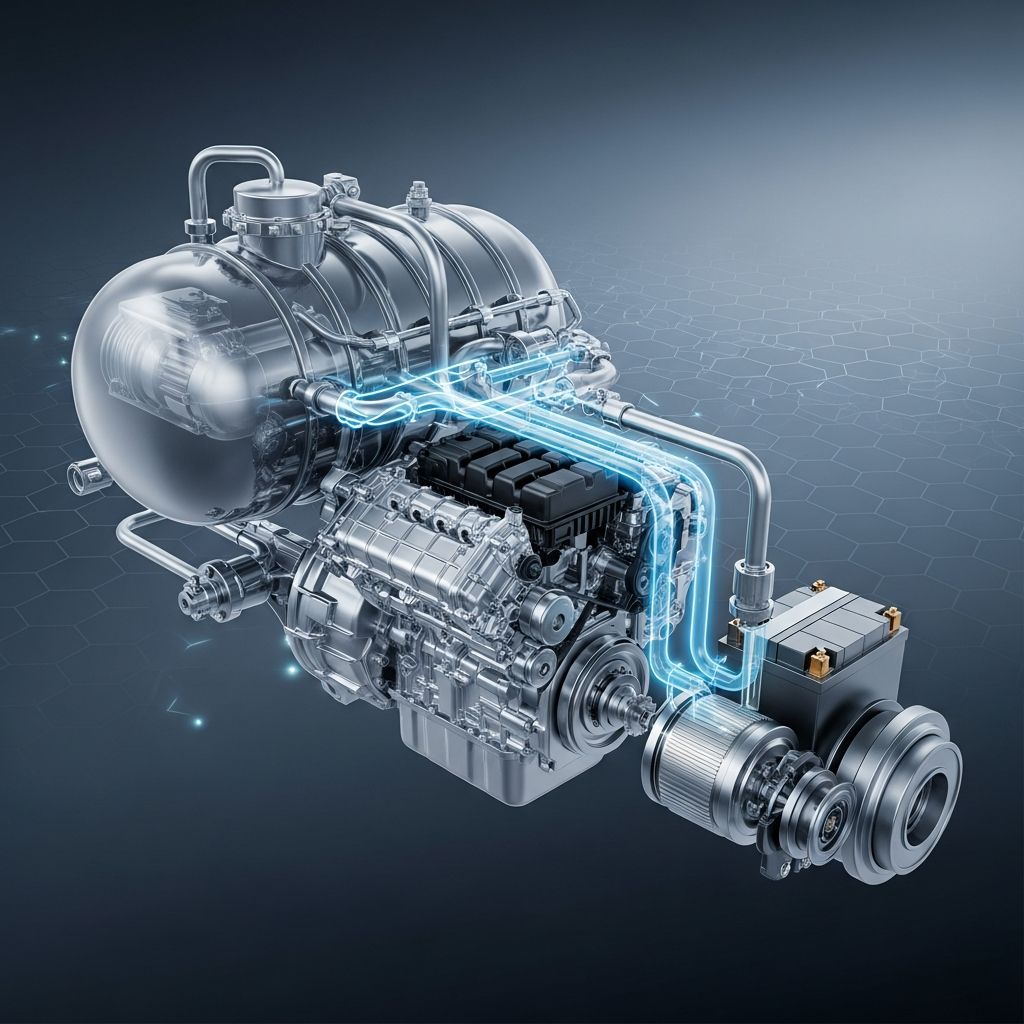
Rather than relying on expensive lithium-ion battery packs, PSA’s Hybrid Air technology utilizes compressed air as a supplementary energy source alongside conventional petrol engines. The system stores pressurized nitrogen and oil in a specialized tank capable of holding 20 liters at 220 bar pressure. This approach represents a fundamental departure from conventional hybrid architectures and offers manufacturers a pathway to significant emissions reductions without the substantial cost implications of traditional electrification.
The technology combines proven components from aerospace and industrial sectors with modern automotive engineering principles. By adapting established air compression systems used in aviation and industrial applications, PSA engineers created a lightweight, durable solution suitable for mass-market vehicles. This cross-industry approach demonstrates how existing technologies can be reimagined for automotive purposes, creating innovative solutions that balance performance, cost, and environmental responsibility.
Technical Architecture and Operating Principles
The Hybrid Air system comprises several integrated components working in harmony to optimize energy distribution. The primary energy storage tank resides beneath the vehicle’s body along the central tunnel, providing a low center of gravity and minimizing cabin intrusion. A secondary expansion tank positioned at the rear suspension crossmember manages pressure fluctuations during operation, while a hydraulic motor-pump unit mounted beneath the bonnet handles energy transfer to the drivetrain.
An Electronic Gearbox Control system replaces traditional mechanical transmissions, automatically managing power distribution between the petrol engine and hydraulic motor. This intelligent management system evaluates driving conditions continuously, determining optimal energy deployment for maximum efficiency. The latest generation three-cylinder petrol engines work in conjunction with the air system, providing responsive power when needed while reducing fuel consumption during routine driving.
Multi-Mode Operating Strategy
The Hybrid Air system operates across three distinct modes, each optimized for specific driving scenarios:
- Air-Only Mode (Zero Emissions Driving): In low-speed urban environments, the compressed air exclusively powers the vehicle, producing zero emissions and consuming no fuel. This mode proves particularly effective during stop-and-go city traffic, where energy efficiency peaks.
- Petrol Engine Mode: When compressed air reserves deplete or sustained acceleration becomes necessary, the 1.2-liter turbocharged three-cylinder engine engages, providing conventional power generation and air tank recharging.
- Combined Mode: Both power sources operate simultaneously during moderate acceleration or highway driving, optimizing efficiency and performance through intelligent power blending.
Performance Metrics and Real-World Testing
Prototype testing conducted in Paris demonstrated the Hybrid Air technology’s practical viability in urban environments. During careful driving, the system exhausts its air charge after approximately 500 meters of city driving, requiring roughly ten seconds of petrol engine operation to fully recharge at typical city speeds. Despite these relatively short air-only range intervals, testing data indicated that 60 percent of test journeys occurred in zero-emissions air mode.
The prototype Peugeot 2008 achieved an impressive 97.4 miles per gallon fuel economy figure while emitting just 69 grams of carbon dioxide per kilometer. These results significantly outpaced conventional powerplants, as a regular 2008 equipped with a 1.2-liter automatic engine managed only 65.7 mpg while producing 99g/km of emissions. The 48 percent reduction in CO2 output demonstrates the technology’s environmental benefits without requiring expensive battery infrastructure.
Cost-Effectiveness as a Primary Advantage
PSA’s primary motivation for developing Compressed Air Hybrid technology centers on addressing the cost barrier preventing mainstream adoption of emissions-reduction technologies. Battery systems in plug-in hybrids and electric vehicles represent significant expense, substantially increasing purchase prices and limiting accessibility for budget-conscious consumers. By substituting compressed air systems for batteries, manufacturers can offer comparable environmental benefits at substantially lower price points.
The compressed air technology can be integrated into diverse engine architectures across multiple vehicle segments with minimal development investment. This adaptability makes the system attractive for economy car manufacturers seeking cost-effective emissions solutions. PSA’s target involved creating genuinely affordable vehicles achieving remarkable fuel efficiency—specifically aiming for 2.0 liters per 100 kilometers (141 mpg equivalent) without sacrificing affordability or driving characteristics.
Environmental Impact and Emissions Reduction
Beyond individual vehicle performance, PSA targeted fleet-wide emissions reductions through widespread Hybrid Air adoption. The company aimed to reduce average CO2 emissions across their entire production range to 116 grams per kilometer by 2015, with Compressed Air Hybrid technology serving as a crucial component of this strategy. By offering the technology across B-segment and C-segment vehicles, PSA could significantly impact overall industry emissions profiles.
Urban environments benefit particularly from this technology’s zero-emissions operation capability. Cities experiencing poor air quality from vehicular emissions could achieve measurable improvements through widespread Hybrid Air adoption, as typical urban driving patterns allow extended zero-emissions operation. The technology’s ability to operate silently in air-only mode additionally contributes to noise pollution reduction in densely populated areas.
Practical Driving Experience and Limitations
During testing, the prototype demonstrated both promising potential and areas requiring refinement. The vehicle exhibited some sluggishness during acceleration, with the petrol engine occasionally engaging more eagerly than ideal. These characteristics reflected developmental maturity rather than fundamental technology limitations, suggesting that optimization could address these characteristics in production versions.
The automatic transmission managed transitions between air and petrol power reasonably smoothly, though occasional hesitation occurred during mode switches. Drivers familiar with conventional hybrids would recognize similar characteristics, as hybrid systems universally require brief adjustments during power delivery transitions. Refinement of control algorithms and motor-pump responsiveness could minimize these effects in future iterations.
Market Positioning Against Competing Technologies
PSA’s Compressed Air Hybrid system offered a distinct alternative to established competitors’ approaches. BMW’s electric iCars represented fully electrified solutions requiring extensive charging infrastructure and significant battery investment. Audi’s plug-in hybrid e-tron range maintained conventional drivetrains supplemented by battery systems, delivering electric-only operation ranges but at premium price points. PSA’s approach occupied a unique middle ground, offering substantial emissions reductions and efficiency improvements while maintaining cost accessibility.
The technology particularly appealed to manufacturers prioritizing affordability without compromising environmental credentials. For consumers unable to justify plug-in hybrid or electric vehicle premiums, Compressed Air Hybrid systems provided meaningful efficiency improvements and emissions reductions at prices closer to conventional powerplants.
Implementation Across PSA’s Vehicle Portfolio
While the Peugeot 2008 served as the primary test platform, PSA explored Compressed Air Hybrid implementation across multiple models. Citroen also developed a C3 prototype showcasing the technology, achieving 97 miles per gallon in contemporary testing. This multi-brand approach allowed PSA to evaluate the technology’s effectiveness across different vehicle classes and intended market segments, informing decisions regarding which models would receive the system in production form.
The flexibility of the compressed air architecture enabled integration into diverse body styles and market segments. Lightweight city cars could achieve exceptional efficiency, while larger vehicles maintained competitive fuel economy despite increased mass. This versatility made the technology valuable across PSA’s portfolio strategy, potentially reaching consumers across numerous market segments.
Future Development Prospects and Evolution
PSA identified Compressed Air Hybrid technology as a crucial development step toward achieving 140 miles per gallon vehicles when combined with other technological advances. Aerodynamic improvements, lightweight materials, further powertrain refinement, and advanced combustion technologies could work synergistically with air hybrid systems to approach this ambitious target. Rather than viewing compressed air as a standalone solution, PSA positioned it as a foundational technology contributing to comprehensive efficiency improvements across their vehicle lineup.
Ongoing development promised refinement of control systems, improved motor-pump responsiveness, and enhanced thermal efficiency. Expanded testing across varied climates and driving scenarios would identify optimization opportunities before production deployment. Consumer feedback from prototype testing informed engineering priorities, ensuring that production vehicles addressed identified limitations while preserving the technology’s core advantages.
Consumer Considerations and Practical Implications
For consumers evaluating alternative powertrain technologies, Compressed Air Hybrid systems presented compelling advantages. Significantly lower purchase prices compared to plug-in hybrids and electric vehicles improved accessibility for cost-conscious buyers. Familiar servicing requirements and minimal new component complexity reduced ownership costs relative to battery-dependent systems. Compatibility with existing petrol refueling infrastructure eliminated range anxiety and charging infrastructure concerns affecting early electric vehicle adoption.
The technology’s environmental benefits—achieving near-hybrid efficiency levels without expensive battery systems—made it particularly attractive for drivers prioritizing sustainability within budget constraints. Urban dwellers would experience benefits from zero-emissions operation during typical city commutes, while highway drivers retained conventional engine capability for longer journeys.
References
- Peugeot 2008 Hybrid Air prototype review — Auto Express. 2014-07-04. https://www.autoexpress.co.uk/car-reviews/87713/peugeot-2008-hybrid-air-prototype-review
- Peugeot 2008 HYbrid Air technology — GreenCarGuide.co.uk. 2013-02-01. https://www.greencarguide.co.uk/2013/02/peugeot-2008-hybrid-air-technology/
- Peugeot 2008 Hybrid Reviews: Overview — GoAuto. 2025-09-23. https://www.goauto.com.au/car-reviews/peugeot/2008/hybrid/2025-peugeot-2008h-gt-review/2025-09-23/97459.html
Similar Articles







Read full bio of medha deb