Compact Crossover Comparison: C4 Cactus Market Analysis
Exploring how Citroën's distinctive crossover stacks against mainstream competitors in the compact segment
Understanding the Compact Crossover Market: Where the Citroën C4 Cactus Stands
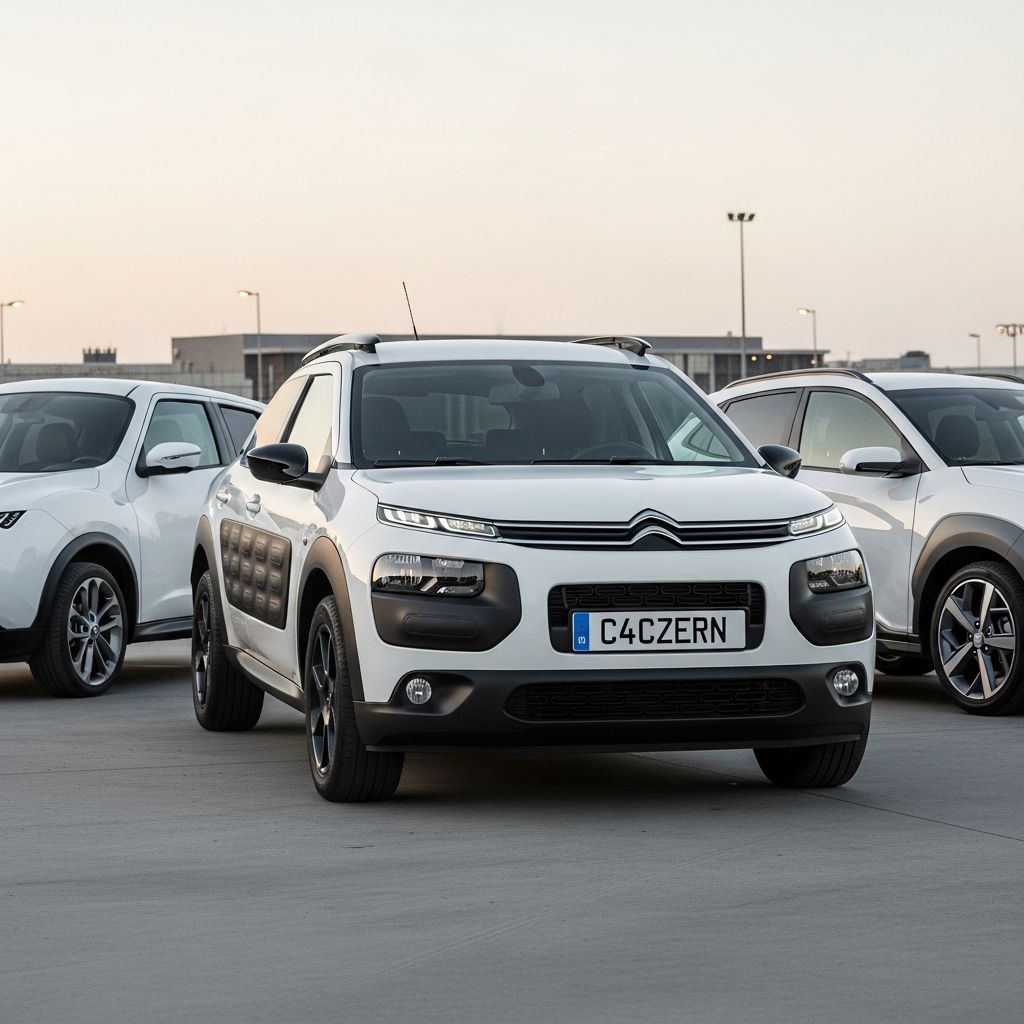
The compact crossover segment has evolved into one of the automotive industry’s most competitive categories, attracting manufacturers eager to capture buyers seeking practicality without sacrificing distinctive styling. The Citroën C4 Cactus emerged as a particularly unconventional entry into this crowded market, challenging conventions with its bold aesthetic and unusual design philosophy. Unlike traditional competitors that prioritize sleek lines and conventional proportions, the Cactus deliberately embraces quirkiness as a core selling point.
Design Philosophy and Visual Impact
When assessing compact crossovers, visual differentiation serves as a critical competitive factor. The Citroën C4 Cactus distinguishes itself through unmistakable design elements that immediately capture consumer attention. The vehicle’s most recognizable feature involves its proprietary Airbump technology—inflatable side panels that serve both aesthetic and practical functions. These distinctive side treatments create a protective buffer against minor parking collisions while simultaneously establishing an unforgettable visual identity that competitors struggle to replicate.
Beyond the Airbump system, the Cactus incorporates additional styling cues that reinforce its unconventional positioning. Sharp, ski-inspired roof bars contribute to an athletic appearance, while the distinctive headlamp design borrowed from the C4 Picasso lineage adds visual sophistication. The vehicle’s versatile color palette further enhances its appeal to buyers seeking individual expression through their automotive choices.
However, the Cactus’s rear treatment reveals less imaginative design execution. While the front and sides command attention, the posterior styling fails to maintain the same level of innovation, resulting in a somewhat disconnected overall appearance. This inconsistency in design language suggests a vehicle conceived as a collection of statement-making elements rather than a holistically integrated design narrative.
Interior Quality and Material Selection
Premium materials and thoughtful cabin design significantly influence purchasing decisions within the compact crossover category. The Citroën C4 Cactus demonstrates commitment to quality interior construction, featuring materials and finishes that exceed expectations at its price point. The cabin design reflects contemporary automotive standards while maintaining functional simplicity that prioritizes user experience over unnecessary technological complexity.
The quality approach extends to surface materials, control interfaces, and overall tactile feedback. Buyers accustomed to vehicles positioned at higher price tiers will recognize familiar material standards and assembly quality, contributing to the Cactus’s value proposition.
Spatial Configuration and Practical Considerations
Space optimization represents a fundamental requirement for crossover success, as buyers expect accommodations comparable to traditional family vehicles despite more compact exterior dimensions. The Citroën C4 Cactus addresses this expectation through intelligent packaging that maximizes interior volume relative to its footprint.
The cargo compartment provides 358 liters of carrying capacity, positioning the Cactus competitively within its segment. This measurement reveals certain trade-offs inherent to the Cactus’s design strategy. Compared to the Dacia Duster, the Cactus sacrifices approximately 50 liters of boot capacity, reflecting different design priorities. Conversely, the load lip height matches the Duster precisely, though the Cactus features a lower boot floor and more restricted tailgate opening dimensions.
Rear passenger accommodation presents a more complex assessment. While the Cactus offers respectable headroom and legroom dimensions, some occupants may perceive the rear seating area as somewhat constrained. The vehicle’s more compact overall length compared to certain rivals influences this spatial perception, particularly during extended journeys with full passenger loads.
Ride Characteristics and Daily Usability
Driving dynamics and ride quality substantially impact ownership satisfaction, particularly for purchasers planning extended journeys or accumulating high annual mileage. The Citroën C4 Cactus prioritizes comfort through a notably softer suspension setup compared to direct competitors. This tuning philosophy delivers impressive compliance over road imperfections, reducing vibration transmission to cabin occupants.
Competitors within the segment frequently adopt firmer suspension calibrations that sacrifice comfort for perceived sportiness or handling agility. The Cactus’s alternative approach positions it as the optimal choice for buyers prioritizing long-distance touring comfort. Extended highway driving in rival vehicles may produce fatigue through road harshness, whereas the Cactus’s compliance-oriented tuning mitigates such concerns.
This characteristic makes the Cactus particularly suited for high-mileage operators, commercial users, and families planning regular extensive journeys. The vehicle’s approach to suspension management reflects understanding that practicality encompasses not merely cargo capacity but comprehensive usability across varied driving conditions.
Powertrain Options and Operational Costs
| Engine Configuration | Displacement | Power Output | Fuel Type | Expected Economy |
|---|---|---|---|---|
| BlueHDi Diesel | 1.6-litre | 99 bhp | Diesel | 83 mpg (combined) |
| Petrol Alternative | 1.2-litre | 110+ bhp | Petrol | 47-52 mpg (combined) |
| PureTech Petrol | 1.2-litre | 130 bhp | Petrol | Variable by specification |
Engine selection profoundly influences total cost of ownership calculations. The Citroën C4 Cactus presents buyers with distinct powertrain philosophies, each optimized for particular usage patterns. The diesel variant prioritizes fuel economy through advanced combustion efficiency, achieving approximately 83 miles per gallon under official combined testing protocols. This exceptional efficiency translates to meaningful financial advantages across ownership periods, particularly for operators covering substantial annual distances.
The petrol powertrain alternatives deliver superior responsiveness and everyday drivability at the expense of fuel consumption. These engines generate increased power output, facilitating more spirited acceleration and improved highway merging characteristics. However, operational costs climb correspondingly, with consumption figures approaching 47-52 mpg depending on specific engine configuration and driving patterns.
Buyers must carefully evaluate their anticipated usage patterns before committing to powertrain selection. High-mileage operators and commercial users will realize significant financial benefits from diesel selection, while moderate-mileage recreational drivers may prefer petrol’s superior responsiveness despite inferior economy figures.
Transmission Configuration and Performance Characteristics
The Citroën C4 Cactus addresses acceleration and highway performance through various transmission options. Five-speed manual boxes represent the baseline configuration, though more sophisticated six-speed transmissions provide enhanced efficiency and refinement. The absence of six-speed options across all diesel variants represents a notable limitation, as additional gear ratios would optimize fuel economy and reduce engine noise during highway cruising.
Performance metrics reveal the Cactus’s positioning within the segment. The vehicle demonstrates adequate acceleration through 0-60 mph in approximately 11.3 seconds with the diesel powertrain, positioning it competitively against similarly configured rivals. The 30-70 mph roll-on acceleration in 10.6 seconds reflects real-world highway performance, though competitors employing turbocharged engines achieve superior results through forced induction technologies.
Braking performance reaches 70-0 mph in 49.6 meters, demonstrating competent deceleration capability. These metrics indicate that the Cactus operates comfortably within safety expectations for its segment, though not establishing performance benchmarks.
Pricing Strategy and Value Proposition
Successful positioning within competitive automotive segments requires balanced pricing that acknowledges both manufacturing costs and perceived customer value. The Citroën C4 Cactus enters the market at an on-the-road price of £17,990, establishing a cost baseline that undercuts certain established competitors while remaining accessible to mainstream buyers.
This pricing strategy reflects Citroën’s confidence in the Cactus’s value delivery. The vehicle combines distinctive styling, quality interior construction, comprehensive standard equipment, and practical usability at a price point typically associated with conventional compact hatchbacks rather than specialized crossover vehicles.
Residual value considerations introduce complexity to ownership economics. While specific three-year depreciation figures remained unavailable at the time of initial assessment, comparable vehicles within the segment demonstrate variable value retention depending on market demand and brand strength. Buyers should recognize that unconventional styling, while attracting initial attention, may influence depreciation trajectories as market preferences evolve.
Competitive Positioning Against Key Rivals
The compact crossover segment encompasses diverse competitors pursuing alternative design philosophies and market positioning strategies. The Peugeot 2008 represents a more conventional interpretation of compact crossover design, emphasizing refined aesthetics and mainstream appeal. With a 1.6-liter e-HDi diesel engine generating 115 bhp, the 2008 offers enhanced power delivery compared to the base Cactus, though at a marginally elevated on-the-road price of £18,045.
The Dacia Duster approaches the segment from an economy perspective, prioritizing value and practicality over styling sophistication. Its four-wheel-drive capability addresses off-road capability requirements, though at the expense of urban agility and refined refinement. The Duster’s £15,495 price point targets budget-conscious buyers willing to accept less polished execution in exchange for substantial equipment and spaciousness.
The Nissan Juke established the kooky crossover genre, though its refreshed iteration maintains a firmer, less comfortable suspension philosophy compared to the Cactus. The Juke’s 1.2-liter DIG-T petrol engine generates 113 bhp but achieves only 47 mpg combined economy, significantly underperforming the Cactus’s efficiency credentials.
Against these alternatives, the Cactus emerges as a distinctly balanced proposition offering distinctive styling, superior comfort delivery, exceptional fuel economy, and accessible pricing within a single package.
Equipment and Specification Levels
Standard equipment provision significantly influences perceived value across automotive segments. The Citroën C4 Cactus delivers comprehensive standard specification, incorporating features typically reserved for higher trim levels in competitor vehicles. This equipment-rich approach contributes substantially to the Cactus’s value proposition, enabling buyers to access well-equipped vehicles without substantial option investment.
Various trim levels permit customization to match individual preferences and budget constraints, ensuring accessibility across broader customer demographics than single-specification offerings would provide.
Addressing Inherent Limitations
Objective assessment requires acknowledging areas where the Cactus exhibits performance gaps relative to alternatives. The rear seating area, while functional, may feel somewhat confined during full-occupancy scenarios. The diesel engine’s power delivery prioritizes efficiency over dynamic responsiveness, potentially disappointing drivers accustomed to more spirited acceleration characteristics. Additionally, the absence of six-speed transmissions across diesel variants represents a missed opportunity for refinement optimization.
These limitations reflect conscious design trade-offs rather than fundamental deficiencies, and may prove inconsequential to buyers whose priorities align with the Cactus’s overall positioning.
Conclusion and Recommendation Summary
The Citroën C4 Cactus establishes itself as a compelling option within the compact crossover segment through distinctive styling, superior comfort delivery, and exceptional fuel economy achieved at competitive pricing. The vehicle successfully differentiates itself through deliberate unconventionality, attracting buyers seeking individual expression and practical usability without conventional design compromises.
Buyers prioritizing comfort during extended journeys, fuel economy optimization, and distinctive appearance will discover the Cactus addresses their requirements comprehensively. Conversely, purchasers emphasizing performance, rear passenger space, or brand prestige may identify superior alternatives within the segment.
Frequently Asked Questions
What makes the Citroën C4 Cactus visually distinctive from competitors?
The Airbump side panel system creates an instantly recognizable appearance while serving protective functions during minor parking incidents. Combined with ski-inspired roof bars and derivative headlamp design, these elements establish unambiguous visual identity.
How does the Cactus compare regarding boot space?
The 358-liter cargo compartment positions the Cactus competitively within its segment, though approximately 50 liters behind the Dacia Duster. The lower boot floor facilitates easier loading compared to certain rivals.
Which powertrain option provides optimal value?
The diesel variant delivers exceptional fuel economy suitable for high-mileage operators, while petrol alternatives offer superior responsiveness for moderate-mileage recreational users. Selection depends upon anticipated annual distance accumulation.
Does the Cactus provide comfortable long-distance travel?
Yes—the compliance-oriented suspension tuning prioritizes comfort over sportiness, establishing the Cactus as an excellent choice for extended journeys compared to firmer-sprung alternatives.
How does pricing compare with competitor vehicles?
The £17,990 on-the-road price represents competitive positioning, offering distinctive styling and comprehensive equipment at price levels typically associated with conventional hatchbacks.
References
- Citroen C4 Cactus vs crossover rivals — Auto Express. 2014-07-03. https://www.autoexpress.co.uk/car-reviews/87706/citroen-c4-cactus-vs-crossover-rivals
- Crossover crunch time: Citroen C4 Cactus v Nissan Juke — Leasing.com. https://leasing.com/car-leasing-news/crossover-crunch-time-citroen-c4-cactus-v-nissan-juke/
- Citroen C4 Cactus Crossover review — Car Keys. https://www.carkeys.co.uk/car-reviews/citroen-c4-cactus-crossover-review
- Citroen C4 Cactus vs Fiat 500X: SUV showdown — Carwow. 2015-10-15. https://www.carwow.co.uk/blog/citroen-cactus-vs-fiat-500x-0322
- Vauxhall Crossland X vs Citroen C4 Cactus vs Peugeot 2008 — Auto Express. https://www.autoexpress.co.uk/car-reviews/101320/vauxhall-crossland-x-vs-citroen-c4-cactus-vs-peugeot-2008
Similar Articles





Read full bio of Sneha Tete