Compact Car Showdown: Impreza Meets Mazda3
Exploring the strengths and trade-offs between two popular compact vehicles
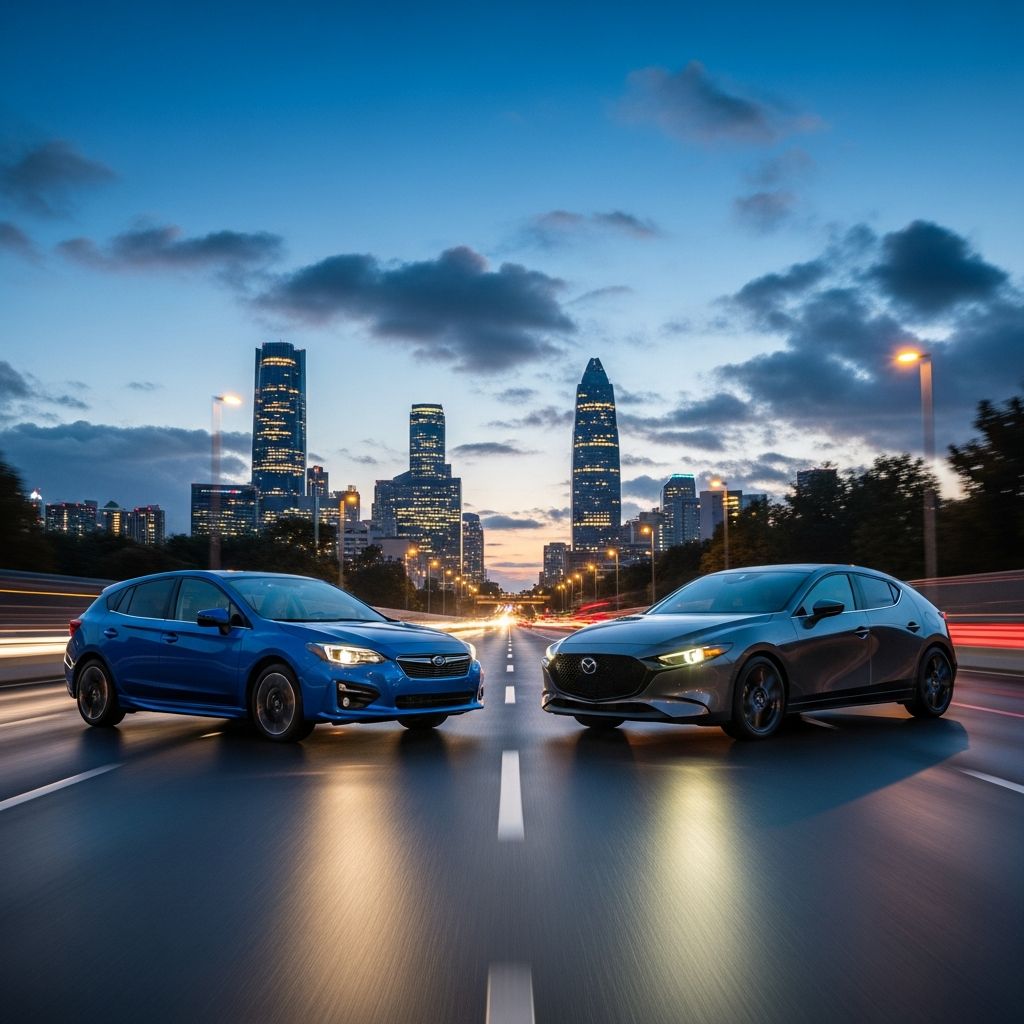
The compact car segment remains one of the most competitive spaces in the automotive market, with manufacturers constantly refining their offerings to capture the attention of budget-conscious buyers seeking practicality without compromise. Two standout contenders in this category are the Subaru Impreza and the Mazda3 hatchback, vehicles that represent distinctly different philosophies in their approach to affordable motoring. While both vehicles serve similar purposes and appeal to comparable demographics, they diverge significantly in execution, styling, and overall character. Understanding these differences proves essential for prospective buyers weighing their options in this crowded segment.
Aesthetic Philosophy and Design Language
The visual presentation of a vehicle often represents the first impression potential buyers encounter, and in this regard, the Impreza and Mazda3 take markedly different approaches. The Subaru Impreza presents a more conservative, upright stance that prioritizes practicality and visibility. Its design language emphasizes simplicity, with clean lines and a utilitarian character that appeals to drivers seeking straightforward functionality rather than aggressive styling cues. The vehicle’s proportions reflect its purpose as a versatile daily driver, with a design that hasn’t dramatically transformed over successive model generations.
In contrast, the Mazda3 hatchback embraces a more contemporary and aggressive aesthetic philosophy. Its low, muscular front end features a prominent grille flanked by slit-like headlamps that convey purposeful intent. The extended hood and distinctive rear treatment, which leans forward like a sports coupe, create an impression of forward momentum even when the vehicle sits stationary. Mazda also offers the 3 as a sedan for those preferring a more conservative silhouette, whereas the Impreza now appears exclusively as a five-door hatchback. This design divergence reflects broader brand positioning: Subaru emphasizes utilitarian capability while Mazda pursues dynamic elegance.
Powertrain Configurations and Performance Metrics
Beneath the surface, the mechanical hearts of these vehicles reveal substantially different engineering philosophies. The 2026 Mazda3 Hatchback Carbon Edition utilizes a 2.5-liter four-cylinder engine with conventional inline configuration, producing 186 horsepower and 186 lb.-ft. of torque. This engine couples with a traditional six-speed automatic transmission—a relatively uncommon specification in the modern compact segment, where continuously variable transmissions have become standard practice across most competitors.
The Subaru Impreza RS, by comparison, features the same 2.5-liter displacement but employs Subaru’s signature boxer engine architecture, where cylinder pairs sit flat on opposite sides of the crankshaft. This unconventional layout generates 180 horsepower and 178 lb.-ft. of torque, slightly trailing the Mazda’s output. The Impreza pairs its engine with a continuously variable transmission (CVT), a component designed primarily to optimize fuel consumption through infinite gear ratio variations rather than discrete steps. While CVTs excel at delivering efficiency, they frequently sacrifice the engaging driving sensation that many enthusiasts value, often producing a characteristic droning noise during acceleration.
For buyers prioritizing raw acceleration, Mazda offers turbocharged variants that elevate the 3’s performance capabilities considerably. The 2024 Mazda3 turbocharged models produce 250 horsepower on premium fuel, dropping to 227 hp on regular unleaded. These turbocharged options position the Mazda3 as the more performance-oriented choice within the segment, though they do sacrifice some fuel efficiency in the process.
Fuel Consumption Realities and Efficiency Comparisons
Despite inherent differences in their powertrains and transmission architectures, the Impreza and Mazda3 deliver remarkably similar fuel economy performance in practice. The 2026 Mazda3 Hatchback achieves EPA ratings of 25 mpg city and 34 mpg highway according to official standards. The Impreza RS, meanwhile, manages 26 mpg city and 33 mpg highway—a marginal advantage in urban driving that reverses on highways where the Mazda demonstrates a one-mpg superiority.
When equipped with all-wheel drive, both vehicles show nearly identical combined efficiency, with the Mazda3 achieving 26 city and 33 highway mpg. Real-world testing frequently reveals that both vehicles exceed EPA estimates, with owners of turbocharged Mazda3 variants with AWD reporting 28 mpg despite the engine’s enhanced output.
The practical implication of these figures remains crucial for ownership economics. Over a vehicle’s lifetime, the efficiency difference between these two approaches proves negligible, suggesting that fuel consumption should not serve as a primary decision-making factor when choosing between them.
Pricing Architecture and Value Proposition
From a financial perspective, these vehicles occupy distinctly different positions within the affordable compact market. The 2024 Subaru Impreza establishes an entry-level benchmark at $22,995 for base models, with mid-level Sport trims priced at $24,995 and the RS variant beginning at $27,885. These price points position the Impreza as the budget-conscious alternative, offering genuine all-wheel drive capability as standard across all trim levels—a meaningful differentiator in markets where weather variability justifies the added cost and complexity of AWD systems.
The Mazda3 hatchback pricing structure reflects its positioning as a more feature-rich and design-focused competitor. The 2026 Mazda3 Hatchback S trim (front-wheel drive only) begins at $25,550, while the comparable all-wheel-drive Carbon Edition costs $30,765. This $1,270 premium over the Impreza RS reflects Mazda’s inclusion of more sophisticated standard features and its commitment to delivering enhanced styling and technology amenities. For budget-conscious shoppers, this pricing gap may prove prohibitive, though those seeking additional creature comforts may find the Mazda’s value proposition compelling.
Interior Experience and Comfort Considerations
The driving experience encompasses far more than acceleration and top speed, extending into the realm of daily comfort, ergonomic design, and interactive feedback. The Subaru Impreza cultivates a reputation for exceptional visibility and uncluttered interior spaces. Its elevated seating position and expansive window area contribute to driver confidence in traffic and parking situations, while the straightforward dashboard layout prioritizes accessibility over novelty.
The Mazda3 emphasizes driver engagement through more sophisticated steering feel and responsive suspension tuning. However, this sportier orientation comes at a cost: rear visibility receives more mixed reviews, with some users reporting challenging sightlines in the rear quarters compared to the Impreza’s superior outward visibility. The Mazda’s torsion beam rear suspension, while space-efficient, doesn’t match the Impreza’s independent multi-link rear design for ultimate ride quality management across rough surfaces.
Transmission Technology and Driving Dynamics
The transmission selection significantly influences the driving experience beyond mere fuel economy. The Mazda3’s conventional six-speed automatic provides predictable, familiar shifting behavior that most drivers find intuitive and satisfying. Acceleration occurs through distinct gear changes, offering feedback that helps drivers understand engine loading and performance parameters. This approach has fallen somewhat out of favor in the cost-conscious segment where manufacturers have adopted CVTs to optimize efficiency metrics.
The Impreza’s CVT operates fundamentally differently, adjusting its internal pulley ratios continuously rather than shifting through preset gears. While this approach maximizes fuel economy potential, it frequently results in an undesirable characteristic where the engine appears to disengage from driving speeds momentarily before re-engaging, creating a sensation of delayed response that detracts from driving satisfaction. For extended highway driving, this rarely presents noticeable concerns, but during spirited urban driving or highway passing situations, the CVT’s behavior becomes more apparent and potentially frustrating.
Suspension Architecture and Handling Characteristics
Suspension design profoundly influences how a vehicle manages cornering loads, absorbs road imperfections, and translates driver inputs into directional changes. The Impreza employs independent suspension components throughout its chassis, contributing to a ride character described as soft and compliant—characteristics that excel at absorbing irregular pavement and maintaining stability during lateral maneuvers. This suspension philosophy prioritizes passenger comfort and stability, though enthusiastic drivers may find the setup overly forgiving.
The Mazda3’s suspension tuning pursues a more engaging character, with steering feel that communicates road surface conditions more directly to the driver’s hands. However, the deployment of a torsion beam rear suspension—a cost-conscious design that connects rear wheels through a flexible rod rather than fully independent links—represents a compromise that some drivers find less sophisticated than the Impreza’s approach. Cornering agility improves, but ride quality on severely irregular surfaces may suffer.
Safety Performance and Reliability Records
Safety remains paramount in vehicle selection, and both competitors maintain solid track records in crash testing and real-world safety statistics. The Impreza benefits from a reputation supported by Consumer Reports’ recognition as a best small car choice, suggesting comprehensive evaluation of reliability, safety, and overall value. Both vehicles offer comprehensive safety feature packages, though specific implementations and standard availability vary by trim level.
Feature Availability and Technology Integration
The 2026 Mazda3 Hatchback includes eight-speaker audio systems and LED headlamps as standard, while the comparable Impreza provides six-speaker audio and LED headlamps across trim levels. This differentiation reflects the Mazda’s positioning as a more feature-rich offering, though both vehicles offer modern conveniences as standard rather than luxury exceptions. Audio quality and speaker count, while seemingly minor specifications, contribute meaningfully to the daily ownership experience, particularly for buyers spending considerable time commuting.
Selecting Your Ideal Compact Companion
The choice between the Impreza and Mazda3 ultimately depends on individual priorities and preferences. Buyers prioritizing affordability, all-wheel-drive capability standard across all trims, exceptional visibility, and straightforward reliability should seriously consider the Impreza. Its conservative design language appeals to those uninterested in trendy styling, and its practical focus addresses genuine ownership concerns rather than chasing subjective aesthetic preferences.
Conversely, prospective owners seeking more dynamic styling, enhanced driving engagement, superior transmission technology in the form of a conventional automatic, and a broader range of trim options and features should examine the Mazda3 more carefully. The willingness to pay a premium for these enhancements indicates that overall ownership experience and driving pleasure rank highly among personal priorities.
Key Comparison Points Summary
- Design Philosophy: Impreza emphasizes utilitarian simplicity; Mazda3 pursues contemporary sportiness
- Engine Configuration: Impreza uses boxer engines; Mazda3 employs conventional inline four-cylinder layout
- Fuel Economy: Both achieve nearly identical EPA ratings; real-world performance depends heavily on driving style
- Pricing: Impreza offers lower base prices; Mazda3 commands premiums for additional features
- All-Wheel Drive: Standard on all Impreza trims; optional on Mazda3 models
- Transmission Technology: Impreza uses CVT; Mazda3 employs traditional automatic
- Driving Engagement: Mazda3 offers more responsive steering; Impreza prioritizes comfort and compliance
- Visibility: Impreza provides superior outward sightlines and rear window area
Frequently Asked Questions
Does the Impreza offer superior winter performance compared to the Mazda3?
The Impreza’s standard all-wheel-drive system provides inherent advantages in snow and ice situations compared to front-wheel-drive Mazda3 models. However, when comparing all-wheel-drive equipped Mazda3 variants against the Impreza, advantages become less pronounced. Both vehicles benefit from quality winter tire selection, which proves more critical than drivetrain configuration for seasonal performance.
Which vehicle experiences fewer maintenance issues?
Both vehicles maintain solid reliability reputations supported by consumer reports and manufacturer warranty programs. The Impreza’s simpler technology package and proven boxer engine design contribute to straightforward service requirements, while the Mazda3’s conventional transmission technology avoids CVT-specific maintenance concerns. Long-term ownership satisfaction depends more heavily on maintenance discipline than inherent design superiority.
Can either vehicle be upgraded with premium features?
Both vehicles offer higher trim levels with enhanced amenities, though the Mazda3’s broader trim lineup provides more upgrade flexibility. Budget-conscious buyers should verify which standard features matter most before selecting trim levels, as Impreza simplicity may result in fewer unnecessary additions compared to Mazda’s progressive enhancement approach.
How do insurance costs compare?
Insurance premiums typically reflect vehicle age, repair costs, and claim history rather than model selection within the compact segment. Both vehicles should produce comparable insurance costs, though specific rates depend on individual driver profiles, location, and coverage selections.
References
- 2024 Subaru Impreza vs. 2024 Mazda3 Hatchback — Autoweb. 2024. https://www.autoweb.com/2024-subaru-impreza-vs-2024-mazda3
- Mazda Mazda3 vs. Subaru Impreza Comparison — TrueCar. https://www.truecar.com/compare/mazda-mazda3-vs-subaru-impreza/
- 2026 Mazda3 Hatchback vs. Subaru Impreza — Balise Mazda. 2026. https://www.balisemazda.com/mazda3-hatchback-vs-subaru-impreza-springfield-ma.html
- 2024 Mazda3 AWD vs Subaru Impreza / Muddy Waters — YouTube. 2024. https://www.youtube.com/watch?v=oCd_bv8f388
- Mazda MAZDA3 vs Subaru Impreza — CarGurus. https://www.cargurus.com/research/compare/Mazda-MAZDA3-vs-Subaru-Impreza-d214-d375
Similar Articles


Read full bio of Sneha Tete