Chrysler Crossfire: Complete Buying Guide And Key Specs
Explore the Chrysler Crossfire's bold design, Mercedes-powered performance, and its place as a unique 2000s sports car blending style and sportiness.
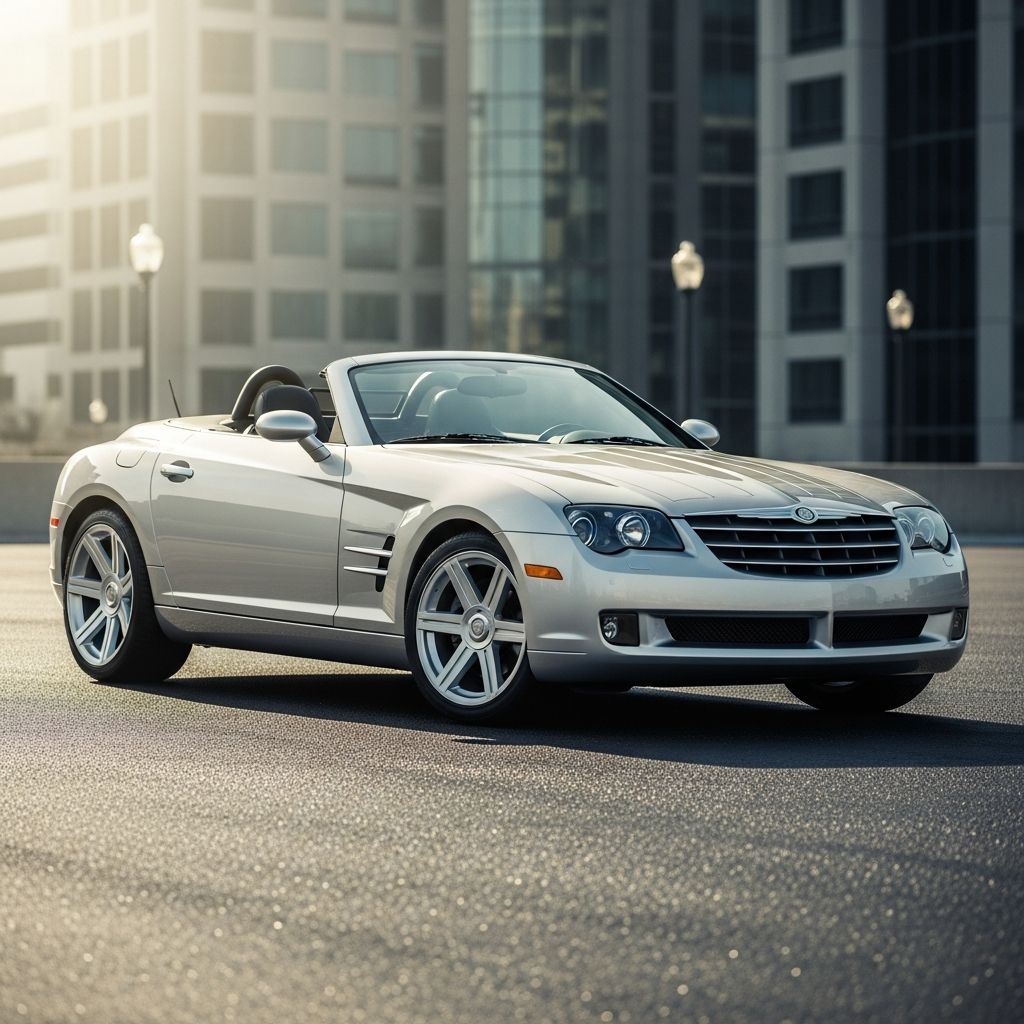
The Chrysler Crossfire stands out as a distinctive entry in the early 2000s sports car landscape, blending aggressive styling with underpinnings borrowed from Mercedes-Benz. Launched in 2003, this two-seater coupe and convertible drew inspiration from classic American muscle aesthetics while leveraging German engineering for its core components. Powered by a 3.2-liter V6 engine sourced from Mercedes, it promised thrilling performance at a more accessible price point than its luxury counterparts.
Origins and Design Philosophy
Chrysler’s collaboration with Daimler-Benz during their merger era birthed the Crossfire, essentially a rebadged and restyled version of the first-generation Mercedes-Benz SLK. This partnership allowed Chrysler to offer premium hardware in a package aimed at style-conscious buyers. The car’s radical exterior, featuring a long hood, short deck, and muscular haunches, evoked images of 1960s muscle cars like the Dodge Charger, setting it apart from sleeker European rivals.
Key design elements include varying wheel diameters—18-inch fronts and 19-inch rears—for a raked stance that enhances its aggressive profile. Centrally mounted tailpipes and a pop-up rear spoiler (deploying around 57-60 mph) add flair, though the spoiler’s frequent operation could become annoying over time. Available as a coupe or convertible, the Crossfire prioritized visual impact, making it a head-turner even today on used car lots.
Powertrain and Performance Breakdown
At the heart of the Crossfire lies a 3.2-liter V6 engine producing around 215 horsepower in base models, with a supercharged SRT-6 variant boosting output to 330 hp for more aggressive acceleration. Paired with either a five-speed automatic or six-speed manual transmission, the power delivery emphasizes mid-range punch between 3,000 and 5,000 rpm, though low-end torque feels somewhat lacking compared to purebred sports cars like the Nissan 350Z.
| Model Variant | Engine | Horsepower | 0-60 mph | Transmission Options |
|---|---|---|---|---|
| Base Coupe/Convertible | 3.2L V6 | 215 hp | ~6.5 seconds | 5-speed auto / 6-speed manual |
| SRT-6 | Supercharged 3.2L V6 | 330 hp | ~4.5 seconds | 6-speed manual |
The manual gearbox shifts smoothly but can feel notchy, while the automatic impresses with quick upshifts and a manual override mode for corner exits. Fuel economy hovers around 20 mpg combined, reasonable for a rear-drive sports car of its era.
Handling and Driving Dynamics
Owners and reviewers praise the Crossfire’s crisp handling, thanks to a stiff chassis, wide tires, and a near-ideal weight distribution (54.5% front-biased). It excels on twisty back roads, sticking to pavement with tenacious grip and minimal body roll, making it a cooperative partner for spirited drives. The suspension balances compliance for highway cruising with firmness for cornering, though some note the steering lacks the razor-sharp feedback of competitors like the BMW Z4 or Porsche Boxster.
- Strengths: Exceptional cornering grip, smooth highway ride, engaging gear shifts.
- Weaknesses: Limited low-rpm torque, vague steering feel at times.
Supercharged SRT-6 models amplify the fun with muscle-car swagger, transforming the base car’s cruiser tendencies into outright performance.
Interior Comfort and Practicality
Inside, the Crossfire creates a driver-focused cockpit with a prominent center line dividing the console and directing attention forward. Leather seats and satin-finish trim lend an upscale vibe, though some plastics feel budget-oriented for a Mercedes-derived car. Switchgear borrowed from the SLK adds familiarity and quality, but quirks like counterintuitive window switches and confusing secondary controls detract from the experience.
Space is tight: tall drivers over six feet may feel cramped, with limited headroom and a header rail close to the scalp. Rear visibility suffers dramatically due to sail panels and a tiny back window, exacerbated by the deploying spoiler. Storage includes a deep glovebox and door nets, but the 8-cubic-foot trunk is minuscule, with no spare tire—just foam and an inflator. The convertible variant opens up the cabin for better airflow.
Safety Ratings and Features
Safety equipment includes stability control, tire pressure monitoring, and an alarm system. NHTSA ratings for the 2005 model show strong frontal crash scores (5 stars driver, 4 stars passenger) and side impacts (5 stars driver), with a 5-star rollover rating. However, some categories like rear passenger side impacts went unrated. Modern standards would demand more, but for its time, it provided decent protection.
Ownership Costs and Reliability
Produced from 2004 to 2008, the Crossfire was discontinued amid Chrysler’s shifting priorities and lukewarm sales due to its divisive looks and high price relative to rivals. Used examples now fetch $8,200-$10,000 for base models, making them affordable entry points into Mercedes-sourced engineering. Maintenance benefits from shared SLK parts, though rarity means specialist knowledge may be needed. Common issues include wind noise, stiff ride wear, and spoiler motor fatigue.
Prospective buyers should inspect for tire costs (due to staggered sizes) and ensure the pop-up spoiler functions smoothly. It’s a solid long-distance companion if you fit comfortably, blending sports car thrills with grand tourer refinement.
Comparing to Contemporaries
| Feature | Chrysler Crossfire | Nissan 350Z | Audi TT |
|---|---|---|---|
| Base Price (2004) | ~$35,000 | ~$28,000 | ~$38,000 |
| Handling | Crisp, grippy | Sharp, playful | Balanced, precise |
| Interior Space | Cramped | Adequate | Tight |
| Power | 215 hp V6 | 287 hp V6 | 225 hp I4 |
The Crossfire undercuts the SLK320 by $11,000 while offering similar dynamics, but trails the 350Z in raw fun and the TT in precision.
Market Position Today
As a rare sight on roads, the Crossfire appeals to collectors valuing its unique styling and heritage. It’s not the quickest or most practical, but its blend of American flair and German substance makes it a quirky choice for enthusiasts seeking a fun daily driver or weekend toy.
Frequently Asked Questions (FAQs)
Is the Chrysler Crossfire reliable?
Yes, sharing Mercedes parts contributes to decent reliability, but check for spoiler issues and suspension wear on used models.
What’s the difference between Crossfire and SRT-6?
The SRT-6 adds a supercharger for 330 hp, quicker acceleration, and sportier tuning.
How does fuel economy compare?
Expect 20 mpg combined; not class-leading but acceptable for performance.
Is it comfortable for tall drivers?
Claustrophobic for those over 6 feet; test fit before buying.
What’s the resale value like?
Affordable at $8k-$10k used, with low depreciation post-discontinuation.
References
- 2005 Chrysler Crossfire Review & Ratings — Edmunds. 2005. https://www.edmunds.com/chrysler/crossfire/2005/review/
- 2004 Chrysler Crossfire Road Test — Car and Driver. 2004. https://www.caranddriver.com/reviews/a15134776/2004-chrysler-crossfire-road-test-counterpoint-page-1/
- Chrysler Crossfire — Consumer Reports. 2026 (updated). https://www.consumerreports.org/cars/chrysler/crossfire/
- MR Archive: Chrysler Crossfire Review — Retro Motor. N/A. https://www.retromotor.co.uk/retro-road-test/chrysler-crossfire-review/
- Tested: 2004 Chrysler Crossfire SRT-6 — Car and Driver. 2004. https://www.caranddriver.com/reviews/a15132578/chrysler-crossfire-srt-6-road-test/
Similar Articles




Read full bio of Sneha Tete