Britain’s Luxury Auto Sector Faces Tariff Threats
How UK premium carmakers navigate Trump-era trade tensions
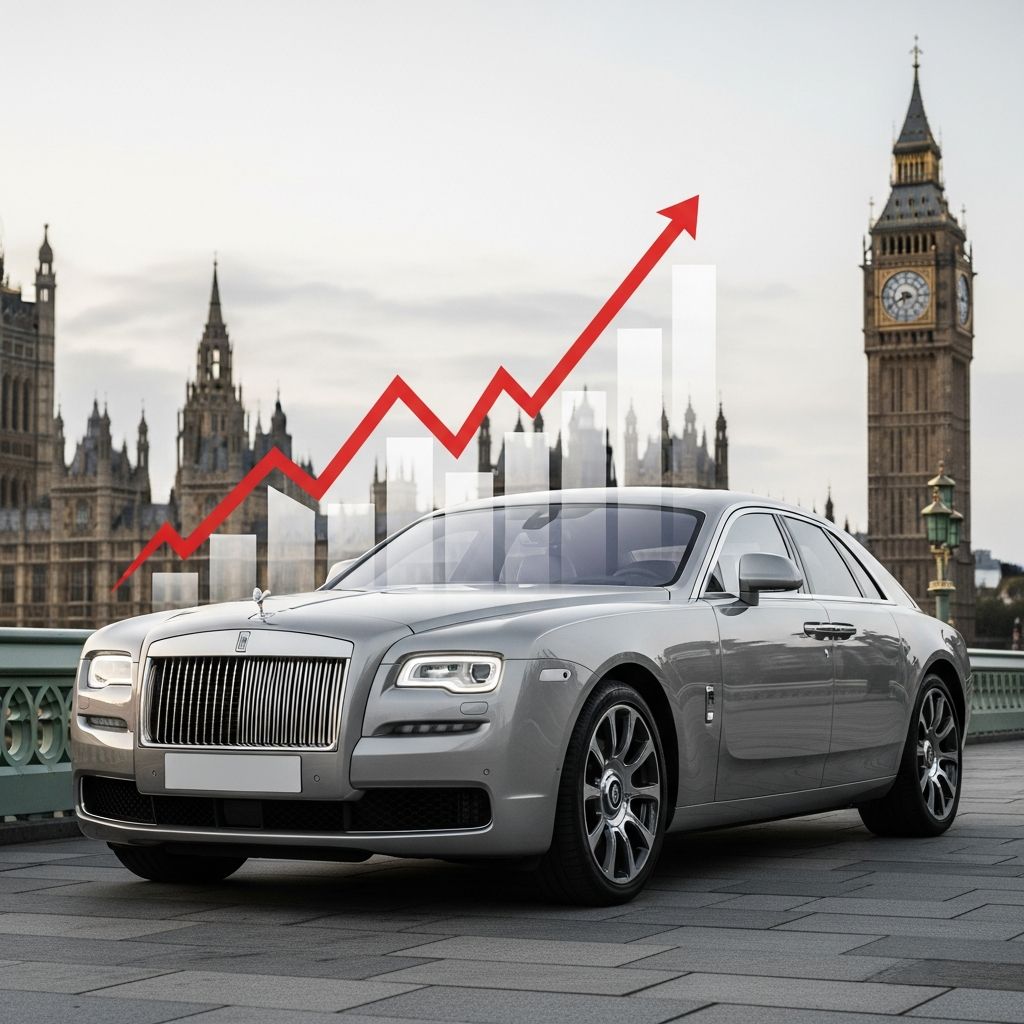
The Strategic Crossroads: Britain’s Premium Automotive Industry Confronts Global Trade Barriers
The United Kingdom has cultivated a distinctive reputation within the global automotive landscape, establishing itself as a premier manufacturer of high-end vehicles destined for international markets. The American market represents a particularly crucial outlet for these British producers, yet recent trade policy developments have introduced significant uncertainty into what was once a predictable commercial relationship. Understanding the implications of these shifts requires examining the structural foundations of Britain’s automotive excellence and the contemporary challenges threatening its viability.
The Foundation of British Automotive Excellence
Britain’s automotive heritage extends back over a century, but the contemporary sector has evolved into something quite distinct from its historical roots. Rather than competing on volume, modern British manufacturers have positioned themselves within premium and ultra-luxury segments where craftsmanship, engineering sophistication, and exclusivity command significant price premiums. This strategic positioning reflects a deliberate choice to compete on factors other than cost, creating a business model fundamentally dependent on access to wealthy international consumers.
The United States market has become indispensable to this model. British manufacturers export approximately 100,000 vehicles annually to American buyers, representing a value proposition that extends far beyond the automotive sector itself—encompassing manufacturing employment, supply chain development, and associated service industries. This export activity reflects not merely commercial transactions but the operational viability of entire British communities built around automotive production centers.
Major Players in the Transatlantic Trade
Several prominent British manufacturers have established commanding positions within American luxury and premium segments:
- Jaguar Land Rover (JLR) – Operating production facilities across Solihull, Halewood, and Castle Bromwich, JLR represents the largest British automotive exporter to the United States. The manufacturer offers an extensive portfolio including Range Rover variants, Land Rover Defender models, and the Jaguar F-Pace, E-PACE, I-PACE, F-Type, and XF. Approximately 25% of JLR’s global sales originate from the American market, translating to over 94,000 vehicles in 2024.
- Rolls-Royce Motor Cars – Positioned within the ultra-luxury segment, Rolls-Royce manufactures the Phantom, Cullinan, Ghost, and Spectre models. Of the company’s 5,712 global sales in 2024, 1,765 vehicles were sold to American customers.
- Aston Martin – Specializing in high-performance luxury vehicles, Aston Martin produces the DB12, Vantage, DBX, Vanquish, Valhalla, Valkyrie, Valour, and Valiant models for discerning international clientele.
- Bentley – Representing another cornerstone of British luxury automotive manufacturing, Bentley maintains significant export volumes to the United States.
- McLaren – Known for high-performance and hypercar production, McLaren continues manufacturing combustion-engine vehicles for export despite broader industry electrification pressures.
The Tariff Environment and Its Cascading Implications
In April 2025, the Trump administration implemented sweeping 25% import tariffs on passenger vehicles and selected automotive components, fundamentally altering the commercial calculus for British manufacturers. This policy intervention represented more than a standard trade measure; it constituted a direct challenge to the economic model upon which Britain’s premium automotive sector had constructed its competitive advantage.
The tariff structure specifically targeted engines, powertrains, and complete vehicles, effectively increasing the delivered cost of British automobiles to American dealers and end consumers by approximately one-quarter before accounting for margin compression or alternative pricing strategies. For luxury manufacturers operating on relatively modest production volumes and narrow margins per unit, this cost imposition created immediate operational challenges.
Jaguar Land Rover responded initially by pausing shipments to the American market in April 2025, a tactical response indicating the magnitude of commercial disruption the tariffs precipitated. While shipments resumed in early May, the underlying structural problems persisted, forcing manufacturers to contemplate fundamental business model adjustments.
Trade Negotiations and Tariff Modifications
The imposition of 25% tariffs did not represent a stable equilibrium but rather an opening negotiating position. In May 2025, the United States and United Kingdom announced a preliminary trade agreement that reduced the applicable tariff rate from 25% to 10% for British automotive exports. While this reduction provided meaningful relief compared to the initial levy, the 10% rate remained substantially higher than the tariff environment preceding April 2025, when most British vehicles entered the American market with minimal or zero duty assessments.
These negotiations underscore the degree to which trade policy has become a central variable in automotive commerce, replacing traditional market competition as the primary determinant of commercial viability for certain manufacturers. The distinction between a 10% and 25% tariff represents, for luxury vehicles priced at $50,000 to $300,000 or more, the difference between manageable cost absorption and fundamental business model disruption.
Employment Consequences and Manufacturing Decline
The potential ramifications of sustained tariffs extend far beyond corporate profitability calculations. British automobile manufacturing has already contracted significantly, with production volumes declining to approximately 50% of their levels six years prior. This contraction reflected multiple factors including Brexit-related uncertainty, supply chain disruptions, and the capital intensity of transitioning to electric vehicle manufacturing.
The introduction of additional tariff-driven cost burdens threatens to accelerate this decline trajectory. Manufacturers facing margin compression may reduce production volumes, extend model lifecycles, or reassess strategic commitments to particular production locations. Each of these responses carries employment implications, affecting not merely factory workers but the broader ecosystem of suppliers, logistics providers, and service technicians dependent on automotive sector vitality.
The employment multiplier effects warrant consideration. A single manufacturing job in automobile production typically supports additional employment throughout supply chains and local economies. Tariff-induced manufacturing contraction thus represents more than sectoral disruption; it constitutes a challenge to community economic stability in regions where automotive manufacturing functions as a primary employment source.
Strategic Responses and Market Adaptation
British manufacturers have begun implementing diverse strategies to navigate the tariff environment. These approaches include:
- Pricing Adjustments – Absorbing portions of tariff costs through margin compression rather than implementing proportional price increases that would diminish demand.
- Production Optimization – Concentrating manufacturing efforts on higher-margin models while potentially reducing volume in more price-sensitive segments.
- Supply Chain Reconfiguration – Evaluating whether component sourcing or final assembly relocation to the United States might reduce tariff exposure.
- Product Mix Evolution – Shifting emphasis toward vehicles where tariff costs represent smaller percentages of final prices, thus maintaining demand resilience.
- Regulatory Advocacy – Engaging with trade bodies and governmental representatives to influence policy discussions and potentially secure additional tariff reductions or carve-outs for specific manufacturers or segments.
The Broader Context: Manufacturing Capacity and Industrial Policy
The tariff environment cannot be understood in isolation from broader industrial policy frameworks. The Trump administration’s tariff initiatives explicitly aimed to encourage foreign manufacturers to establish production facilities within the United States rather than relying on imports. For British manufacturers, this policy objective presents a strategic dilemma: accepting tariff costs while maintaining British production, or undertaking substantial capital investments to establish American manufacturing capabilities.
Large-scale American manufacturing operations would require significant capital deployment, extensive workforce development, supply chain establishment, and operational time to achieve productivity parity with established British facilities. For manufacturers already experiencing revenue pressures and uncertain American market demand due to tariff-driven price increases, such investments carry substantial risk.
The Regulatory Environment and Vehicle Electrification
Complicating the tariff situation are parallel regulatory developments affecting vehicle electrification mandates. Recent policy adjustments have relaxed controversial zero-emission vehicle (ZEV) requirements, confirming that manufacturers including McLaren and Aston Martin can continue producing internal combustion-powered vehicles for at least an additional decade. This regulatory relief provides strategic flexibility at a moment when capital constraints might otherwise force rapid electrification commitments.
The intersection of tariff policy and electrification regulations creates complex decision matrices for British manufacturers. Sustained tariff burdens might incentivize accelerated electrification to access lower-tariff components or potential regulatory incentives, yet the capital requirements for comprehensive electrification programs could exceed what tariff-pressured revenue streams support.
Long-Term Viability Considerations
The sustainability of Britain’s premium automotive sector within a tariff-protected American market remains fundamentally uncertain. The 10% tariff following the May 2025 negotiations represents a compromise between the initial 25% levy and the historically minimal duty environment. Whether this rate level permits profitable operations depends on multiple variables including manufacturer cost structures, consumer price sensitivity, competitive positioning, and the durability of current trade agreements.
Particularly concerning is the vulnerability of smaller, volume-constrained manufacturers to tariff impacts. Jaguar Land Rover’s significant scale and diverse product portfolio provide somewhat greater resilience than manufacturers producing fewer vehicle types. Ultra-luxury producers like Rolls-Royce, while commanding price premiums that accommodate tariff costs more readily than volume manufacturers, serve markets of such limited size that tariff-driven demand destruction could materially affect viability.
Frequently Asked Questions
- What percentage of British automotive manufacturing goes to the United States?
- Approximately 100,000 vehicles annually are exported from the UK to America, representing the nation’s number one automotive export market and a substantial portion of total British vehicle production.
- How much did tariffs increase in 2025?
- The Trump administration implemented 25% import tariffs on vehicles in April 2025, later reduced to 10% following US-UK trade negotiations in May 2025.
- Which British manufacturers are most affected by US tariffs?
- Jaguar Land Rover, representing the largest exporter, faces the most substantial absolute impact, though all premium British manufacturers including Rolls-Royce, Aston Martin, Bentley, and McLaren experience material margin compression.
- Could British manufacturers relocate production to America?
- Potential American production represents a strategic option for larger manufacturers but requires substantial capital investment and creates operational complexity that may not justify expenditures given uncertain future market conditions.
- What does the recent regulatory relaxation of EV mandates mean for British manufacturers?
- The relaxation permits continuation of internal combustion engine production through at least 2035 for manufacturers like McLaren and Aston Martin, providing strategic flexibility during a period of tariff-driven financial pressure.
Looking Forward: Uncertainty and Adaptation
The future trajectory of British automotive manufacturing in relation to American markets appears dependent on factors extending beyond manufacturer control. Trade policy stability, consumer demand resilience in the face of tariff-driven price increases, and the durability of negotiated tariff reductions all represent variables affecting sector viability. Manufacturers themselves cannot influence these external conditions but must adapt operational strategies accordingly.
What appears clear is that the era of unrestricted market access to American consumers has concluded. Whether British manufacturers successfully navigate the evolving tariff environment while maintaining manufacturing employment and sectoral vitality remains an open question requiring strategic acuity, operational excellence, and favorable external circumstances.
References
- UK is the World’s Best at Building and Shipping Expensive Cars to America — Auto Express. 2024. https://www.autoexpress.co.uk/opinion/366510/uk-worlds-best-building-and-shipping-expensive-cars-america
- UK-Built Cars Sold in America [2025 Update] — CarEdge. 2025. https://caredge.com/guides/uk-cars-sold-in-america-2025
- Rolls-Royce Owner Donald Trump Just Took a Hammer to the UK’s $8 Billion Luxury Car Market — Fortune Europe. 2025-03-27. https://fortune.com/europe/2025/03/27/rolls-royce-owner-donald-trump-hammer-uk-8-billion-luxury-car-market/
- Will the UK’s Luxury Car Makers Survive Trump’s Tariffs? Episode 258 — The Intercooler. 2025. https://www.youtube.com/watch?v=NwXd49VuKAo
- Shipments of British Cars Set Sail for America as the UK-US Trade Deal Progresses — Business and Economics Coverage. 2025. https://www.youtube.com/watch?v=s0e5jwjQkgU
Similar Articles






Read full bio of medha deb