BMW M3 CSL: Engineering Masterclass And Why It Matters
Discover how BMW's lightweight masterpiece revolutionized performance driving.
Introduction to an Automotive Icon
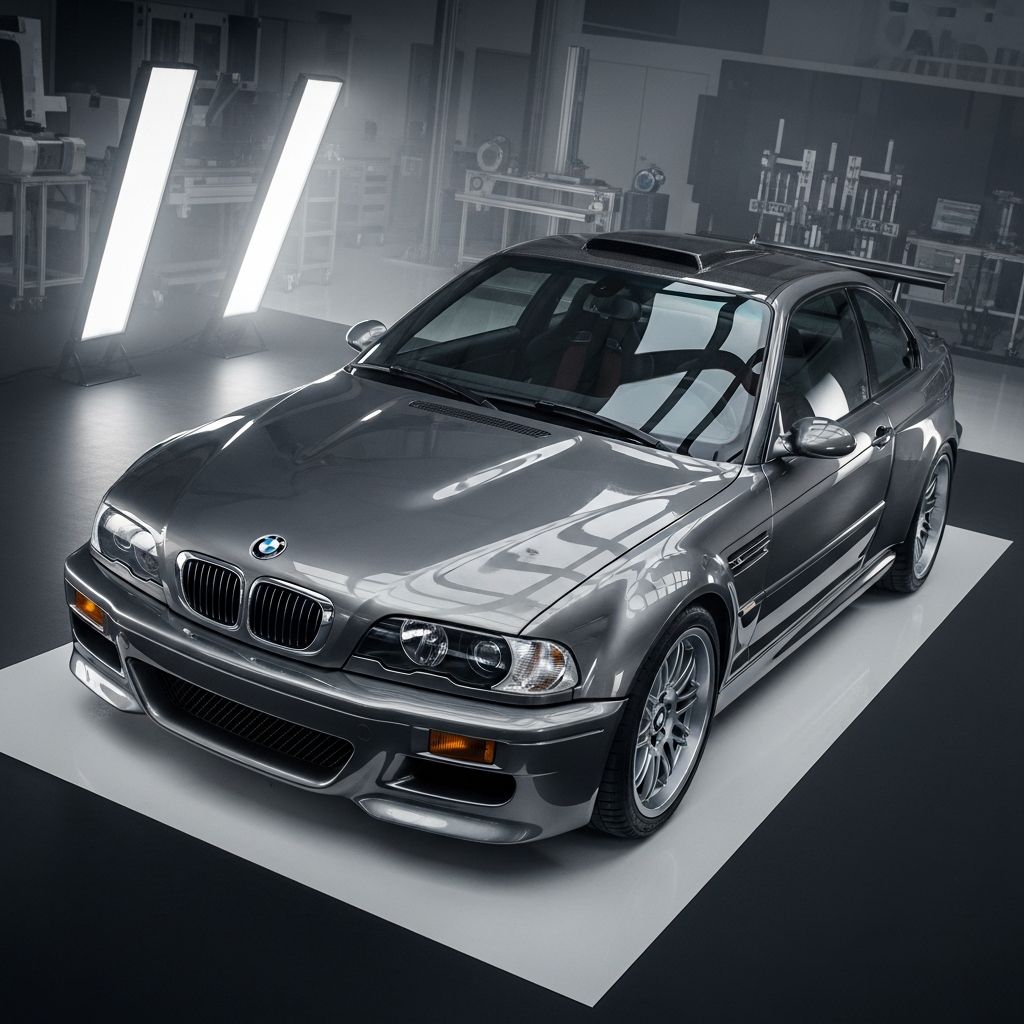
The BMW M3 CSL represents a defining moment in automotive history when manufacturers still prioritized driver engagement over mass-market appeal. Unveiled in 2003, this exceptional machine emerged from BMW’s M Division as a focused, uncompromising expression of what happens when engineers are given the freedom to pursue perfection through meticulous weight reduction and performance optimization. The acronym CSL stands for Coupe Sport Leichtbau, which translates to “Coupe Sport Lightweight,” encapsulating the vehicle’s fundamental philosophy and design ethos.
This wasn’t merely a cosmetic upgrade or a marketing exercise. Instead, BMW embarked on a comprehensive engineering program to transform the already-impressive E46 M3 into something genuinely transformative. Every component received scrutiny, every kilogram faced elimination, and every system underwent refinement. The result was a car that would captivate enthusiasts for generations and establish a benchmark against which future performance vehicles would be measured.
Structural Innovations and Material Selection
The path to lightness requires unconventional thinking. BMW’s engineers made extensive use of carbon fiber reinforced plastic (CFRP) throughout the CSL’s construction, a material choice that was genuinely revolutionary for a production vehicle at the time. The roof, bootlid, and door cards were all crafted from this advanced composite material, reducing unnecessary mass while maintaining structural integrity.
The center console received similar treatment, with carbon fiber replacing conventional plastic and metal components. Even the bucket seats that graced the interior were engineered to be significantly lighter than standard offerings without compromising support during aggressive driving. This obsessive attention to weight reduction extended to the inclusion of a carbon fiber intake manifold, which delivered dual benefits: further weight savings and an intoxicating induction note that became synonymous with the vehicle’s character.
For customers prioritizing the ultimate driving experience, BMW offered optional deletion of conventional comforts. The air conditioning system and factory stereo could be removed entirely, transferring an additional burden of weight savings to owners willing to sacrifice creature comforts. This level of personalization reflected the CSL’s target demographic: individuals for whom driving purity superseded convenience.
Weight Reduction Achievements
The cumulative effect of these material choices and component optimizations resulted in a vehicle that weighed approximately 1,385 kilograms at the curb. This represented roughly 110 kilograms of weight savings compared to the standard M3 of the era, an achievement that seems remarkable when considering the car retained rear seating capacity. To contextualize this accomplishment: modern lightweight initiatives often celebrate weight reductions measured in tens of kilograms across entire model generations, yet BMW achieved this transformation on a single model variant.
Powertrain Excellence and Engine Dynamics
Beneath the carbon fiber hood resided a 3.2-liter naturally-aspirated straight-six engine, a configuration that represented the pinnacle of naturally-aspirated engineering in the early 2000s. While the standard M3 generated 343 horsepower from this displacement, BMW’s CSL variant produced 355 horsepower, a modest increase that belied the sophisticated mechanical modifications achieved through cam and valve optimization.
The power increase extended beyond simple horsepower figures. The engine produced 273 lb-ft of torque, delivering this output in a linear, predictable manner that created a seamless acceleration experience. The carbon fiber intake system served multiple purposes: it reduced weight, it improved air flow efficiency, and it delivered one of the most celebrated induction sounds ever produced by an automotive engine. This acoustic signature became instantly recognizable, transforming mundane acceleration into a multisensory experience.
Without hybrid assistance, turbocharging complications, or variable geometry technology, the CSL’s engine operated with mechanical simplicity that generated profound satisfaction. In 2003, these specifications were genuinely impressive for a naturally-aspirated motor, particularly when housed in a vehicle weighing barely 1,385 kilograms.
Performance Metrics
- 0-62 mph acceleration: 4.9 seconds (0-60 mph achieved in approximately 4.7 seconds)
- Top speed: 155 mph electronically limited for standard buyers, with racing license holders eligible for 174 mph capability
- Fuel economy: Approximately 23.7 mpg combined
- CO2 emissions: 287 g/km
- Engine displacement: 3.2 liters
- Power output: 355 horsepower at 7,900 rpm
- Torque delivery: 273 lb-ft at 4,900 rpm
Transmission Technology and Driver Engagement
The most contentious aspect of the CSL experience involved its six-speed SMG (Sequential M Gearbox), an electro-hydraulic transmission that represented cutting-edge sequential technology but delivered divisive real-world execution. BMW’s engineers replaced the standard M3’s traditional manual gearbox with this motorsport-derived alternative, a decision that optimized shift speed while introducing notoriety for jerky, sometimes awkward gear changes, particularly during casual driving.
In automatic mode, the SMG transmission exhibited obvious hesitations during upshifts and aggressive head-tossing during downshifts. However, this transmission possessed a genuinely unique feature: drivers could adjust the gearshift ferocity using dedicated controls, allowing personalization of shift aggression based on driving conditions and preferences. When cranked to maximum intensity, the transmission delivered deliciously anorak-ish rev-matching downshifts accompanied by algorithmic precision.
Alternatively, drivers could engage full manual control, utilizing the stubby lever mounted between the bucket seats to command every gear change. In this configuration, the six-speed Getrag-sourced manual gearbox operated with ruthless efficiency, delivering thumping upshifts that seemed to occur instantaneously. Enthusiasts argue that a traditional manual transmission would have elevated the CSL to perfection, though the available SMG represented genuinely innovative technology for its era.
Suspension Architecture and Handling Precision
The CSL’s chassis dynamics represented perhaps its most triumphant achievement, establishing handling standards that competitors struggled to replicate. BMW engineered bespoke suspension components specifically for this variant, including custom-tuned springs and dampers designed to work harmoniously with the vehicle’s lightweight construction.
A wider front track enhanced mechanical grip, while a quicker steering rack provided increased responsiveness compared to the standard M3. This faster steering ratio transformed the driving experience from merely quick to genuinely intuitive, allowing drivers to apply inputs with surgical precision. The steering wheel transmitted detailed road feedback, creating an almost telepathic connection between driver intention and vehicle response.
The suspension setup delivered abundant grip levels in dry conditions, while near-perfect weight distribution maintained beautiful mechanical balance throughout driving dynamics. Despite 355 horsepower directed exclusively to the rear wheels, the CSL’s engineering prevented aggressive oversteer tendencies under normal driving circumstances. Instead, the setup provided clear warning signals when approaching the performance envelope, allowing competent drivers to explore the vehicle’s capabilities with confidence rather than anxiety.
Braking Systems and Stopping Power
While brake technology didn’t reach the sophistication levels later applied to M Division vehicles, the CSL still received larger front discs compared to standard M3 specifications. This enhancement provided adequate stopping power for the vehicle’s performance envelope, though experienced drivers noted that extended track sessions could test brake longevity and thermal management.
The braking system delivered respectable performance for street driving and occasional track outings, combining mechanical robustness with linear power delivery. However, engineers acknowledged that brake technology represented one area where the CSL accepted compromise in exchange for the weight reductions prioritized throughout the remainder of the vehicle.
Aesthetic Design and Visual Presence
The CSL announced its exclusivity before acceleration commenced. The carbon fiber roof established immediate visual distinction, while purposeful 19-inch alloy wheels wrapped in performance rubber communicated serious intent. The overall aesthetic language conveyed functionality rather than decorative excess; every visual element served specific purposes within the engineering framework.
The interior environment prioritized driving focus through minimalist design. Race-inspired bucket seats replaced conventional seating arrangements, while pared-back door cards eliminated unnecessary trim materials. Air conditioning and sound systems could be deleted entirely for weight-conscious buyers, transforming the cabin into a genuinely ascetic space dedicated exclusively to the driving experience.
Real-World Performance Experience
Driving the CSL through traffic reveals its dual nature. In urban environments, the SMG transmission stumbles through sluggish gear changes, and the heavy steering rack demands constant input. However, these perceived shortcomings dissolve entirely once the road opens into sweeping bends and undulating country lanes. The vehicle’s true capabilities emerge through the steering wheel: exceptional feedback, intuitive responsiveness, and mechanical directness that modern vehicles struggle to replicate.
The acceleration feels appropriately quick rather than genuinely terrifying. Modern performance vehicles have obliterated the CSL’s 0-62 times, yet the linear power delivery and natural aspiration create a driving experience that feels more rewarding than raw numerical superiority. The 355 horsepower develops with predictability and transparency, never overwhelming tire grip or challenging driver control.
Comparison to Contemporary Alternatives
| Characteristic | BMW M3 CSL | Modern Performance Alternatives |
|---|---|---|
| Engine Technology | Naturally-aspirated straight-six | Turbocharged, hybrid-assisted, or electrified |
| Weight Approach | Obsessive reduction through exotic materials | Electronic aids compensate for heavier curb weight |
| Driving Engagement | Direct, mechanical feedback-focused | Technology-mediated, screen-centric interfaces |
| Customization | Optional removal of comfort systems | Limited personalization of fundamental systems |
Legacy and Continuing Relevance
Nearly two decades after its introduction, the CSL maintains its position as a performance car masterpiece. While absolute performance metrics have been superseded by subsequent generations, the vehicle’s approach to automotive engineering remains relevant and admirable. The CSL’s philosophy that lighter weight, mechanical directness, and driver engagement supersede raw horsepower represents a counterculture sentiment in modern automotive development.
BMW’s M Division produced only limited examples of this special variant, ensuring its exclusivity and desirability within enthusiast communities. The rarity combined with exceptional driving characteristics has established strong collector appeal, with well-maintained examples commanding premium valuations in secondary markets.
Frequently Asked Questions
What does CSL stand for?
CSL stands for “Coupe Sport Leichtbau,” a German term meaning “Coupe Sport Lightweight,” which perfectly encapsulates the vehicle’s fundamental design philosophy and engineering approach.
How much lighter is the CSL compared to the standard M3?
The CSL weighs approximately 110 kilograms less than the standard E46 M3, achieving a curb weight of 1,385 kilograms despite retaining rear seating.
What transmission options were available?
The CSL utilized a six-speed SMG (Sequential M Gearbox) as its standard transmission. While criticized for jerky operation during casual driving, it excelled at rapid gear changes and allowed manual control via a center-mounted lever.
Is the naturally-aspirated engine still considered impressive?
Yes. The 355-horsepower output from 3.2 liters of displacement remains respectable by modern standards, particularly when considering the vehicle’s lightweight construction and the naturally-aspirated approach’s inherent efficiency characteristics.
What makes the CSL’s handling so exceptional?
The combination of custom suspension tuning, wider front track, quicker steering ratio, near-perfect weight distribution, and the low 1,385-kilogram curb weight creates handling characteristics that many drivers consider superior to significantly more powerful contemporary vehicles.
Conclusion: A Snapshot of Automotive Purity
The BMW M3 CSL stands as a remarkable achievement representing a moment when automotive engineers pursued uncompromising performance through mechanical excellence rather than electronic complexity. Its lightweight construction, naturally-aspirated engine, and handling-focused engineering created a vehicle that transcends traditional performance metrics. For drivers prioritizing engagement, feedback, and connection to their vehicle, the CSL remains an incomparable experience that modern automotive development increasingly struggles to deliver.
References
- BMW M3 CSL Review 2026 — Top Gear. 2026. https://www.topgear.com/car-reviews/bmw/m3-csl
- BMW M3 CSL Review: Is This the Greatest M Car of All Time? — Carwow. 2023. https://www.carwow.co.uk/bmw/m3/news/9287/bmw-m3-csl-review-jamie-edkins
- The Best Car I’ve Ever Driven! BMW M3 CSL Review — YouTube. 2023. https://www.youtube.com/watch?v=hTlQwgNkkuQ
- The BMW M3 CSL Intimidated Me, Until I Drove It — CarThrottle. 2024. https://www.carthrottle.com/features/bmw-m3-csl-intimidated-me-until-i-drove-it
- M3 CSL: The Search for BMW’s M Car Pinnacle Ends Here — Hagerty UK. 2023. https://www.hagerty.co.uk/articles/m3-csl-the-search-for-bmws-m-car-pinnacle-ends-here/
- 2004 BMW M3 CSL Coupe Review — Car Enthusiast. 2004. https://www.carenthusiast.com/reviews/article/855/-/2004-BMW-3+Series/Road+test+-+Mk4+M3+CSL+Coupe.html
Similar Articles





Read full bio of medha deb