BMW i8: The Hybrid Supercar Revolution
Discover how BMW's i8 merges supercar performance with hybrid efficiency
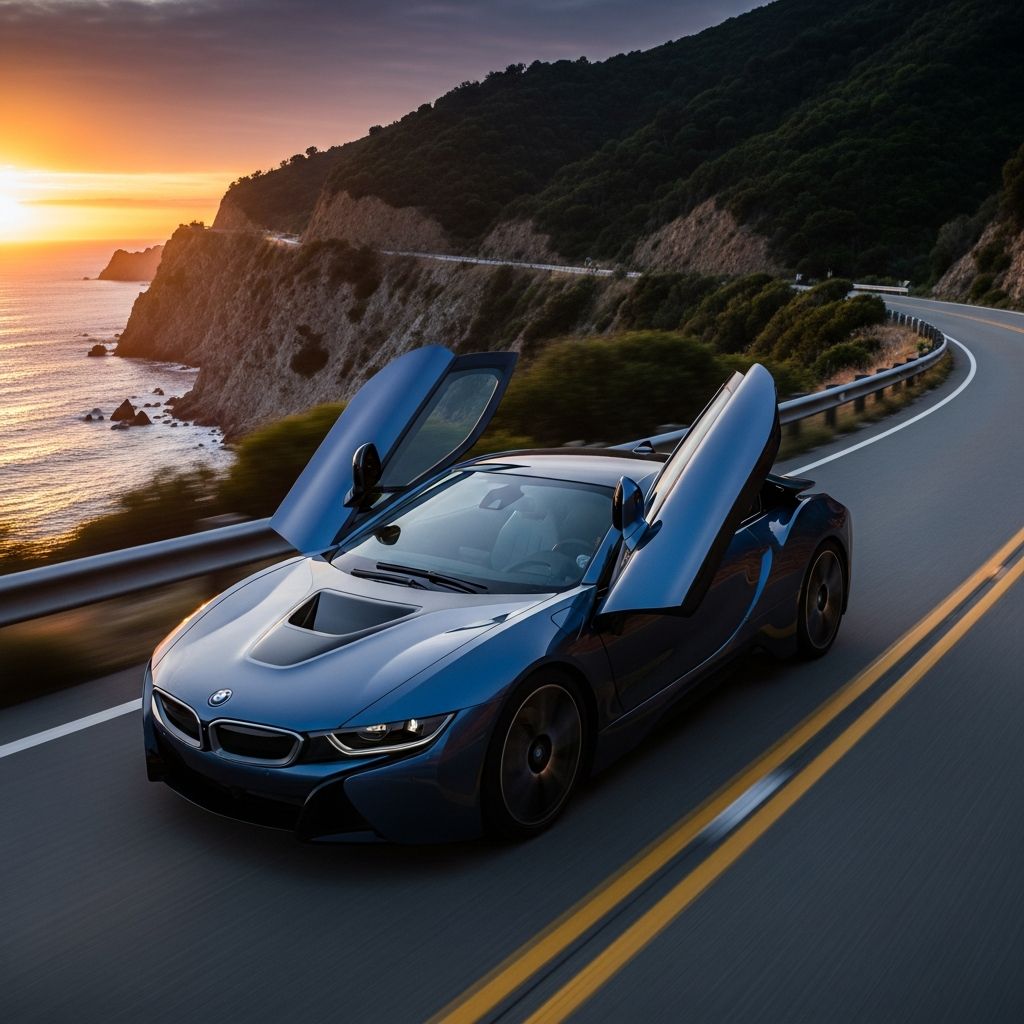
The automotive industry has long debated whether performance and environmental responsibility can coexist in a single vehicle. The BMW i8 stands as a compelling answer to this question, representing a paradigm shift in how supercars can be engineered for the modern era. This distinctive machine combines turbocharged power with electric efficiency, creating an experience that challenges conventional wisdom about what a high-performance vehicle should be. Since its introduction, the i8 has maintained its position as a unique offering in the sports car market, proving that exhilarating acceleration and impressive fuel economy need not be mutually exclusive.
The Evolution of Plug-in Hybrid Technology in the i8
The BMW i8 represents a carefully considered approach to hybrid propulsion, incorporating technology that allows it to function as a pure electric vehicle for urban driving while retaining the extended range and performance capabilities of a traditional combustion engine. This dual-powertrain strategy distinguishes the i8 from conventional sports cars, offering drivers flexibility in how they approach each journey. The vehicle’s engineering represents a maturation of plug-in hybrid concepts, with continuous refinements ensuring that neither the electric system nor the petrol engine feels like a compromise.
The propulsion system consists of three distinct power sources working in coordinated harmony. A turbocharged 1.5-liter three-cylinder petrol engine, originally derived from Mini Cooper engineering, provides the foundation for extended-range capability. This compact powerplant delivers 227 horsepower, demonstrating that displacement no longer determines performance potential. Complementing this is an electric motor mounted on the front axle, supplying 143 horsepower of instantaneous torque. The combination yields a total system output of 369 horsepower, sufficient to accelerate the vehicle from zero to 62 mph in approximately 4.4 seconds.
Recent iterations of the i8 have benefited from enhanced battery technology. The lithium-ion battery capacity has expanded from 20Ah to 34Ah in newer models, increasing the electric-only driving range to 34 miles. This represents a meaningful improvement for daily commuting scenarios, where many journeys can be completed on electric power alone, eliminating tailpipe emissions during these segments.
Performance Characteristics and Driving Dynamics
The i8 delivers a driving experience that defies easy categorization. When both power sources are engaged simultaneously, the vehicle demonstrates acceleration figures competitive with established performance marques. In sport mode, drivers report the ability to maintain pace with considerably more expensive exotic vehicles, suggesting that the published performance specifications may actually be conservative estimates of real-world capability.
The instant torque delivery from the electric motor creates a unique acceleration signature. Unlike traditional turbocharged engines that require engine revolutions to build boost pressure, the electric motor provides maximum force immediately upon application of throttle input. This characteristic means corner-exit acceleration feels particularly strong, and the vehicle’s overall responsiveness exceeds what one might anticipate from its relatively modest engine displacement.
During pure electric driving, the i8 operates nearly silently, with refined power delivery through the front wheels. The experience is markedly different from petrol-powered acceleration, offering a smooth and cultured alternative for city driving. When the petrol engine engages, drivers can select between Comfort mode for relaxed motoring and Eco Pro mode for maximized fuel efficiency on longer journeys. The transition between power sources occurs seamlessly, with the driver experience remaining uncompromised during the switchover.
Efficiency and Real-World Fuel Consumption
The efficiency claims surrounding the i8 warrant careful examination, as official figures frequently diverge substantially from practical experience. BMW’s official fuel economy rating stands at approximately 150 mpg under the WLTP test cycle, though real-world driving typically demonstrates considerably lower figures. Long-term owners report average fuel consumption in the 60 mpg range under normal driving conditions, with efficiency improving when the vehicle is operated in electric-only mode for shorter journeys.
The vehicle’s energy consumption translates to 23.5 kWh per 100 kilometers according to EV database measurements, which provides a useful metric for understanding efficiency relative to pure electric vehicles. When charged from the grid and driven exclusively on electric power within the 34-mile range limitation, the i8 delivers zero tailpipe emissions and outstanding energy efficiency. However, drivers who frequently exhaust battery capacity and rely on the petrol engine will observe fuel consumption figures more aligned with conventional sports cars, typically ranging between 20 and 35 mpg depending on driving style and terrain.
The disparity between official and actual figures reflects several factors, including the aggressive testing protocols of the WLTP cycle and the vehicle’s performance-oriented engineering. The i8 was not designed as a fuel-economy champion but rather as a supercar that happens to incorporate hybrid technology, and this design philosophy is evident in its real-world consumption patterns.
Aesthetic Innovation and Practical Design
The BMW i8’s visual presentation commands attention in virtually any environment. The distinctive upward-hinging gull-wing doors create a dramatic visual statement, while the overall silhouette suggests performance capabilities that the powertrain largely delivers. This audacious styling approach distinguishes the i8 from competitors such as the Honda NSX and Audi R8, vehicles that pursue more conventional aesthetic paths.
Despite its challenging exterior proportions, the i8 proves more accessible for daily use than many established supercars. The driving position offers reasonably good outward visibility for a vehicle in this category, and standard features including parking sensors and a surround-view camera system facilitate parking and maneuvering in tight urban environments. The adaptive suspension system absorbs road imperfections with competence, softening the impact from larger potholes and bumps that would challenge vehicles with performance-focused suspension tuning.
The interior construction employs extensive plastic components, which some observers view as inconsistent with the vehicle’s premium positioning. However, this material selection contributes to weight reduction, a critical factor in hybrid vehicle efficiency. The cabin design prioritizes functionality over opulence, reflecting the i8’s positioning within BMW’s efficiency-focused “i” division rather than the brand’s traditional luxury segment.
Practical Considerations for Prospective Owners
The i8 presents several ownership characteristics that extend beyond conventional performance metrics. The vehicle’s unique positioning means maintenance and repair considerations may differ from those of traditional sports cars. Specialized expertise in plug-in hybrid systems adds complexity to servicing, potentially affecting long-term ownership costs.
Depreciation represents another significant consideration. The i8’s distinctive nature and limited production volumes have contributed to substantial depreciation from original purchase prices. Used examples purchased several years after initial sale offer considerably reduced entry prices, though this reflects the vehicle’s niche status rather than any deficiency in engineering or reliability.
The interior durability has proven commendable according to long-term owner reports. Areas such as seat bolsters and door sills show wear patterns consistent with any performance vehicle, but overall interior condition has held up well across multiple years of ownership, suggesting sound material selection and construction quality despite the extensive use of plastic components.
Technology Integration and Control Systems
The i8 incorporates an EV button allowing drivers to enforce electric-only operation, ensuring the petrol engine remains dormant during selected driving sessions. This feature proves particularly valuable in urban environments where zero-emission operation is desired or required. The driver can push the vehicle moderately hard while maintaining electric-only power, with the petrol engine engaging only when truly aggressive acceleration is demanded.
The synthesized engine sound piped into the cabin during petrol-powered driving represents an interesting design choice. While not equivalent to the visceral appeal of a naturally aspirated engine, this approach adds auditory interest to the driving experience without the mechanical complexity and weight penalties of traditional intake and exhaust systems.
Comparative Performance Analysis
| Specification | BMW i8 | Performance Category |
|---|---|---|
| 0-62 mph Acceleration | 4.4 seconds | Competitive with contemporary supercars |
| Total Horsepower | 369 hp | Meaningful performance capability |
| Electric-Only Range | 34 miles | Sufficient for typical commutes |
| Official Fuel Economy | 150 mpg | Test cycle performance |
| Actual Fuel Economy | 60 mpg average | Real-world driving |
| Battery Capacity | 34 Ah lithium-ion | Enhanced efficiency |
| Driving Range | 350+ miles | Extended capability with petrol engine |
The i8 as Daily Transportation
Despite its supercar credentials, the i8 functions more effectively as daily transportation than many established performance vehicles. The automatic transmission in both the electric and petrol powertrains eliminates gear selection, reducing fatigue during congested urban driving. The electric-only mode provides genuinely practical all-day capabilities for drivers with predictable commute patterns and access to charging infrastructure.
The vehicle’s relatively compact dimensions, despite its dramatic styling, facilitate parking and maneuvering in typical urban environments. The suspension tuning balances performance with compliance, making extended driving sessions reasonably comfortable by sports car standards. These attributes combine to create a machine that functions credibly as primary transportation while maintaining exotic vehicle credentials.
Frequently Asked Questions
How long does the BMW i8 battery take to charge?
Charging time varies depending on charger capacity. Standard household charging requires approximately 3-4 hours, while dedicated charging equipment can reduce this to 1.5-2 hours.
What happens when the battery depletes during driving?
The petrol engine automatically engages, allowing continuous operation. The transition occurs seamlessly without any noticeable interruption to driving dynamics or comfort.
Is the i8 suitable for track driving?
While capable of impressive performance figures, the i8 was engineered for efficiency and daily usability rather than sustained track operation. Extended high-speed driving depletes battery reserves quickly, shifting the vehicle to petrol-only operation.
How does the i8 compare to pure electric supercars?
The i8 offers extended range and flexibility through its hybrid architecture, whereas pure electric alternatives provide instantaneous power delivery and zero emissions during operation. The choice depends on individual prioritization of extended range versus emissions reduction.
The i8’s Position in the Contemporary Market
The BMW i8 maintains a unique market position that few vehicles occupy. It delivers supercar performance and dramatic styling while incorporating hybrid efficiency that provides practical advantages for daily driving. This combination proves increasingly relevant as emissions regulations tighten globally and environmental consciousness influences purchasing decisions among affluent consumers.
The vehicle’s engineering philosophy—prioritizing efficiency dynamics alongside performance rather than treating them as opposing objectives—influenced subsequent BMW models and contributed to industry-wide recognition that these characteristics need not be mutually exclusive. The i8 demonstrated that ambitious styling and innovative technology could coexist with practical consideration for operational economy.
As the automotive industry transitions toward electrification, the i8’s plug-in hybrid approach represents an interesting evolutionary step. The vehicle bridged the transition between conventional supercars and fully electric performance vehicles, proving that hybrid technology could deliver genuine appeal rather than serving as a compromise solution for environmentally conscious performance enthusiasts.
References
- BMW i8 Performance Review – Everything Electric — Fully Charged. Accessed April 2026. https://fullycharged.show/reviews/bmw-i8-performance-review/
- BMW i8: Long Term Test Review — Discover EV. Accessed April 2026. https://www.discoverev.co.uk/ev-reviews/bmw-i8-long-term-review
- 2020 BMW i8 Review, Pricing, and Specs — Car and Driver. Accessed April 2026. https://www.caranddriver.com/bmw/i8
- BMW i8 Review 2026: Drive, Specs & Pricing — Carwow. Accessed April 2026. https://www.carwow.co.uk/bmw/i8
- BMW i8 Roadster Review: Take Away The Roof, And The Desire Grows — Car Throttle. Accessed April 2026. https://www.carthrottle.com/reviews/bmw/bmw-i8-roadster-review-take-away-roof-and-desire-grows
Similar Articles



Read full bio of medha deb