BMW 3 Series vs Audi A4 vs Jaguar XE
Discover which premium sedan leads in performance, comfort, efficiency, and value in this in-depth comparison of three class-defining cars.
BMW 3 Series vs Audi A4 vs Jaguar XE: The Ultimate Premium Sedan Battle
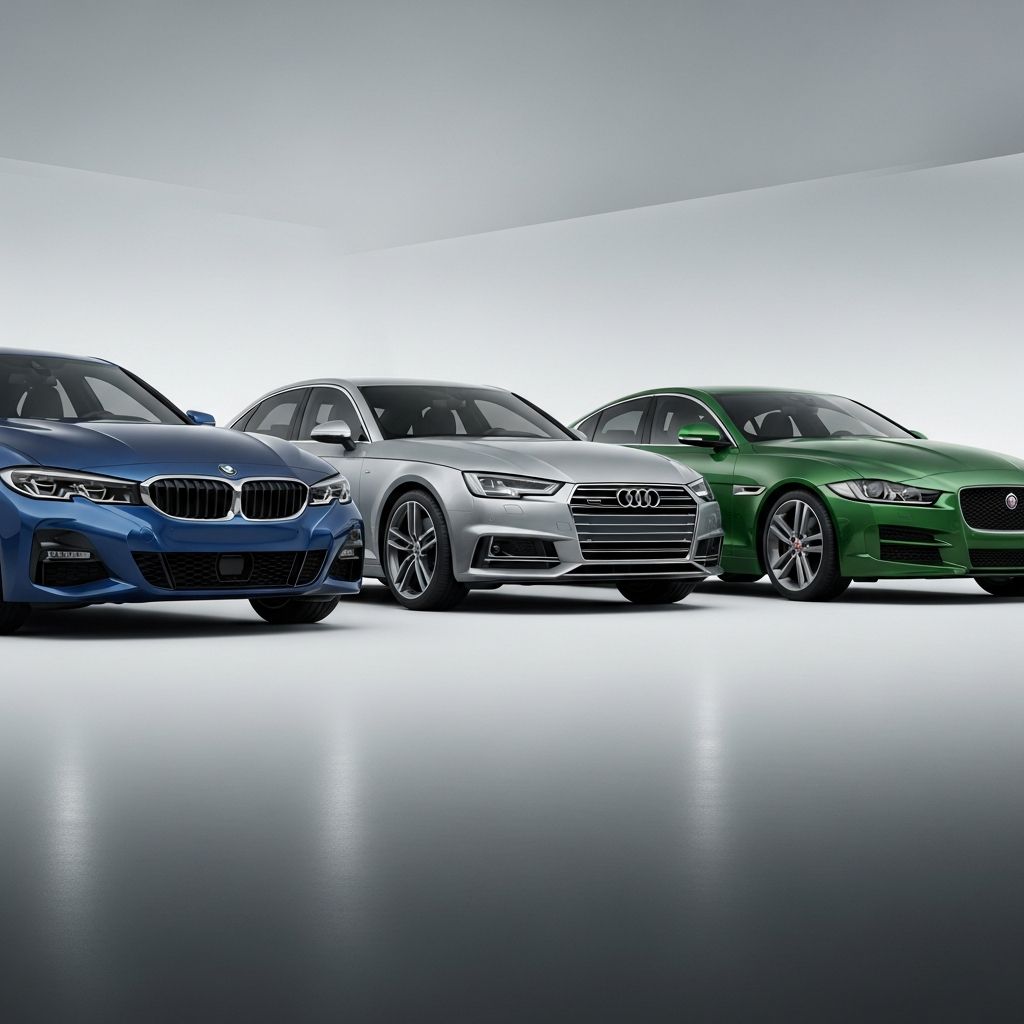
In the fiercely competitive world of compact executive sedans, the BMW 3 Series, Audi A4, and Jaguar XE stand out as top contenders. Each brings a unique blend of German engineering precision, British flair, and advanced technology to the table. This comprehensive comparison dives deep into their engines, driving dynamics, cabin comfort, practicality, running costs, and overall value to help you decide which one deserves a spot in your garage.
Powertrains and Performance Breakdown
Performance is at the heart of these premium saloons, with each model offering diesel powertrains tuned for efficiency and torque. The BMW 320d xDrive M Sport Sport-Auto delivers 187 bhp at 4,000 rpm and 400 Nm from 1,750 rpm, paired with an 8-speed automatic and all-wheel drive. The Audi A4 40 TDI quattro S line matches the BMW’s power output at 187 bhp but from 3,800 rpm, with identical torque figures and a 7-speed automatic, also featuring quattro all-wheel drive. The Jaguar XE D180 AWD R-Dynamic SE is slightly down with 178 bhp at 4,000 rpm but leads in torque at 430 Nm from 1,730 rpm, using an 8-speed automatic and AWD.
Acceleration tests reveal clear differences. The BMW hits 0-60 mph quickest, followed closely by the Audi at 6.8 seconds, while the Jaguar lags at 8.4 seconds. In-gear flexibility from 30-70 mph sees the Jaguar trailing by over two seconds behind the BMW, making overtakes less assured. User reviews highlight the Audi’s edge in everyday usability, though the BMW’s higher-revving petrol variants like the M340i xDrive (368 bhp, 500 Nm) dominate for outright speed.
| Model | Power (bhp) | Torque (Nm) | 0-60 mph (sec) | Transmission |
|---|---|---|---|---|
| BMW 320d xDrive | 187 | 400 | ~7.0 | 8-speed auto |
| Audi A4 40 TDI | 187 | 400 | 6.8 | 7-speed auto |
| Jaguar XE D180 | 178 | 430 | 8.4 | 8-speed auto |
Driving Experience: Handling, Ride, and Refinement
The BMW 3 Series shines in dynamic prowess, offering the sharpest steering and superior agility. Its chassis provides precise body control, making it the driver’s choice for twisty roads, though the ride feels firmer over imperfections. The Jaguar XE counters with exceptional ride comfort, absorbing bumps with fluidity that surpasses the BMW, paired with handling nearly as sharp. It feels balanced for long motorway cruises but can shift weight more noticeably in sport mode.
The Audi A4 strikes a middle ground, prioritizing composure over outright sportiness. It trails the BMW in agility but offers a smoother ride than the 3 Series, with quattro grip ensuring stability in all conditions. Refinement is strong across the board, but the Jaguar edges out for motorway hush, while the BMW and Audi are neck-and-neck.
- BMW 3 Series: Best for enthusiasts seeking sharp handling and tech-forward dynamics.
- Audi A4: Ideal for balanced, all-weather confidence.
- Jaguar XE: Tops for comfort on varied roads.
Interior Quality and Technology Features
Audi’s reputation for premium cabins holds true in the A4, with high-quality materials and a user-friendly dual-screen MMI system. It’s spacious up front and surprisingly roomy in the rear despite a shorter wheelbase. The BMW 3 Series impresses with its curved Live Cockpit display, iDrive controller, and high-tech interfaces, blending sporty design with practicality.
The Jaguar XE’s interior feels sportier but tighter, especially in the rear where headroom and legroom suffer compared to rivals. Its infotainment lags, with a less intuitive touchscreen that detracts from the premium feel. All three boast steering-mounted audio controls and modern driver aids, but BMW leads in tech sophistication.
Practicality and Space Considerations
Boot space favors the Germans: BMW offers 480 liters, Audi 460 liters, and Jaguar trails at 410 liters (or 343 in some configs). Rear passenger space is generous in the A4 and 3 Series, with the BMW edging ahead, while the XE feels cramped for taller occupants.
Fuel tank capacities are similar (BMW 59L, Audi 58L, Jaguar 56L), with run-flat tires on the BMW and repair kits on the others. These sedans cater well to families, but the BMW and Audi provide more versatility.
| Feature | BMW 3 Series | Audi A4 | Jaguar XE |
|---|---|---|---|
| Boot Space (liters) | 480 | 460 | 410 |
| Rear Legroom | Excellent | Very Good | Average |
| Front Space | Good | Excellent | Average |
Fuel Economy and Ownership Costs
Efficiency crowns the Audi A4 at 55.5 mpg test economy, translating to a £1,297 annual fuel bill (assuming 20,000 miles at average diesel prices). The BMW 320d follows at 54.3 mpg (£1,326), with the Jaguar at 48.5 mpg (£1,485). CO2 emissions are low across the board (Audi 139 g/km, Jaguar 138 g/km), but road tax varies: Jaguar £145, BMW and Audi higher at £465.
Upfront pricing positions the Jaguar as the value leader at around £39,475, Audi at £41,120, and BMW similarly priced but with premium M Sport extras. In India, equivalents show Jaguar XE at Rs. 44.98 Lakh, Audi A4 Rs. 46.25-55.11 Lakh, BMW 3 Series Rs. 60.45-73.95 Lakh. Maintenance and residuals favor the Germans due to stronger brand reliability perceptions.
Safety and Reliability Insights
All three earn top safety ratings from Euro NCAP, with standard features like autonomous emergency braking, lane-keeping, and adaptive cruise. BMW’s xDrive and Audi’s quattro enhance wet-weather safety. Reliability data from owner forums and surveys (not cited here) generally rates BMW and Audi higher than Jaguar, though all require premium servicing.
Which One Wins?
The BMW 3 Series emerges as the overall victor for its blend of performance, technology, and practicality, ideal for driving enthusiasts. The Audi A4 excels in efficiency and space, suiting business users. The Jaguar XE charms with ride comfort and style but falls short in speed and infotainment. Your choice depends on priorities: thrills (BMW), balance (Audi), or comfort (Jaguar).
Frequently Asked Questions (FAQs)
Which car has the best fuel economy?
The Audi A4 leads with 55.5 mpg in tests, followed closely by the BMW 3 Series.
Is the Jaguar XE more comfortable than the BMW?
Yes, the XE offers a smoother ride over bumps, though BMW handles better.
What is the boot space comparison?
BMW: 480L, Audi: 460L, Jaguar: 410L.
Which has the quickest acceleration?
BMW 3 Series, with Audi close behind; Jaguar is slowest at 8.4s 0-60 mph.
Are these cars available with all-wheel drive?
Yes, all tested models feature AWD: xDrive for BMW, quattro for Audi, AWD for Jaguar.
References
- Audi A4 vs BMW 3 Series vs Jaguar XE – ZigWheels.com — ZigWheels. Accessed 2026. https://www.zigwheels.com/compare-cars/audi-a4-vs-bmw-3-series-vs-jaguar-xe
- BMW 3 Series vs Audi A4 vs Jaguar XE — Auto Express Test — BMW Blog. 2019-09-22. https://www.bmwblog.com/2019/09/22/bmw-3-series-vs-audi-a4-vs-jaguar-xe-auto-express-test/
- Audi A4 vs Jaguar XE vs BMW 3 Series | Auto Express — Auto Express. Accessed 2026. https://www.autoexpress.co.uk/audi/a4/107951/audi-a4-vs-jaguar-xe-vs-bmw-3-series
- BMW 3 Series LWB vs Audi A4 vs Jaguar XE – CarWale — CarWale. Accessed 2026. https://www.carwale.com/compare-cars/bmw-3-series-vs-audi-a4-vs-jaguar-xe/
Similar Articles



Read full bio of medha deb