Audi Le Mans Quattro: 610 HP V10 Concept Shaping Audi Design
Explore the groundbreaking 2003 Audi Le Mans Quattro, a concept that fused racing pedigree with revolutionary road car tech for ultimate performance.
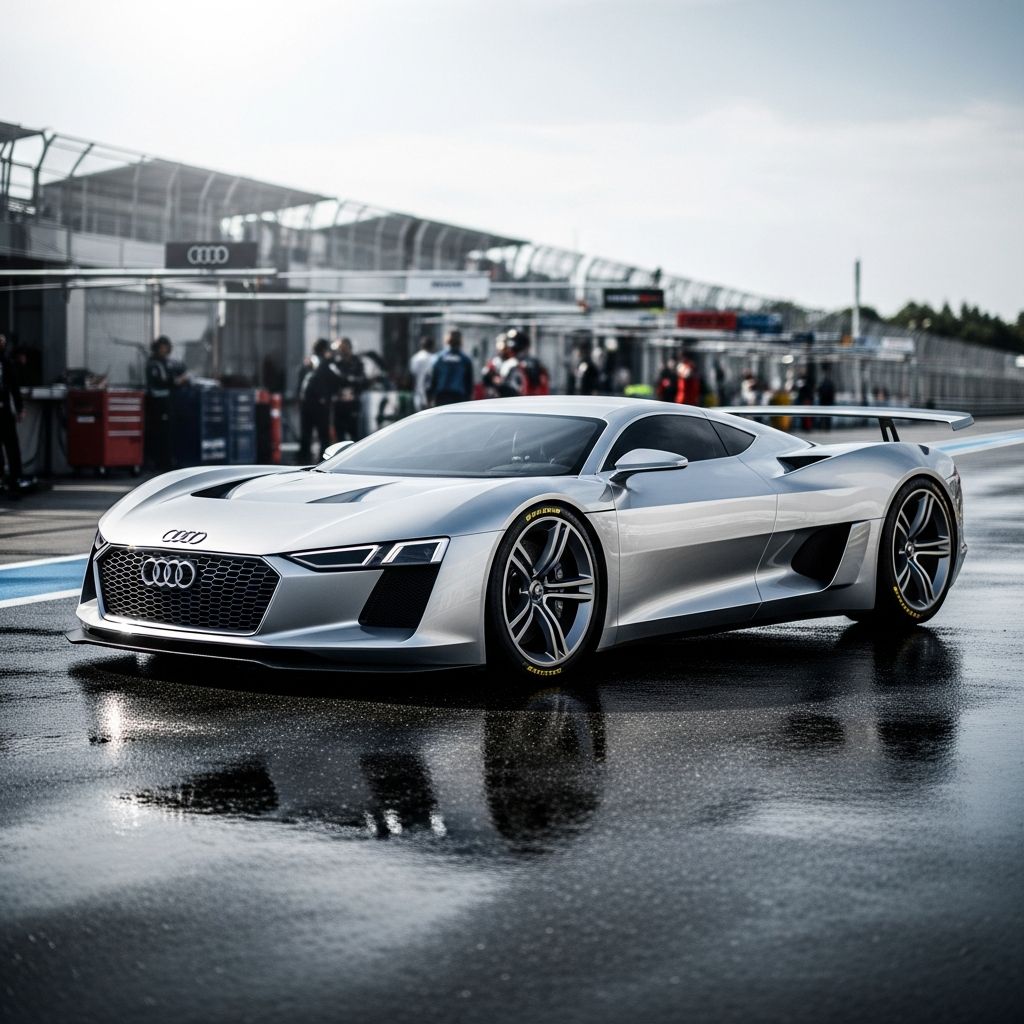
The Audi Le Mans Quattro concept, unveiled at the 2003 Frankfurt Motor Show, represented a bold fusion of motorsport heritage and cutting-edge automotive engineering. Drawing inspiration from Audi’s dominant victories at the 24 Hours of Le Mans race in 2000, 2001, and 2002 with the R8 prototype, this show car showcased what a road-legal supercar could achieve by borrowing directly from racing technology. With its aggressive styling, monstrous powertrain, and innovative chassis, it set a new benchmark for performance vehicles that could transition seamlessly from track to everyday roads.
Origins Tied to Racing Glory
Audi’s success at Le Mans was no accident; the R8 race car, powered by a turbocharged V8, clinched three consecutive wins, proving the brand’s prowess in endurance racing. The Le Mans Quattro concept paid homage to these triumphs while pushing boundaries for production feasibility. It embodied Audi’s philosophy of “Vorsprung durch Technik,” translating advanced race tech into a street machine capable of 0-62 mph in just 3.7 seconds. This wasn’t merely a showpiece; it hinted at future production models with its forward-looking design cues.
Powertrain: A Turbine-Like V10 Masterpiece
At the heart of the Le Mans Quattro beats a longitudinally mounted 5.0-liter twin-turbocharged V10 engine, delivering a staggering 610 horsepower and 553 pound-feet of torque. This powerplant, featuring direct petrol injection (FSI) technology proven in Le Mans winners, revs freely with explosive pull across the rev range. Peak torque of 750 Nm arrives between 1,750 and 5,800 rpm, minimizing the need for constant shifting. Paired with a six-speed sequential manual gearbox, it sends power to all four wheels via an advanced quattro system with a 40/60 front/rear bias, adjustable to 30/70 for optimal traction.
The engine’s design prioritizes both brutality and usability. Twin turbos spool quickly for turbine-like response, while FSI ensures efficient combustion and high output. On the road, it produces a symphonic exhaust note from dual tailpipes integrated into the rear fascia, promising top speeds exceeding 205 mph based on simulations.
- Engine Specs: 5.0L V10 biturbo FSI
- Power: 610 HP (449 kW)
- Torque: 553 lb-ft (750 Nm)
- 0-62 mph: 3.7 seconds
- Transmission: 6-speed sequential manual
Chassis and Suspension: Precision Engineering
Built on a lightweight aluminum spaceframe for exceptional rigidity, the Le Mans Quattro employs sophisticated suspension geometry. Front and upper rear control arms are triangulated, with trapezoidal lower rear arms, ensuring precise handling. It shod in massive Goodyear F1 tires—255/30ZR-20 front and 295/30ZR-20 rear—mounted on center-lock Ronal wheels, gripping the road with authority.
The star of the suspension is Audi’s magnetic ride technology. Shock absorbers use magneto-rheological fluid, whose viscosity changes via magnetic fields controlled electronically. This allows real-time damping adjustments for firm track dynamics or compliant road comfort, making it versatile for mountain passes or urban drives.
| Component | Front | Rear |
|---|---|---|
| Tires | 255/30ZR-20 | 295/30ZR-20 |
| Arm Design | Triangulated | Triangulated upper, trapezoidal lower |
| Drive Bias | 40% | 60% (adjustable) |
Exterior Design: Aggressive and Forward-Thinking
The Le Mans Quattro’s exterior screams performance with a deeper, bolder grille that foreshadowed Audi’s evolving design language. Sharp lines, wide stance, and low profile evoke the R8 racer, yet conventional doors ensure practical access. Its understated elegance appeals to enthusiasts seeking exclusivity without the flash of a Porsche 911. Aluminum body panels feature intricate jigsaw-like patterns, enhancing both aesthetics and structural integrity.
Aggressive aerodynamics channel air efficiently, with vents and diffusers optimizing downforce and cooling for the mid-engine layout. The result is a car that looks ready to devour circuits while blending into high-society settings.
Interior: Driver-Focused Luxury
Step inside, and the cockpit prioritizes the driver with controls angled toward the helm. A high center tunnel isolates occupants, fostering a race-car ambiance. Seats and trim use premium synthetic materials mimicking the exterior’s geometric motifs, creating seamless, symmetrical patterns.
The instrument panel blends analog and digital: a central tachometer pairs with a reconfigurable display showing clock, navigation, or even track maps like Le Mans with cornering speed advice. Four-point harnesses add safety without sacrificing opulence. Visibility is strong, though slim mirrors prioritize style—likely refined for production.
Legroom and headroom accommodate tall drivers comfortably, with ergonomic pedals and a spacious footwell. It’s a space for focused driving or refined cruising.
Performance on Road and Track
With quattro’s Torsen center differential distributing power dynamically, the Le Mans Quattro offers neutral, predictable handling. The 40/60 bias enhances agility on corners, while magnetic ride keeps composure over bumps. Simulations suggest it rivals GT race cars on tracks favoring straight-line speed, like Le Mans.
Its mid-engine placement and AWD make it forgiving yet thrilling, putting 610 HP to the ground without drama. In wet or dry, quattro shines, as echoed in related production models like the A6 Avant Le Mans edition.
Legacy and Influence on Audi’s Lineup
Though never produced, the Le Mans Quattro influenced Audi’s supercar evolution, seen in the R8’s production form. Its grille and proportions previewed models like the A8 and future flagships. Tech like FSI and magnetic ride became staples, proving concepts can shape reality.
Today, it remains a collector’s dream in simulations and games, valued for its blend of power and practicality. For enthusiasts, it symbolizes Audi’s racing-to-road philosophy.
Key Specifications Overview
- Layout: Mid-engine, AWD
- Chassis: Aluminum spaceframe
- Suspension: Magnetic ride adaptive
- Brakes: High-performance ventilated discs
- Weight: Optimized lightweight construction
FAQs
What inspired the Audi Le Mans Quattro?
It celebrated Audi’s three straight Le Mans wins with the R8 racer, incorporating race tech for road use.
How powerful is the V10 engine?
The twin-turbo 5.0L V10 produces 610 HP and 553 lb-ft, with FSI for efficiency.
Does it have all-wheel drive?
Yes, quattro with 40/60 bias and Torsen differential for superior traction.
Was it ever produced?
No, it was a 2003 concept, but influenced the R8 and other models.
What makes the suspension special?
Magnetic ride uses fluid that changes viscosity magnetically for adaptive damping.
References
- Audi Le Mans Quattro Concept — MotorTrend. 2003. https://www.motortrend.com/news/2003-fms-audilemans
- Audi Le Mans Quattro Concept First Drive Review — Car and Driver. 2003. https://www.caranddriver.com/reviews/a15133556/audi-le-mans-quattro-concept-first-drive-review/
- 2003 Audi Le Mans Quattro Concept — Supercars.net. 2003. https://www.supercars.net/blog/2003-audi-le-mans-quattro-concept/
- 2007 Audi A6 Avant 3.0 TDI Quattro Le Mans – Condition Review — YouTube (J A Jarvis). 2007. https://www.youtube.com/watch?v=LA8L50E8LAk
Similar Articles








Read full bio of Sneha Tete