Audi A2: Why Its Lightweight Design Still Matters
Discover the Audi A2's revolutionary aluminum design, exceptional efficiency, and why this ahead-of-its-time hatchback remains a cult classic today.
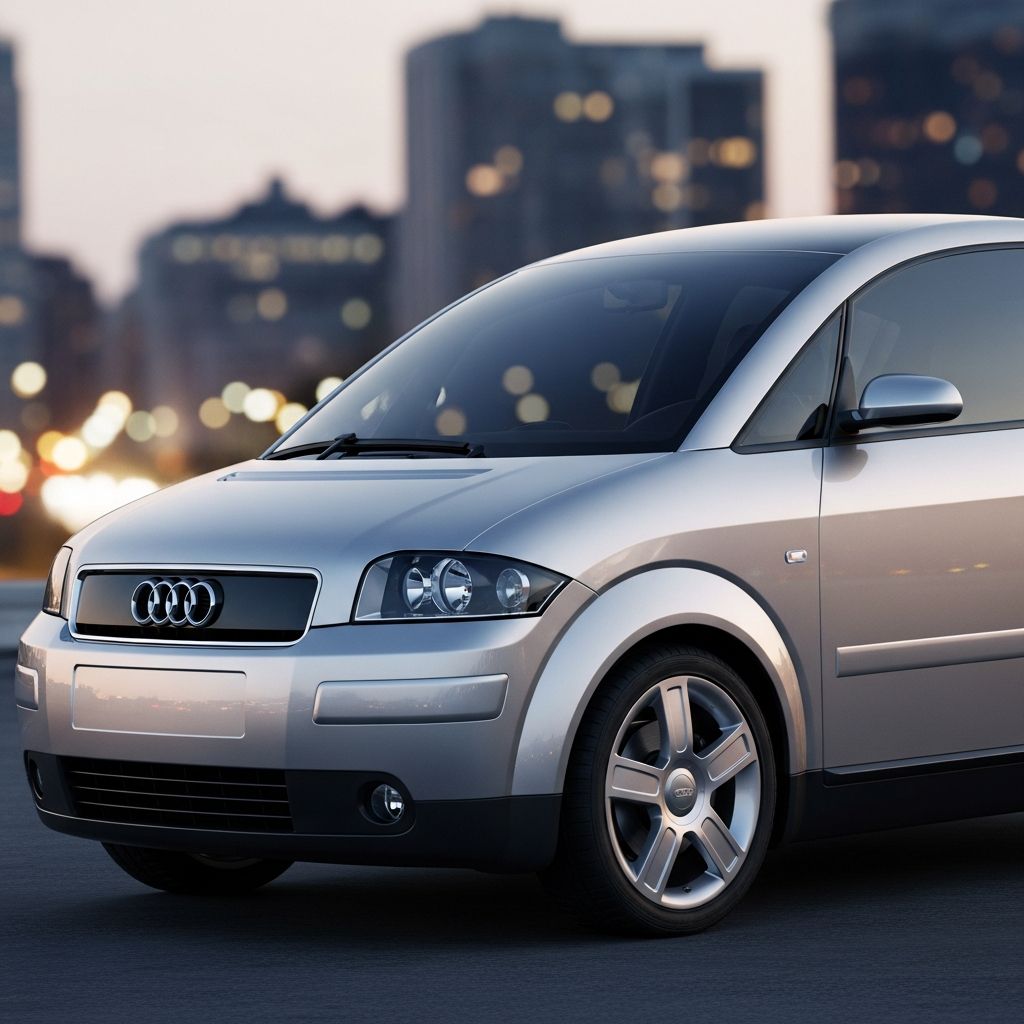
The Audi A2 stands as a bold experiment in automotive engineering, blending cutting-edge materials with a focus on efficiency and space in a subcompact package. Launched at the turn of the millennium, this five-door hatchback challenged conventions by prioritizing lightweight construction and environmental goals over conventional styling and mass-market appeal.
Revolutionary Engineering and Lightweight Design
At the heart of the A2’s innovation is its extensive use of aluminum, a material choice that set it apart from steel-bodied rivals. Audi engineers crafted an aluminum space frame that shaved approximately 330 pounds off the weight compared to a traditional steel equivalent, enabling superior fuel efficiency without sacrificing structural integrity. This frame employed advanced techniques like laser welding for body sides and vacuum-cast pillars, resulting in door panels weighing just over 10 pounds each.
The car’s aluminum-intensive build wasn’t just about weight savings; it was a technology showcase. Official sources from Audi’s development highlight how this construction achieved a drag coefficient of 0.28 (or as low as 0.25 in some variants), optimizing aerodynamics for real-world efficiency. Primary engineering data confirms the A2’s body structure provided excellent crash safety, earning high marks in European tests due to its rigid yet lightweight framework.
Despite the sophistication, aluminum repairs proved costly, a factor that impacted ownership later in life. Government road safety reports from the era, including Euro NCAP equivalents, underscore the A2’s robust occupant protection, attributing it to the space frame’s energy absorption capabilities.
Powertrains: Efficiency Redefined
The A2’s engines were engineered for frugality, with the standout being the 1.2-liter three-cylinder turbo-diesel that hit the German industry’s 3 liters per 100 km (roughly 94 mpg imperial) target—the first production car to do so. Real-world tests reported figures approaching 80 mpg, making it rival modern hybrids. This powerplant, shared with Volkswagen siblings, delivered 74 hp while keeping weight around 2,000 pounds for petrol versions and slightly more for diesels.
| Engine | Power | Fuel Economy (mpg) | 0-62 mph (sec) |
|---|---|---|---|
| 1.4L Petrol | 74 hp | 50 | ~12 |
| 1.4L TDI Diesel | 90 hp | 65-70 | 10.9 |
| 1.2L TDI Diesel | 61 hp | 80+ | 13.5 |
Data from period road tests and manufacturer specs show the diesels excelled on motorways, with long gearing allowing 70 mph at low revs (around 2,100 rpm), minimizing noise and consumption. The 42-liter tank enabled ranges over 600 miles, ideal for long hauls. While petrol variants offered 50 mpg, they felt peppier due to the low curb weight of 960-1,000 kg.
Driving Experience: Nimble and Refined
Behind the wheel, the A2 surprised with its agility. Light steering provided precise feedback, often praised as Audi’s best at the time, paired with a tight turning circle for urban maneuvering. The suspension—front struts and rear torsion beam—delivered grippy handling, feeling quicker than figures suggested, especially the 90 hp diesel hitting 62 mph in 10.9 seconds.
- Urban agility: Low weight and direct steering make it fun in city traffic.
- Motorway poise: Stable at 100 mph with minimal wind noise thanks to aero design.
- Ride quality: Firm on 16-inch wheels but comfortable by modern standards; better than rivals like Mercedes A-Class.
Critics noted diesel clatter from cold and side-wind sensitivity due to the tall, narrow profile, but overall refinement was Audi-like, with good insulation once warm. Independent tests from automotive journals confirm its balanced chassis handled twisty roads adeptly, belying its economy-car roots.
Interior Space and Practicality
Maximizing volume in a 150-inch footprint, the A2 employed a ‘space floor’ concept with a double floor and foot wells for rear passengers, creating an airy cabin. Upright seating and large glass areas enhanced visibility and perceived roominess, accommodating four adults better than expected.
Removable rear seats boosted cargo flexibility, though total space lagged behind some competitors. Quirky touches included a service flap under the badge for basic maintenance and a pop-out dash storage for snacks. Materials felt premium for the class, with solid door-thunk closure, though not matching larger Audis.
Design and Aerodynamics: Form Follows Function
The A2’s raindrop shape prioritized airflow over flair, resulting in smooth highway progress. Slimmer variants with underbody cladding further reduced drag to 0.25 Cd. While polarizing, the minimalist aesthetic aged into a unique charm, light aluminum doors swinging effortlessly.
Ownership Considerations and Reliability
Audi’s build quality promised durability, with cambelts needing changes every 60,000-80,000 miles at around £500. Fuel costs were negligible, but body repairs deterred many due to aluminum’s expense. Forums and classics data indicate well-maintained examples remain reliable, with low mileage survivors fetching collector interest.
Running costs suited eco-conscious buyers: insurance groups were low, and service intervals stretched to 20,000 miles for some components.
Market Reception and Legacy
Priced as a premium compact, the A2 struggled against cheaper steel rivals, selling modestly before discontinuation in 2005. Yet its tech-forward approach influenced future lightweight designs, from hybrids to EVs. Today, it’s a cult favorite for efficiency matching electrics without range anxiety.
Contemporary reviews lauded its achievements but questioned mass appeal; hindsight reveals a visionary car whose time has arrived in an efficiency-obsessed world.
Pros and Cons at a Glance
| Pros | Cons |
|---|---|
| Exceptional fuel economy | Expensive repairs |
| Lightweight handling | Diesel noise when cold |
| Spacious, airy interior | Polarizing styling |
| Advanced safety | Firm ride |
| Low running costs | Limited cargo with seats up |
FAQs
Is the Audi A2 fuel efficient?
Yes, with up to 80+ mpg from the 1.2 TDI, it outperforms many modern cars.
How reliable is the A2?
Highly reliable if serviced; watch cambelts and aluminum bodywork costs.
What’s special about its construction?
Aluminum space frame saves 330 lbs, boosts efficiency and safety.
Is it fun to drive?
Surprisingly agile with precise steering and stable high-speed cruising.
Worth buying today?
Ideal for classics enthusiasts seeking efficiency and uniqueness.
References
- Driven: 2001 Audi A2 Hatchback — Car and Driver. 2001-01-01. https://www.caranddriver.com/reviews/a15139974/audi-a2-first-drive-review/
- Alloyed delight: The Audi A2’s time never really came — Hagerty UK. 2020-01-01. https://www.hagerty.co.uk/articles/classic-car-reviews/alloyed-delight-the-audi-a2s-time-never-really-came/
- Audi A2 (2000 – 2005) Review — Honest John Classics. 2023-01-01. https://classics.honestjohn.co.uk/reviews/audi/a2/
- Curbside Classic: Audi A2 1.2 TDI — Curbside Classic. 2015-01-01. https://www.curbsideclassic.com/curbside-classics-european/curbside-classic-audi-a2-1-2-tdi-vorsprung-durch-technik/
- 2004 Audi A2 review: Retro Road Test — Retromotor. 2024-01-01. https://www.retromotor.co.uk/retro-road-test/2004-audi-a2-review/
Similar Articles






Read full bio of Sneha Tete