Atkinson Cycle Engines: How They Improve Fuel Economy
Discover how Atkinson cycle engines boost fuel efficiency through innovative valve timing, their ideal role in hybrids, and the trade-offs involved.
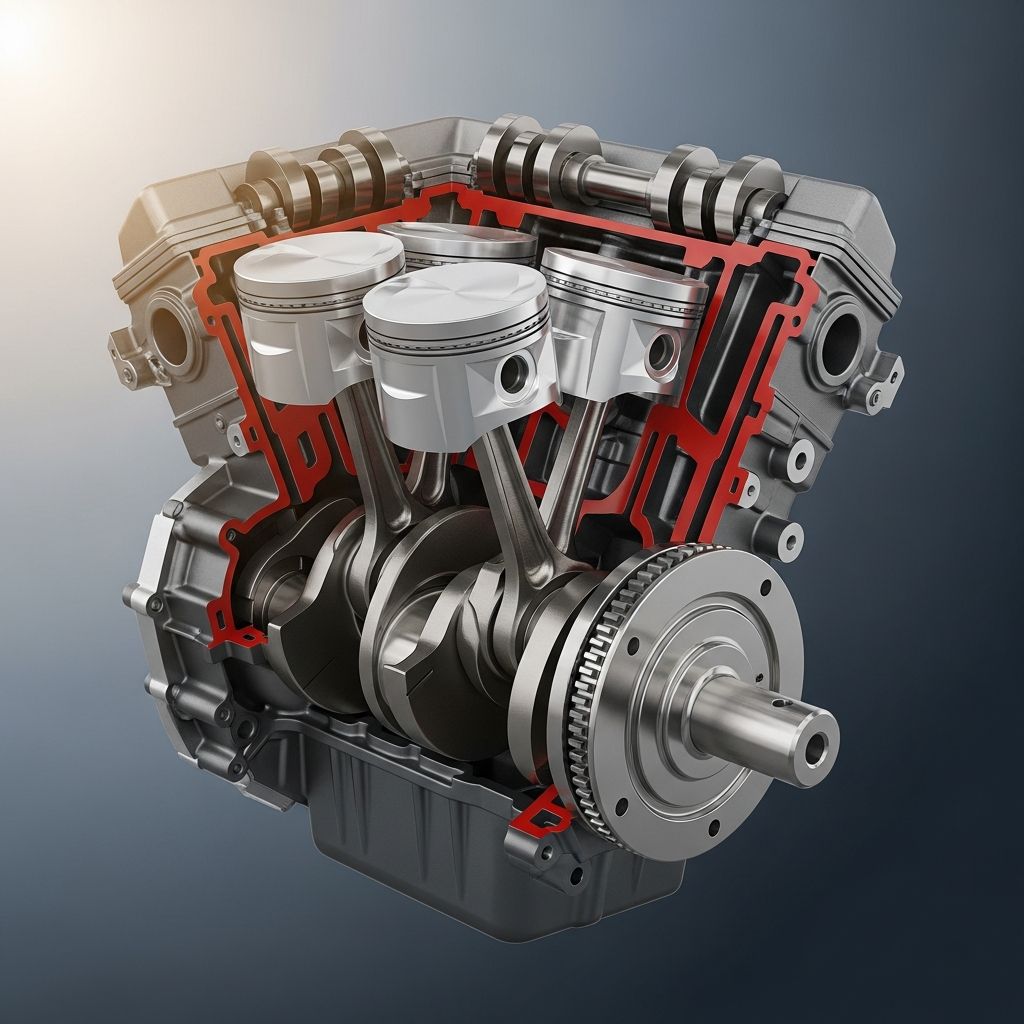
Atkinson Cycle Engines Explained
The Atkinson cycle engine represents a clever evolution in internal combustion technology, prioritizing fuel efficiency over raw power by altering the traditional four-stroke process. This design, pioneered in the late 19th century, has found renewed relevance in today’s automotive landscape, especially in hybrid vehicles.
The Fundamentals of Engine Cycles
Internal combustion engines operate on repeating cycles of intake, compression, power, and exhaust. In the standard Otto cycle, used in most gasoline engines, the intake valve closes fully before compression begins, ensuring a balanced compression and expansion stroke. This setup delivers consistent power but at the cost of some thermal efficiency, as not all energy from combustion is fully extracted.
Atkinson cycle engines diverge by keeping the intake valve open longer into the compression stroke. As the piston rises, a portion of the air-fuel mixture gets pushed back into the intake manifold. This reduces the effective amount of mixture compressed, lowering the compression ratio while preserving a full expansion ratio during the power stroke. The result? More work extracted from each fuel increment, translating to better mileage.
How the Atkinson Cycle Operates Step by Step
Understanding the Atkinson cycle requires breaking down its four strokes:
- Intake Stroke: Piston descends, drawing in air-fuel mixture with the intake valve open.
- Compression Stroke (Modified): Piston ascends, but intake valve remains open for 20-30% of the stroke, expelling some mixture back to the manifold. This creates a lower effective compression ratio, around 8:1 to 10:1, versus Otto’s 10:1 to 12:1.
- Power Stroke: Spark ignites the mixture; piston descends fully, leveraging the longer expansion stroke to convert heat into mechanical energy efficiently.
- Exhaust Stroke: Piston rises again, expelling gases with the exhaust valve open.
This late intake valve closing (IVC) is managed today via variable valve timing (VVT) systems, electronics, and hydraulic actuators, a far cry from James Atkinson’s original mechanical linkages in 1882.
Core Advantages Driving Adoption
Atkinson engines excel in scenarios demanding economy over performance. Key benefits include:
- Superior Fuel Economy: Studies show up to 9% better brake specific fuel consumption (BSFC) at 2000-3000 rpm, thanks to reduced pumping losses and higher thermal efficiency.
- Lower Emissions: Cooler combustion peaks cut NOx formation, aiding compliance with strict standards.
- Pumping Loss Reduction: Less throttle restriction at part loads minimizes energy wasted overcoming intake vacuum.
- Hybrid Synergy: Electric motors compensate for low-end torque deficits, making it ideal for city driving and steady cruising.
Thermal efficiency can reach 40% or more in optimized designs, surpassing Otto cycles’ typical 30-35%.
Challenges and Performance Trade-Offs
No technology is perfect; Atkinson’s efficiency comes with compromises:
- Reduced Power Density: Less air-fuel in the cylinder means lower torque, especially at low speeds—unsuitable for standalone sports cars.
- Engineering Complexity: VVT adds cost, weight, and potential failure points.
- Acceleration Lag: Feels sluggish from stops or hills without electric assistance.
To illustrate, here’s a comparison table:
| Aspect | Otto Cycle | Atkinson Cycle |
|---|---|---|
| Compression Ratio | 10:1 – 12:1 | 8:1 – 10:1 (effective) |
| Expansion Ratio | Equal to compression | Higher than compression |
| Fuel Efficiency | Good | Excellent (up to 9% better BSFC) |
| Low-Speed Power | Strong | Weaker |
| Best Use | Performance cars | Hybrids, cruisers |
Data drawn from engineering analyses.
Historical Evolution and Inventor
James Atkinson patented his cycle in 1882, aiming for efficiency in stationary engines. Early prototypes used over-square designs with complex valve gear, but they struggled with power and reliability. The concept languished until the 1990s hybrid boom revived it electronically.
Modern implementations, like Toyota’s since the 1997 Prius, use late intake valve closing via cam phasers, proving the idea’s viability.
Real-World Applications in Vehicles
Atkinson shines in hybrids:
- Toyota Prius and Lexus Hybrids: Flagship users, delivering 50+ mpg combined.
- Ford Fusion Hybrid, C-Max: Similar efficiency gains.
- Mazda SkyActiv: Partial Atkinson mode via VVT for non-hybrids.
Some engines switch dynamically: Otto for acceleration, Atkinson for cruise, balancing both worlds without full hybridization.
Variants like the Miller cycle add turbocharging to offset power loss, used in some Honda and Nissan models.
Technical Innovations Enabling Modern Use
Key enablers include:
- Variable Valve Timing (VVT): Adjusts IVC precisely.
- Electric Throttle Control: Fine-tunes load.
- High-Efficiency Combustion Chambers: Optimize expansion.
These allow seamless integration, with experimental BSFC improvements verified in lab tests.
Future Prospects and Industry Trends
As electrification advances, Atkinson remains relevant in plug-in hybrids and range-extenders. With global efficiency mandates tightening, expect wider adoption, potentially in mild-hybrids. Research into super-Atkinson cycles with even longer expansions could push efficiencies toward 50%.
Challenges like battery costs may prolong ICE relevance, where Atkinson offers a bridge to full EVs.
Common Questions About Atkinson Cycle Engines
Why don’t all cars use Atkinson engines?
Power loss at low speeds makes them impractical without electric help; they’re optimized for efficiency, not acceleration.
Is Atkinson better than Otto?
For fuel economy, yes—especially in hybrids—but Otto wins for power density.
Can non-hybrids use Atkinson?
Yes, via switchable VVT, as in some Mazda and Honda engines.
How much fuel savings?
Up to 9-10% better BSFC at part loads, per studies.
Does it reduce emissions?
Yes, lower NOx from reduced peak pressures.
In summary, the Atkinson cycle exemplifies smart engineering: sacrificing some power for substantial efficiency gains, perfectly suiting the hybrid era’s demands.
References
- What Is the Atkinson Combustion Cycle, and What Are Its Benefits? — Car and Driver. 2016-06-01. https://www.caranddriver.com/news/a15345875/what-is-the-atkinson-combustion-cycle-and-what-are-its-benefits/
- Atkinson Cycle Engine: How They Work and Why They’re Efficient — PatSnap Eureka. 2023-10-15. https://eureka.patsnap.com/blog/what-is-atkinson-cycle-engine/
- What is an Atkinson cycle engine? Pros, cons and how it works — Auto Express. 2023-05-20. https://www.autoexpress.co.uk/tips-advice/363496/what-atkinson-cycle-engine-pros-cons-and-how-it-works
- Atkinson cycle — Wikipedia. 2024-01-12. https://en.wikipedia.org/wiki/Atkinson_cycle
- The Atkinson cycle and improving the ICE’s efficiency — Claytex. 2022-08-10. https://www.claytex.com/tech-blog/the-atkinson-cycle-and-improving-the-ices-efficiency/
- How The Atkinson Cycle Works – Car Engines — Engineering Explained (YouTube). 2014-11-05. https://www.youtube.com/watch?v=z45fM2N-4C4





Read full bio of medha deb