Alcantara In Cars: Is It Worth The Cost? Expert Guide
Explore the premium synthetic suede transforming car interiors: its origins, benefits, drawbacks, and whether it's a smart upgrade for your next vehicle.
Alcantara in Cars: Luxury Worth the Cost?
Alcantara, a synthetic microfiber material mimicking suede’s texture, has become a hallmark of premium automotive interiors. Developed in Italy during the 1970s, it combines softness, durability, and functionality, making it ideal for high-performance and luxury vehicles. This article delves into its composition, applications, advantages, challenges, and real-world value to help you decide if it’s a worthwhile addition to your car.
Understanding Alcantara’s Unique Composition
Alcantara stands out due to its innovative manufacturing process. It consists primarily of polyester and polyurethane microfibers, intricately woven and treated through needle-punching, dyeing, and buffing techniques. This creates a non-woven fabric with a distinctive nap, offering a velvety touch without the vulnerabilities of natural suede.
Unlike traditional leather derived from animal hides, Alcantara is entirely vegan and cruelty-free. Its production is also carbon-neutral, appealing to environmentally aware consumers. The material’s structure provides breathability, lightness, and resistance to fading, ensuring it maintains vibrancy over time.
- Key Components: 68% polyester, 32% polyurethane for optimal strength and flexibility.
- Weight Advantage: Significantly lighter than leather, aiding fuel efficiency in performance cars.
- Sustainability: Recyclable and produced with low environmental impact.
Common Applications in Vehicle Interiors
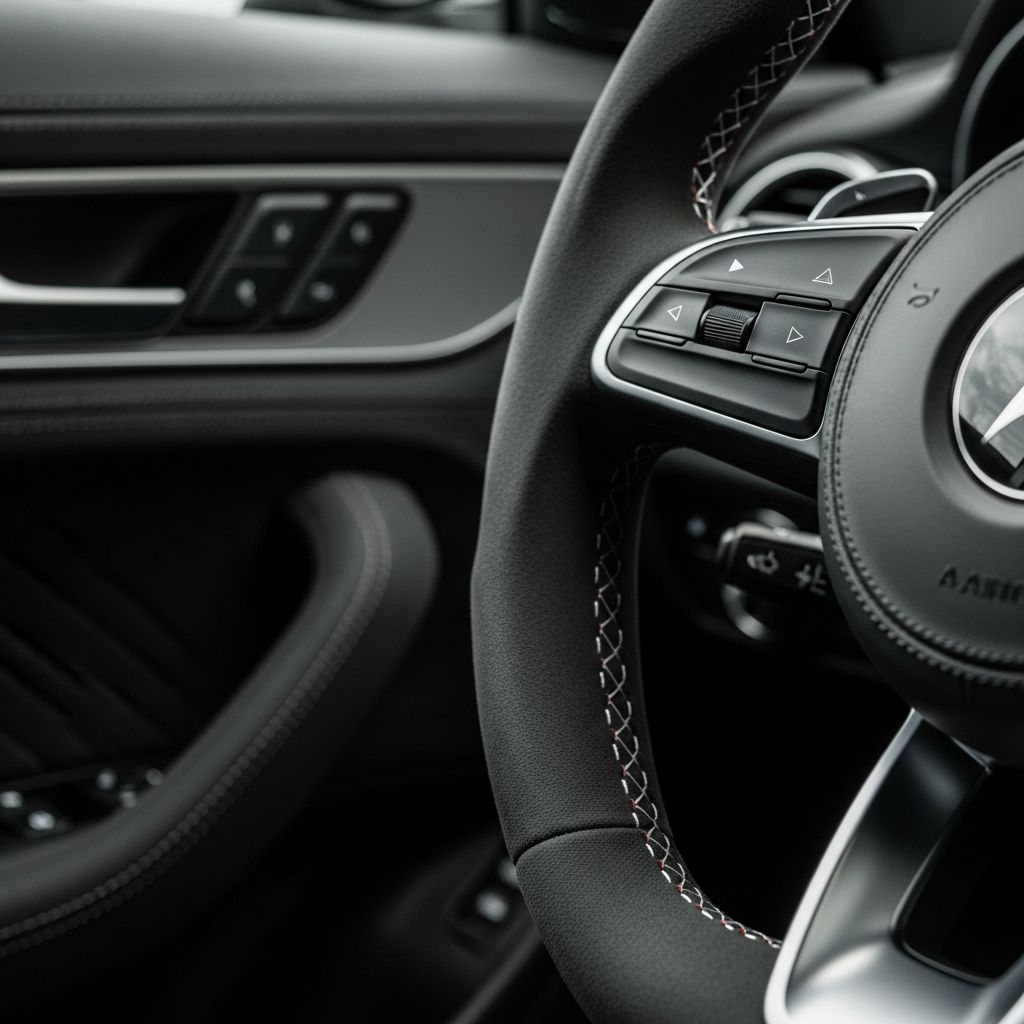
Alcantara’s versatility allows it to enhance various cabin elements. It’s frequently used on steering wheels and gear shifters for superior grip, especially in racing-inspired road cars. Beyond controls, it covers seats, dashboards, door panels, armrests, sun visors, transmission tunnels, and headliners.
High-end brands like Porsche and Mercedes-Benz integrate it extensively, from roof linings to center consoles, creating a cohesive, upscale ambiance. In sports cars, its matte finish prevents glare from sunlight, improving driver visibility. Formula 1 teams favor it for seats due to its fire resistance and low weight.
| Component | Primary Benefit | Example Brands |
|---|---|---|
| Steering Wheel & Shifter | Enhanced grip in sweaty conditions | Porsche, Ferrari |
| Seats & Headliners | Comfort and reduced weight | Mercedes-Benz, Lamborghini |
| Dashboard | Anti-glare matte surface | Audi, BMW |
Standout Advantages of Choosing Alcantara
One of Alcantara’s biggest draws is its tactile superiority. The soft, grippy surface outperforms smooth leather or plastic, providing confidence during spirited driving. Its high friction coefficient is particularly valued in motorsports, where quick, precise inputs are crucial.
Durability is another strength: it resists scratches, abrasion, and moisture better than real suede. Fire-retardant properties make it safe for high-heat environments, and it’s even machine-washable in some cases. The lightweight nature contributes to better vehicle dynamics without sacrificing luxury.
Additionally, Alcantara repels dust and pollutants effectively, maintaining a clean appearance with minimal effort. Its colorfastness ensures no quick fading from UV exposure, preserving the interior’s premium look.
- Grip and Control: Ideal for performance driving.
- Maintenance Ease: Water-repellent and simple to spot-clean.
- Aesthetics: Suede-like elegance elevates any cabin.
Potential Drawbacks and Maintenance Realities
Despite its appeal, Alcantara isn’t flawless. The nap can mat or show directional wear from repeated handling, creating visible patterns over time. It demands regular brushing to restore uniformity, unlike set-it-and-forget-it materials like leather.
In everyday use, it attracts lint and pet hair more readily, requiring frequent vacuuming. While durable, it’s not as robust against heavy soiling as vinyl or thick fabrics. Costs are comparable to leather options, often adding £1,000–£3,000 depending on the vehicle and extent of use.
For those with messy lifestyles or minimal upkeep tolerance, these factors might deter selection. However, protective sprays can mitigate some issues, extending its lifespan.
Alcantara vs. Traditional Interior Materials
Comparing Alcantara to alternatives highlights its niche. Against leather, it offers better grip and a matte finish but requires more care. Suede looks similar but absorbs moisture and wears faster. Standard cloth is cheaper and easier to maintain but lacks the premium feel and durability.
| Material | Grip Level | Durability | Maintenance | Cost |
|---|---|---|---|---|
| Alcantara | High | High (scratch/fire resistant) | Moderate (regular brushing) | Premium (£1k+) |
| Leather | Medium | Very High | Low | Premium |
| Suede | High | Medium | High | High |
| Cloth | Low | Medium | Low | Low |
Alcantara shines in performance contexts but may not suit family haulers prioritizing low maintenance.
Cleaning and Care Best Practices
To maximize longevity, use a soft brush weekly to realign the nap. Spot-clean stains with a mild soap solution and microfiber cloth, avoiding harsh chemicals. For deeper cleans, vacuum attachments designed for upholstery work well. Professional detailing every six months prevents buildup.
Avoid direct sunlight prolonged exposure and heat sources to prevent drying. Protective treatments like fabric guards enhance water and stain resistance without altering texture.
- Brush gently in one direction.
- Dab stains; do not rub.
- Air dry completely.
- Apply protector sparingly.
Real-World Examples from Leading Automakers
Porsche’s 911 GTS models feature Alcantara extensively for its sporty edge. Mercedes-AMG lines use it on performance trims, balancing luxury with function. Even mainstream brands like Volkswagen offer it in GT variants, democratizing access.
Custom shops increasingly adopt it for personalization, proving its broad appeal beyond OEMs.
Is Alcantara a Smart Investment?
Ultimately, Alcantara suits enthusiasts valuing tactility and performance over zero-effort upkeep. It transforms cabins into driver-focused sanctuaries, justifying the cost for sports car buyers. Casual drivers might prefer leather’s simplicity. Test it in showrooms to gauge personal fit.
Frequently Asked Questions
What exactly is Alcantara made from?
A blend of polyester and polyurethane microfibers, creating a durable, suede-like synthetic.
Does Alcantara fade in sunlight?
No, its UV-resistant dyes maintain color integrity better than many fabrics.
Can I machine-wash Alcantara?
Yes, many variants are machine-washable on gentle cycles, but check manufacturer guidelines.
Is Alcantara more expensive than leather?
Often similar, ranging £1,000–£3,000 as an option or in higher trims.
How do I remove pet hair from Alcantara?
Use a lint roller or rubber brush for effective, non-damaging removal.
References
- Alcantara Leather: The Complete Guide — LeatherNeo. 2023. https://www.leatherneo.com/blogs/news-and-stories/alcantara-leather-the-complete-guide
- Alcantara fabric: What is it and is it worth it? — Carwow. 2023. https://www.carwow.co.uk/guides/glossary/what-is-alcantara-0518
- What Is Alcantara Fabric? Lowdown on the Lightweight Vegan Textile — MotorTrend. 2023. https://www.motortrend.com/features/alcantara-fabric-what-is-it
- Benefits of Alcantara Fabric in Modern Car Design — NW Crafted Interiors. 2023. https://nwcraftedinteriors.com/alcantara-fabric-in-modern-car-design/
- Alcantara car seats: why clean when you can protect — Protect Me Products. 2023. https://protectmeproducts.co/blogs/learn-more/alcantara-car-seats-why-clean-when-you-can-protect
- Stop Putting Alcantara in Cars — The Drive. 2023. https://www.thedrive.com/news/44694/stop-putting-alcantara-in-cars
- Genuine Automotive Alcantara – the good and the ugly — YouTube (Porsche GTS review). 2023. https://www.youtube.com/watch?v=aebUNgMhQV4


Read full bio of medha deb