2026 Honda Civic: Complete Guide to Features and Performance
Discover what makes the 2026 Honda Civic a standout choice in the compact sedan segment.
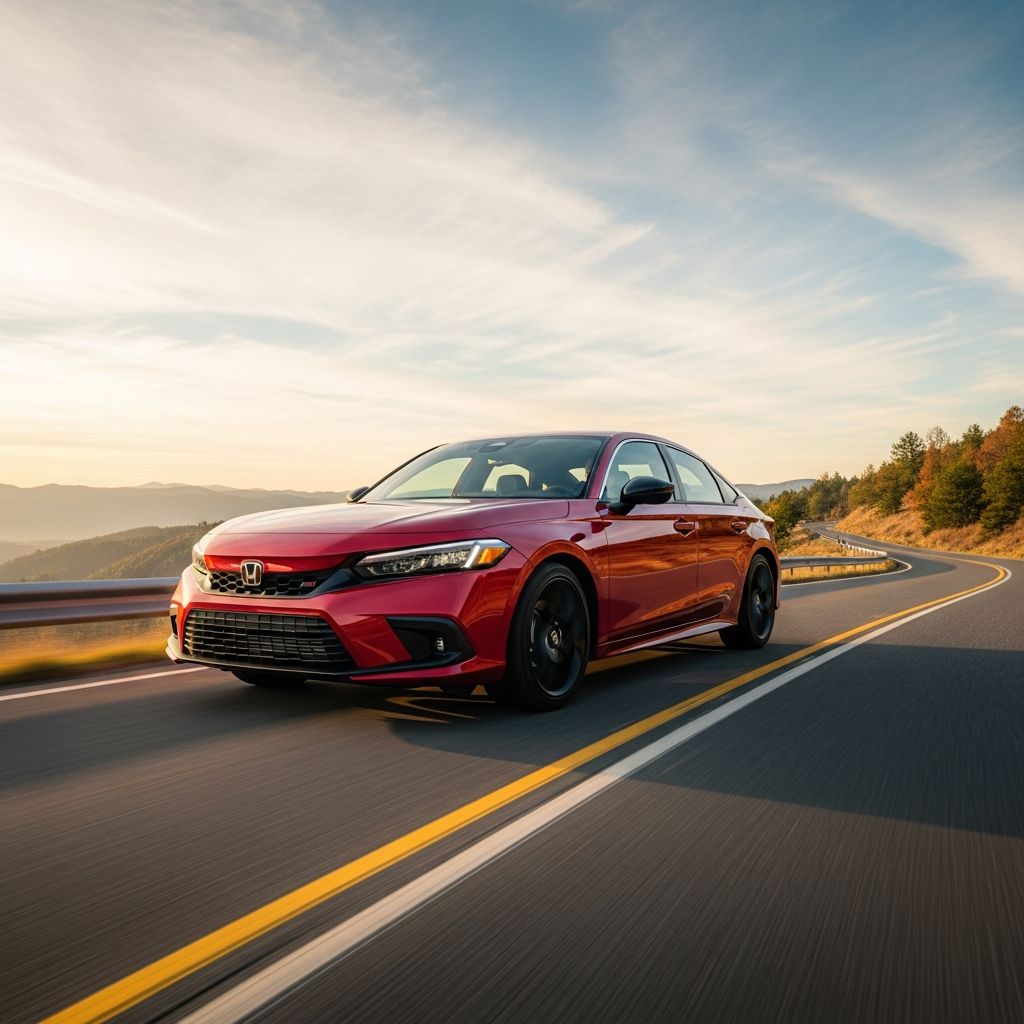
The automotive landscape has witnessed significant evolution in recent years, with manufacturers competing intensely to deliver vehicles that balance practicality, performance, and environmental consciousness. The 2026 Honda Civic stands as a testament to this industry transformation, representing a thoughtful approach to compact car design that refuses to compromise on any front. This comprehensive guide examines what makes this particular generation of the Civic such a compelling proposition for discerning drivers across multiple demographics.
Understanding the 2026 Civic’s Market Position
The compact sedan segment has traditionally occupied an interesting space in the automotive hierarchy. These vehicles serve as the gateway for first-time buyers, yet they also attract seasoned motorists who prioritize practicality over ostentation. The 2026 Honda Civic has carved out a distinctive niche within this category by refusing to accept the conventional trade-offs that have historically defined small cars.
What distinguishes the current generation Civic from its competitors is its holistic approach to vehicle engineering. Rather than excelling in one area while compromising in others, Honda has orchestrated a careful balance across multiple performance dimensions. The result is a car that genuinely appeals to diverse buyer profiles, from young professionals seeking their first new vehicle to more experienced drivers downsizing from larger vehicles.
Pricing Architecture and Value Proposition
The 2026 Honda Civic pricing structure reflects a strategic positioning within the competitive compact sedan marketplace. Starting at $24,695 for base models and extending to $32,395 for fully equipped variants, the Civic occupies a sweet spot that combines accessibility with premium features.
This pricing strategy enables Honda to reach multiple customer segments without diluting the brand’s value proposition. Entry-level buyers gain access to a vehicle with legitimate quality credentials, while those with additional budget room can unlock advanced technology and comfort amenities. The pricing range demonstrates Honda’s confidence in the Civic’s fundamental appeal across the economic spectrum.
Understanding the Value Equation
Beyond raw pricing, the Civic’s value proposition encompasses what buyers receive for their investment. The vehicle combines practical utility with a refined driving experience, addressing the fundamental requirements that motivate compact sedan purchases while elevating expectations around comfort and engagement.
The Hybrid Powertrain Revolution
Perhaps the most significant development in the 2026 Civic lineup is the expansion and refinement of hybrid technology. After nearly a decade of absence, Honda reintroduced the Civic Hybrid for 2025, and the 2026 model year builds upon this foundation with proven reliability and customer satisfaction.
The hybrid system represents a fundamental departure from traditional approaches to automotive electrification. Rather than simply bolting electric components onto existing architectures, Honda engineered the Civic Hybrid as an integrated system where gasoline and electric power sources work in seamless harmony.
Powertrain Configuration and Performance Metrics
The 2026 Civic Hybrid employs a sophisticated two-motor hybrid system that combines a 2.0-liter four-cylinder engine with advanced electric propulsion. This configuration generates a combined system output of 200 horsepower, positioning the Civic Hybrid as not only the most efficient variant in the lineup but also remarkably potent from an acceleration standpoint.
The performance figures underscore this hybrid’s distinctive character. The Civic Hybrid achieves a 0-60 mph acceleration time of 7.5 seconds, translating to more than a two-second advantage over the conventional gasoline-only model. For perspective, this performance level exceeds what the standard Civic Si achieves, demonstrating that efficiency need not come at the expense of driving engagement.
Fuel Economy Excellence
The fuel efficiency metrics represent perhaps the most compelling argument for hybrid ownership. Independent testing has documented that the Civic Hybrid achieves approximately 44 mpg overall, making it the most fuel-efficient Civic variant available in the current lineup. While this figure trails the Hyundai Elantra and Toyota Corolla hybrid variants by approximately 4 mpg, Honda’s engineering delivers compensatory advantages through superior driving dynamics and responsive performance.
The hybrid system’s sophisticated transmission behavior deserves particular attention. Honda engineered the two-motor hybrid system to mimic the operational characteristics of conventional automatic transmissions, creating a driving experience that feels intuitive and familiar to drivers regardless of their automotive background.
Conventional Gasoline Powertrain Options
While the hybrid variant captures significant attention, the 2026 Civic continues offering traditional gasoline-powered alternatives for buyers prioritizing other considerations. The base gasoline model provides a proven, straightforward powerplant with the reliability expected from Honda’s engineering pedigree.
These conventional variants maintain the Civic’s reputation for practicality and enjoyable driving dynamics while offering lower purchase prices than their hybrid counterparts. For drivers with predictable commutes and limited annual mileage, the gasoline option may provide superior economic value despite higher per-mile fuel consumption.
Chassis Dynamics and Handling Characteristics
The driving experience encompasses far more than raw acceleration figures or fuel consumption numbers. The 2026 Civic demonstrates remarkable proficiency in translating engineering excellence into moment-to-moment driving pleasure.
The suspension architecture underwent meaningful refinement for the hybrid variant, accounting for the additional weight introduced by battery systems while maintaining the responsive handling characteristics that define the Civic nameplate. This engineering sophistication resulted in a vehicle that feels considerably more compliant than previous iterations without sacrificing the precision that enthusiasts demand.
Steering Response and Vehicle Agility
Independent testing confirms that the Civic Hybrid exhibits responsive and direct steering, translating driver inputs into predictable vehicle behavior. The vehicle demonstrates genuine nimbleness when navigating winding roads, with brake performance matching the precision of the steering inputs.
On the automotive journalist circuit, the Civic Hybrid achieved a 55 mph speed through standardized avoidance maneuver testing, demonstrating solid stability and composure when subjected to emergency handling exercises. For a compact sedan prioritizing efficiency, this performance level indicates engineers refused to compromise on safety-critical handling characteristics.
Interior Quality and User Interface Design
The cabin environment represents the space where drivers spend considerable time during daily commutes and weekend adventures. The 2026 Civic interior reflects Honda’s philosophy of functional elegance, prioritizing intuitive controls and thoughtful material selection over unnecessary ornamentation.
The design approach emphasizes simplicity, with controls positioned logically and materials selected to balance durability with aesthetic appeal. This philosophy extends to the technology integration, where the touchscreen interface, while compact in dimensions, provides essential functionality without overwhelming drivers with excessive complexity.
Technological Integration and Information Systems
The infotainment system reflects a pragmatic approach to automotive technology. Rather than pursuing cutting-edge graphics or excessive feature proliferation, Honda prioritized responsive operation and user-friendly navigation. The touchscreen may not feature the latest graphical sophistication, but it accomplishes its primary mission efficiently.
Climate control systems maintain a straightforward approach on base models, though buyers seeking enhanced comfort can specify rear climate vents on higher trim levels. This modular approach to feature distribution allows buyers to customize their vehicle around genuine priorities rather than paying for unnecessary complexity.
Competitive Positioning and Market Alternatives
Understanding the Civic’s strengths requires acknowledging the competitive landscape. The hybrid compact sedan segment includes the Toyota Corolla, Toyota Prius, and Hyundai Elantra as primary rivals. Each competitor brings distinctive characteristics to the category.
The Toyota Corolla represents the segment’s most conservative approach, prioritizing proven reliability over dynamic driving engagement. The Prius pursues maximum fuel efficiency at the potential expense of driving enjoyment. The Hyundai Elantra delivers competitive efficiency metrics with value-oriented pricing.
The 2026 Civic Hybrid distinguishes itself by refusing to optimize exclusively for any single dimension. Instead, it delivers the sportiest driving dynamics among hybrid compact sedans while maintaining fuel economy figures that compete favorably with dedicated hybrid specialists.
Feature Availability and Trim Structure
Honda organizes the 2026 Civic lineup into distinct trim levels, each representing a carefully considered balance of features and pricing. The modular approach to specification allows buyers with varying budgets to access genuine quality while avoiding mandatory feature bundles that inflate costs unnecessarily.
- Base models provide essential transportation with proven reliability and acceptable comfort
- Mid-tier trims introduce convenience features and enhanced materials for modest additional investment
- Top-tier variants offer premium touchpoints and advanced technology integration for buyers prioritizing comprehensive feature sets
- The Sport Hybrid variant emphasizes dynamic driving credentials through suspension tuning and performance-oriented design elements
Real-World Performance Assessment
Automotive testing organizations have subjected the 2026 Civic to rigorous evaluation protocols. The Civic Sport Hybrid hatchback variant achieved a 0-60 mph acceleration time of 6.1 seconds in independent testing, demonstrating genuine performance that aligns with Honda’s engineering claims. For context, this performance level actually surpasses the conventional Civic Si variant, which accomplishes the same acceleration in 6.6 seconds.
Real-world fuel economy testing has produced results that validate manufacturer claims while demonstrating the practical benefits of hybrid ownership. Observed fuel economy of 36 mpg during standard driving cycles confirms that theoretical EPA estimates translate into genuine savings at the fuel pump for typical drivers.
Safety and Structural Integrity
The 2026 Civic benefits from Honda’s accumulated engineering expertise in passenger compartment protection and crash energy management. While specific safety testing results warrant independent verification through NHTSA and IIHS protocols, the Civic’s long-standing reputation in crash safety testing provides confidence in its structural integrity.
Advanced braking systems demonstrate impressive stopping performance, with 70-0 mph braking distances of 180 feet indicating responsive deceleration and effective heat dissipation. This braking performance is particularly impressive considering it occurs within the constraints of a vehicle optimized for fuel economy.
Long-Term Ownership Considerations
Beyond initial purchase decisions, the Civic demonstrates strengths that accumulate over the ownership experience. The hybrid powertrain’s refined architecture and Honda’s reputation for powertrain longevity suggest favorable long-term reliability prospects. The standardized transmission behavior in hybrid applications reduces driver learning curves and supports intuitive operation throughout vehicle ownership.
Maintenance requirements for hybrid models follow predictable patterns, with regenerative braking systems reducing conventional brake wear while the electric drivetrain contributes to lower overall powertrain stress compared to aggressive conventional engines.
The Verdict: Why 2026 Civic Hybrid Earns Recognition
The 2026 Honda Civic Hybrid has earned recognition as Edmunds Top Rated Car for 2026, a distinction reflecting its balanced approach to competing priorities. This recognition acknowledges that the vehicle successfully navigates the complex interplay between efficiency, performance, practicality, and enjoyment.
For buyers seeking a compact sedan that refuses to demand conventional compromises, the 2026 Civic represents a genuinely compelling proposition. The hybrid variant, in particular, demonstrates that automotive engineering can simultaneously optimize for environmental responsibility, driving engagement, and economic value.
Frequently Asked Questions
- What distinguishes the 2026 Civic Hybrid from the conventional gasoline model?
- The hybrid variant combines electric and gasoline propulsion for superior fuel economy (44 mpg) and performance (0-60 in 7.5 seconds), making it both the most efficient and most powerful non-Type R variant in the lineup.
- Are there significant updates for the 2026 model year?
- The 2026 model year maintains the platform introduced for 2025, with engineering refinement focused on suspension tuning and reliability validation rather than architectural overhaul.
- How does the Civic Hybrid compare to Toyota Corolla and Hyundai Elantra hybrids?
- While competitors may achieve slightly higher fuel economy (48 mpg), the Civic Hybrid compensates through superior driving dynamics, responsive steering, and more engaging overall performance characteristics.
- What transmission technology powers the Civic Hybrid?
- The direct-drive transmission, integrated with the two-motor hybrid system, mimics conventional automatic operation while delivering electric propulsion seamlessly between traditional gear engagement points.
- Does the Civic Hybrid offer all-wheel-drive capability?
- No, the 2026 Civic Hybrid is exclusively front-wheel-drive, reflecting Honda’s strategic focus on delivering maximum efficiency and interior space within this platform constraint.
References
- 2026 Honda Civic Prices, Reviews, and Pictures — Edmunds. 2026. https://www.edmunds.com/honda/civic/
- 2026 Honda Civic Hybrid Expert Review — MotorTrend. 2026. https://www.motortrend.com/cars/honda/civic-hybrid/2026
- 2026 Honda Civic Hybrid Road Test Report — Consumer Reports. 2026. https://www.consumerreports.org/cars/honda/civic-hybrid/2026/road-test-report/
- 2026 Honda Civic Review, Pricing, and Specs — Car and Driver. 2026. https://www.caranddriver.com/honda/civic
Similar Articles



Read full bio of Sneha Tete