2003-2009 Toyota Land Cruiser: Performance & Reliability
Comprehensive guide to the J120 generation Land Cruiser's capabilities
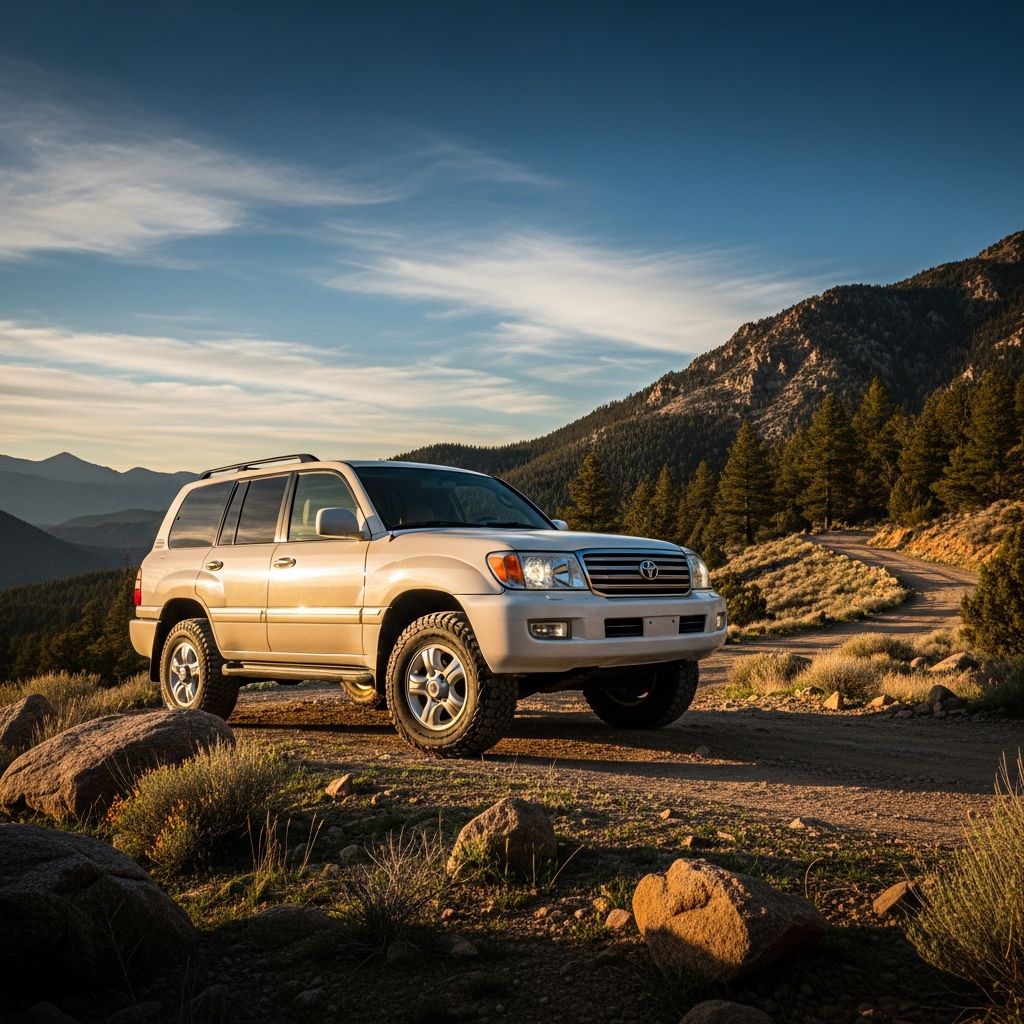
The Toyota Land Cruiser has maintained its position as one of the most respected four-wheel-drive vehicles globally for over half a century. The 2003 to 2009 model cycle, formally known as the J120 generation, represented a pivotal moment in the model’s evolution. This iteration introduced a refined approach to the traditional Land Cruiser formula, blending sophisticated interior appointments with genuine off-road prowess. The J120 marked Toyota’s strategic pivot toward creating a vehicle that appealed equally to family-oriented buyers seeking comfort and those demanding authentic capability in challenging terrain.
This generation emerged at a time when the sport utility vehicle market was expanding rapidly, with consumers increasingly expecting luxury-like amenities alongside rugged engineering. The J120 Land Cruiser answered this demand by offering a compelling package that neither compromised on wilderness credentials nor cabin refinement. The result was a vehicle that became a steady commercial success and garnered considerable critical respect among automotive journalists and enthusiasts.
Understanding the Powertrain Options and Performance Characteristics
The J120 generation offered buyers two distinct engine pathways, each reflecting different priorities and market preferences. The decision between diesel and petrol powerplants would fundamentally shape the ownership experience and long-term value proposition of each vehicle.
The Diesel Revolution: D4-D Engine Excellence
The 3.0-litre D4-D diesel engine became the dominant choice across most markets, particularly in the United Kingdom and Europe. This four-cylinder turbodiesel represented a breakthrough in combining fuel efficiency with substantive torque delivery. In its initial 2003-2004 form, the D4-D generated sufficient power to satisfy daily driving requirements while delivering exceptional economy figures for a vehicle of this size and capability. The engineering philosophy behind this engine prioritized low-end torque availability, making it particularly adept at hauling substantial loads or climbing challenging gradients without excessive strain.
A significant enhancement arrived with the 2005 model year revision, which extracted approximately 20 percent additional torque from the D4-D diesel architecture. This improvement translated directly into noticeably sharper acceleration characteristics and further refined fuel consumption metrics. The 2005-onward D4-D became demonstrably superior for both everyday driving dynamics and demanding off-road situations where accessible power at lower engine revolutions proved advantageous.
The 2007 model year brought additional technical refinement, with the diesel engine receiving an uprating to 171 brake horsepower while simultaneously adapting to meet Euro IV emissions standards. This technological progression reflected Toyota’s commitment to maintaining competitive performance specifications throughout the generation’s lifecycle while progressively addressing environmental regulatory requirements.
Petrol Alternative: The 4.0-Litre V6
For customers prioritizing outright power delivery and smoother engine characteristics, Toyota offered a 4.0-litre naturally aspirated V6 petrol engine. While this powerplant provided considerably higher horsepower figures and the refined acoustic signature associated with petrol engines, it came with substantially elevated fuel consumption. The petrol variant attracted enthusiasts who valued performance and smoothness over operating economy, though it represented a minority choice in markets with high fuel costs.
Transmission Systems and Driveline Engineering
The J120 generation incorporated evolving transmission technology throughout its production cycle. New transmission configurations introduced during model updates enhanced both efficiency and driving enjoyment. These mechanical refinements, combined with standardized cruise control across all trim levels from 2005 onwards, reflected Toyota’s incremental approach to product improvement.
The vehicle’s permanent four-wheel-drive system provided continuous traction across varying terrains, while the transfer case offered selectable modes for maximizing efficiency during road-based travel. This architecture delivered genuine off-road competency without requiring driver intervention for routine highway journeys.
Handling Dynamics and Suspension Architecture
The J120 Land Cruiser featured a sophisticated suspension design that balanced on-road composure with off-road articulation. The independent front suspension combined with a live rear axle represented a carefully calibrated compromise between these sometimes-competing objectives.
The suspension geometry permitted substantial wheel travel and articulation, enabling the vehicle to maintain tire contact across severely broken terrain. However, this soft suspension tuning created a trade-off on conventional roads, where body control exhibited less precision compared to certain rivals employing stiffer, more dedicated on-road-oriented suspension configurations. This characteristic reflected the J120’s fundamental design philosophy: a genuine family 4×4 that prioritized comfort and capability over dynamic entertainment.
The elevated seating position, higher than its smaller Prado cousin, provided commanding forward visibility across urban environments and enhanced sight-lines during off-road navigation. This ergonomic advantage contributed to driver confidence and reduced fatigue during extended journeys.
Reliability and Longevity Credentials
The J120 generation earned widespread recognition for exemplary reliability and robust durability characteristics. Consumer ratings reflected this reputation, with owners frequently praising manufacturing quality and mechanical dependability. The vehicle’s longevity extended beyond typical automotive timescales, with many examples accumulating substantial mileage while maintaining core functionality.
The D4-D diesel engine proved particularly resilient when subjected to reasonable maintenance regimens and typical owner care. The simpler mechanical architecture of diesel engines, compared to contemporary petrol powerplants, contributed to extended service intervals and reduced vulnerability to certain failure modes. Many Land Cruisers from this generation continue providing dependable service after accumulating over 200,000 kilometers, demonstrating the fundamental soundness of Toyota’s engineering approach.
Consumer Satisfaction Metrics and User Experience Ratings
Comprehensive consumer review data reveals consistently high satisfaction ratings across multiple dimensions. Owners rated comfort characteristics at 4.9 out of 5.0 stars, reflecting the vehicle’s spacious cabin architecture and supportive seating ergonomics. Performance ratings similarly achieved 4.9 stars, indicating that the available powerplants satisfied customer expectations for acceleration, response, and overall driving dynamics.
Value assessment also received exceptional scores of 4.9 stars, with 94 percent of surveyed owners expressing satisfaction with their purchasing decisions. This exceptional approval rate suggested that the J120 Land Cruiser delivered tangible benefits justifying its premium positioning within the market segment.
Qualitative feedback consistently highlighted:
- Robust reliability and manufacturing integrity
- Genuine off-road capability combined with urban usability
- Comfortable interior environment for extended journeys
- Effective handling and responsive steering
- Safety-oriented engineering and protective design
- Functional infotainment system integration
Off-Road Performance and Terrain Capability
The J120 generation delivered substantive off-road prowess suitable for recreational adventuring and professional applications. The vehicle’s solid rear axle, combined with independent front suspension, provided genuine articulation and terrain-following capability. This mechanical foundation permitted safe navigation across rocky outcrops, ford crossings, and severely rutted surfaces where conventional vehicles would founder.
The available torque, particularly from the revised 2005-and-later diesel engines, enabled the Land Cruiser to maintain momentum climbing steep gradients laden with cargo. The transmission’s low-range gearing multiplied this mechanical advantage, offering driver control that prevented wheel-spin while permitting modulated progress through challenging obstacles.
Off-road performance metrics showed impressive capability, with the vehicle delivering approximately 241 horsepower and 277 pound-feet of torque in some configurations. This power availability enabled meaningful acceleration on both sealed and unsealed surfaces, though serious off-road driving or transporting heavy loads would increase fuel consumption substantially above normal driving figures.
Fuel Economy and Operational Efficiency
The D4-D diesel engine achieved respectable efficiency under typical driving conditions, averaging between 13 to 15 litres per 100 kilometers during urban travel. Long-distance highway driving improved these figures, with fuel economy dropping to approximately 11 litres per 100 kilometers under steady-state cruising conditions.
However, serious off-road driving or transporting substantial cargo would degrade these economy metrics significantly, as engine load increased and less-efficient transmission gearing engaged. This reality reflected the fundamental physics of moving a substantial, heavy vehicle across challenging terrain.
Comparative Market Position and Value Proposition
The J120 Land Cruiser occupied a distinctive market position during its production cycle. Compared to competitors, it offered superior reliability and longevity expectations, though at a premium purchase price. The vehicle attracted buyers prioritizing dependability and genuine capability over style considerations or fashion-conscious aesthetic appeal.
As a used purchase, the J120 represented exceptional value within the premium 4×4 segment. The combination of proven durability, spacious interior accommodation, and genuine off-road credentials made it an outstanding proposition for families seeking a vehicle capable of both comfortable daily driving and wilderness exploration.
Interior Practicality and Accommodation
The J120 generation represented a notable advancement in interior sophistication compared to earlier Land Cruiser generations. The cabin featured improved material quality, more intuitive control layouts, and enhanced storage solutions designed for modern family requirements.
The spacious seating arrangement accommodated seven or eight passengers depending on configuration, with the third-row seating suitable for children or occasional adult use. The commanding driving position provided excellent visibility in all directions, while the substantial side windows permitted clear forward sightlines regardless of driver stature.
Climate control systems maintained consistent cabin temperature across seasonal variations, while functional storage compartments dispersed throughout the interior provided logical organization for travel essentials and daily necessities. The vehicle’s generous load bay capacity enabled carrying substantial cargo, recreational equipment, or luggage for extended expeditions.
Market Reception and Production Timeline
The J120 Land Cruiser arrived in showrooms during January 2003, commencing a steady sales trajectory that demonstrated strong market acceptance. The vehicle’s combination of attributes appealed to diverse buyer demographics ranging from adventure-seeking families to professional operators requiring reliable transport across demanding environments.
Production continued through 2009, spanning seven model years during which Toyota introduced progressive refinements and technical enhancements. This extended lifecycle reflected successful market positioning and sustained consumer demand, validating the fundamental design direction established at the generation’s inception.
Maintenance Considerations and Long-Term Ownership
Ownership of a J120 Land Cruiser demanded commitment to regular maintenance schedules and preventive care protocols. While the vehicles demonstrated robust durability, achieving maximum service life required disciplined adherence to Toyota’s recommended service intervals.
Critical maintenance items included:
- Regular engine oil and filter changes using appropriate specification fluids
- Diesel fuel filter replacement at prescribed intervals to maintain injection system integrity
- Transmission fluid servicing to preserve driveline smoothness and longevity
- Coolant system maintenance to prevent overheating and corrosion-related failures
- Suspension component inspection and lubrication to ensure handling consistency
- Brake system servicing including pad replacement and fluid renewal
Vehicles maintained according to these protocols consistently demonstrated exceptional longevity, frequently surpassing 200,000 kilometers while retaining substantial mechanical integrity. Previous ownership patterns influenced long-term reliability, with vehicles driven primarily across established roads generally proving more dependable than those subjected to constant severe off-road abuse without adequate maintenance intervals.
Practical Ownership Insights and Recommendations
Prospective buyers evaluating used J120 examples should prioritize service history documentation and maintenance records. Vehicles with complete records demonstrating regular servicing at appropriate intervals typically provided superior reliability compared to examples lacking maintenance documentation.
Mileage accumulation patterns offered important insight into usage intensity. Vehicles with proportional annual mileage generally proved more robust than examples exhibiting irregular usage patterns or sudden high-mileage increases suggesting recent owner changes.
The choice between diesel and petrol variants should reflect individual priorities. Diesel examples offered superior economy, lower operating costs across extended ownership, and enhanced reliability reputations. Petrol variants provided smoother engine characteristics and simpler mechanical systems, though higher fuel consumption partially offset their reduced purchase prices.
Inspection of suspension components, particularly articulation bushings and damper condition, identified wear patterns that might necessitate future maintenance investments. Differential and transfer case fluid conditions indicated whether previous owners had maintained these critical systems appropriately.
Frequently Asked Questions About the J120 Generation
What separates the 2003-2004 model year D4-D from the 2005-2009 versions?
The 2005 revision introduced approximately 20 percent additional torque and enhanced fuel efficiency, while 2007 models received further uprating to 171 brake horsepower and Euro IV emissions compliance improvements. These changes made 2005-and-later examples more capable during acceleration and offering slightly improved economy.
Is the petrol V6 engine a viable alternative to the diesel option?
The 4.0-litre V6 petrol engine provided considerably higher horsepower and smooth operation but consumed substantially more fuel. The choice should reflect individual priorities regarding performance versus operational economy.
How does the J120 perform in serious off-road environments?
The J120 delivered genuine off-road capability through its solid rear axle, independent front suspension, and substantial low-range gearing. Wheel articulation enabled terrain negotiation suitable for recreational adventuring and professional applications.
What fuel economy should prospective owners anticipate?
Typical D4-D diesel examples averaged 13-15 litres per 100 kilometers during urban driving, improving to approximately 11 litres per 100 kilometers during highway cruising. Serious off-road driving or cargo transportation would increase consumption significantly.
Are these vehicles still economically viable for purchase in today’s market?
The J120 Land Cruiser represents exceptional value within the premium used 4×4 segment. Proven durability, spacious accommodation, and genuine capability make them outstanding propositions for families prioritizing reliability and capability over contemporary styling.
References
- Used 2003 Toyota Land Cruiser Consumer Reviews — Edmunds. Accessed 2026. https://www.edmunds.com/toyota/land-cruiser/2003/consumer-reviews/
- Toyota Land Cruiser Light Duty Series ‘J120’ (2003 – 2009) Review — Exchange and Mart. Accessed 2026. https://www.exchangeandmart.co.uk/reviews/toyota/land-cruiser-light-duty-series-j120/2003/208604
- 2003 Toyota Land Cruiser Consumer Reviews & Ratings — Kelley Blue Book. Accessed 2026. https://www.kbb.com/toyota/land-cruiser/2003/consumer-reviews/
- Toyota Land Cruiser Prado (2003) Used Car Review — El.P Reviews. YouTube. Accessed 2026. https://www.youtube.com/watch?v=W69naMVCrbg
- Toyota Land Cruiser Light Duty Series ‘J120’ (2003 – 2009) — Car and Driving. Accessed 2026. https://www.caranddriving.com/editorial-library-review.aspx?id=208604
Similar Articles







Read full bio of Sneha Tete